Showing posts with label Homeschooling High School Hop. Show all posts

Wednesday, August 26, 2015

High School Math and Science

(This post contains affiliate links.  Please see here for full disclosures.)


I'm excited to share our math and science programs for this year for the big boys. At first glance, math and science seemed like they would be pretty easy to plan.  While homeschoolers in our state aren't beholden to specific requirements, it made sense to follow a similar plan in order to be competitive for college applications. This meant math involved Algebras I and II plus Geometry, and sciences included a minimum of biology, chemistry, and physics (all with lab).  Sounded easy enough, right?  Um...maybe not.  At first, it didn't seem like there were that many programs out there, and the majority of maths and sciences were for grammar school.  After a bit of digging, suddenly we went from one or two options to twelve!  So how to decide which programs?


First, Math.  I am not a math person.  I passed Algebra I only due to intense tutoring from a friend who now holds a PhD in mathematics, and the margins of my Trig notebook were littered with "don't forget this" flags. Anything literary based? I'm right there!  Math much beyond times tables?  Let's say it's good to recognize your limits as a parent and know when to ask for help.

We definitely needed something that was self-contained.  I could handle grading a test if need be, but I needed something that would teach it all and give me the answer key.  Luke had completed Algebra I in school, so when he came home, he went right to Geometry.  We started with a program from Time 4 Learning.  Luke thought it was OK, and he definitely was learning, but he didn't love it.  He also tried a couple of other programs that we had reviewed, and they just didn't do it for him, either.   He decided he wanted to try something new when it came time for Algebra II.   At the same time, Matthew became a homeschooler and was ready for Algebra I.   I was hopeful we'd hit on something that would be able to take Matthew all the way through high school math, since he agreed that Time 4 Learning wasn't really his thing either.  We finally found Thinkwell's math programs, and signed up for their free trial.  Oh. my. goodness - we found something that was right for everyone!


Let me just say how much I love Thinkwell.  First, for this not-math-inclined Mama, it's a dream come true.  It's completely self-contained, from opening lessons to final exam.  Each lesson has a printable worksheet - with answer key! - so I can check how the boys are doing, but even when there are only "potential answers" given for a question, it is easy to see the pattern and see if a different answer is still correct.

As much as I love the easy-to-grade angle, our favorite part is the video instruction.  I have never, ever, ever heard so much giggling over math.  Dr. Burger has a very dry sense of humor -- I'd describe it as "dry as the Sahara in a drought."   However, math is a pretty dry subject, so the the jokes provide some much needed levity.  He also explains things in a way that is so approachable that even I can understand what he's talking about.  Luke likes that sometimes Dr. Burger makes mistakes.  Sure, he could go back and re-record the lessons, but Luke likes being able to watch the problem and see where things went wrong.  First, it helps him not make the same mistake, because he's aware of where it's easy to go wrong, but second - and maybe more importantly - it shows that even the teacher makes mistakes, and the important thing is to figure out how to go back and fix them. I was happy to find out that Thinkwell is one of the more difficult programs for math available, so when both boys ended the year with A averages, I felt they had truly earned their grades and not gotten lucky with an easy program.   Our experience last year made this year's math choices easy.  Matthew followed Algebra I with Geometry for Matthew, and even though he wasn't required to take a fourth year of Math, Luke readily chose Pre-Calculus as an "elective," based on the skill of the teacher.

It's a good thing Math was easy to decide, because Science wasn't so simple.   Luke doesn't officially need a science course, but most of the colleges "strongly suggest" a fourth year of science (and math).  Since "strongly suggest" is pretty much code for "if you want a fighting chance to get in," he figured he had better do something science related during his senior year.  Since he's interested in a health sciences career, he decided he wanted to do something in the anatomy realm, but he didn't want the stress of an AP-caliber program.  Since science was sort-of-optional, he wanted to do something that would count for a credit but be more "What I really want to study," instead of "You have to study this to tick the requirement box."  We went back to our Great Courses listings, and found they offered an course called  Understanding the Human Body: An Introduction to Anatomy and Physiology.  He figures this will take a little more than a single semester, so he'll add in Physiology and Fitness, to focus on anatomy & physiology of the body during exercise to round out the year. He is definitely excited to be able to do a course that interests him, rather than one that falls under the "must do" list.

Matthew, however, is pretty much stuck with a choice of "bio, chem, or physics?"  (We've told him 12th grade choices are your reward for getting to Senior year.)  He's opted to begin with Biology, but it's been a rough start.  I originally had planned on Shepherd Science, but then we had the opportunity to review a different program.  Since the price was right (no cost in exchange for the review), so we decided to give it a shot.  We've been pretty lucky at finding programs right off that suit Matthew's learning style, but this one just isn't cutting it.  I'll be honest -- I love science, and even began my college career as a biology major, but this particular program is slow-paced, and the only interaction is clicking to the next screen.  I'm glad we tried it, but it's proven to us that this particular style of program isn't going to work. Live and learn, right?  Once we are through with our review, we are going to go back to Plan A.  I'm hopeful that its lab-heavy syllabus will suit him better.  If anything else, the dissections will be fun for everyone.  Even kindergartener Damien is interested in being an observer to find out what the insides of animals look like.  Next year he'll do Chemistry, followed by Physics in his junior year.  I'm taking suggestions for those already!  

Thanks for visiting this installment of the Homeschooling High School blog hop.  This month's theme was Math, Science, and History.  I'm holding off on history this month, and will discuss it next month alongside Language Arts, since we have a cross-curricular, unit-study approach to these subjects.  In the meantime, check in with the other blogs participating in the hop: 


©2012- 2015 Adventures with Jude. All rights reserved. All text, photographs, artwork, and other content may not be reproduced or transmitted in any form without the written consent of the author. http://adventureswithjude.com

Wednesday, July 29, 2015

High School Electives - Tasting the Real World


Welcome back! This month, the hop is focusing on Electives.  What is an elective?  Technically, it's something that isn't an official "must take to graduate" class. However, some things may be an elective to graduate, but not if you want to continue on to college.  For example, in our state, anything beyond one year of a foreign language is an "elective." However, looking at the entrance requirement to a local university, they require at least two years, but four are "suggested."  So are Spanish II, III, and IV "required" or "elective"?  For us, they're required.  My philosophy is they don't have to go to college; if one of the kids wants to enter a trade school, that's fine by me. However, I don't want a shortfall in their education to be why they can't go, so...tenemos clases de español por cuatro años.

Electives, to us, are the "fun" things that are based on kiddo's interest.  In our homeschool, there are two kinds of electives.  The first kind is that "another year of... but you can pick the topic" course.  The second is a "whatever excites you" course -- something that makes you want to study hard and isn't "dumb" or "boring". However, I have three rules when choosing electives.

3 questions to ask when choosing a high school elective

The first kind of elective we have here is the "You need to choose a topic within this subject" flavor. Luke has already taken World History, and US History I and II.  That just leaves a "senior social studies" class.  He decided he wanted to learn political science.  We've put together an independent study in Political Science:

-Mother, Should I Trust the Government by FreedomProject Education
-Critical Thinking by FreedomProject Education
-Modern Political Thinking: Hobbes to Habermas by The Great Courses
-In-depth reading/study of Machiavelli, the Jefferson/Locke/Rousseau triad, and the American Presidency

A fourth social studies/social sciences course will make Luke more marketable to a college.  However, he's excited to be able to study something that is of interest to him and that will soon have a practical application -- the first election he will be able to vote in will be for the next President.

As a freshman, Matthew is still in the "you can pick a topic - sort of" realm. For example, he has to take a world history course.  We're both very happy with the scope of the curriculum we've chosen, but I don't think it's quite meaty enough to count for high school without some supplemental activity. For his "electives," I've let him choose a course of study that interests him that still pertains to that particular period.  For example, as he studied Ancient Greece and Rome, he chose to also study Greco-Roman engineering. He opted for a course also from The Great Courses.  It was taught by a retired US Army engineer, and explored the architecture and technology of the ancient world.  The best thing about homeschooling electives is that the boys can choose what interests them.  I have to say, that I groaned inwardly reading the title - Understanding Greek and Roman Technology: From Catapult to the Pantheon - but Matthew was absolutely fascinated by it.

This summer, we visited Vicksburg National Battlefield, and the Illinois monument is styled after the Pantheon.

Illinois monument Vickburgs National battlefield

He spent a full 20 minutes explaining to me how the engineering held up the building.  He started with the style of the colonnade, followed by how the dome of the ceiling/roof holds itself up.  He then pointed out something I hadn't noticed -- the room wasn't perfectly circular, but rather held 12 walls.  Then he pointed out the orientation of the door and a large plaque.  Like the Parthenon, the opening in the roof used the light cast by the sun to tell time.  After counting walls and adjusting for daylight savings, we could estimate pretty closely what time it was!  Exam: Passed with flying colors!


This "required-elective" hybrid really allowed him to discover several things.  First, the principles from thousands of years ago still apply today. Secondly, he found that he really likes the puzzling of engineering.  I'm not sure that he's going to become an engineer, but this allowed him to start thinking about what he's going to do "when he grows up" and helped him realize that he really enjoys engineering and architecture, and something that uses these might be a career worth exploring. 

The second kind of elective is the "you pick anything you want because you need to become a well-rounded person."  These are the "fun" classes that allow you to explore interests and get credit for them.  Matthew doesn't yet have room in his schedule for these -- he still has plenty of mandatory/core classes.  When Luke started high school, he didn't have time for them either. However, by his junior year, his schedule started freeing up a bit, and he decided he wanted to learn to cook. That morphed into his "Real Men Make Quiche" series here on the blog.


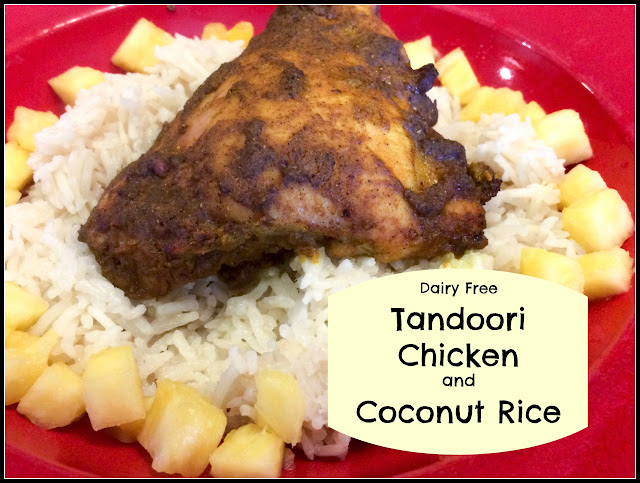
This elective multitasks as a personal exploration and life skills.  Luke found that he can see himself as a hobby chef. He's not really interested in working in a kitchen as a professional, but enjoys cooking, playing with ingredients, and creating new things.  Does it make him "marketable" to a college? Maybe not.  But does it make him more interesting as a person? Definitely.  (I don't know too many sixteen year old boys who can make tandoori chicken or tiramisu.)


www.adventureswithjude.com/2015/05/tandoori-chicken-and-coconut-rice-dairy.html

http://www.adventureswithjude.com/2014/04/mangia-spaghetti-bolognese-and-tiramisu.html

I think electives are the best part of homeschooling.  Electives are what helps a student grow as a person, and having the flexibility to delve into individual interests helps a student to see that an education isn't just about checking off topics on a pre-written syllabus, but that any topic is an avenue to learning!


Read More on Homeschooling in the High School Years

©2012- 2015 Adventures with Jude. All rights reserved. All text, photographs, artwork, and other content may not be reproduced or transmitted in any form without the written consent of the author. http://adventureswithjude.com

Wednesday, June 24, 2015

Planning Your Homeschool High School - Independent Study Model

Note: This post contains affiliate links. Please see here for a full disclosure.


Ok, I'll be honest.  When we first started, Luke was already done his first year of high school.  We never planned to homeschool to begin with, so we were diving in the proverbial deep end.  In our state, there is no official guideline of requirements for homeschoolers, but colleges want to see that the student has taken generally the same type of courses. We found combining what the state requires for a regular from-a-Board-of-Ed diploma with what colleges want helps give a good guide of what to study.  Often, the two don't always meet -- for example, our state only requires one year of foreign language study, while Luke's top choice for college requires two and "suggests" four.   We've decided that even if one of our homeschoolers chooses not to go to college, it won't be because he's unprepared. That means studying a wide range of subjects, and not doing the "minimums" to graduate.

http://www.adventureswithjude.com/2015/04/epcot-norway-stave-church-disney.htmlOne of the blessing of homeschooling is being able to choose both required courses and electives.  For example, our state has a "visual or performing arts credit requirement.  Yes, art is important, but having sat through an art history course memorizing the names and dates of buildings, paintings, and sculptures where my eyes glazed over vs. earning a theater degree, it makes a huge difference when you're interested and engaged in the topic.  Luke decided to take a course on the architecture of churches and cathedrals.  He's been fascinated by the common features of the basilica, stavkirke, and Gothic cathedral, but how different they all are and reflect the local culture.  This fills the "art" requirement but engages him, making it an easy class.  (Not necessarily easy in terms of content, but in topic.)  The state "requires" only World History plus two years of American history, but most colleges would like to see four.   In order to make him more marketable to a college, and has chosen to study Political Science as his senior year option.  (I've always said this kid would debate anything.)

Putting together an Intro to Poli Sci course has been...interesting.  If there's a pre-fabricated high school course out there, I haven't found it.  Instead, we are building our own independent study style course.   One of my biggest sources of stress when I'm planning a course is "Is it enough?"  High school credits generally mean somewhere around 120-150 hours of work, between instruction and activity (writing reports, papers, etc.)   What helps me is to research other syllabi and compare to make sure we're covering a similar amount of content; even if it isn't something on a high school vs. college level, it can give ideas of what is appropriate to cover.  I also try to talk to other families and see what they are doing.  Certainly, we make our own decisions, but in talking to others I've come to the conclusion that two or three books over the year is not enough to create a good high school course, but expecting a kid to read 15 or 20 books in ten months is unrealistic, too. 

We've put the course together using varied resources.  He completed two 8-week courses fom FreedomProject Education, and is currently working on two introduction to political theories courses from The Great Courses.  (The Great Courses has become one of my favorite resources for in-depth lectures.)  Combined, these give him about 50 "instruction hours" to combine with another 70-100 of reading, research, oral discussion and writing.  We've worked The Great Courses lectures as a spine to the course, pausing in the lecture to then read "textbooks" on the current concepts.   For example, he's read Machiavelli's The Prince and written examples of how the theory has remained in action today; he is currently working on the interplay between John Locke, Jean-Jaques Rousseau, and Thomas Jefferson.  The goal with this course is not to create a political viewpoint, but to learn compare all the sides, attempt to understand party and individual platforms, and create an adult with both a working knowledge of political history, political theory, and critical thinking skills. 

Now that it's Matthew's turn for high school, it's a whole different game because we are planning everything from the ground up.  While we have a framework of "four Englishes, three Maths, foreign language..." we're planning the course of study completely on our own.   On one hand, he has more time - he started high school courses last fall, with the idea he would have 5 years to do 4 years' worth of requirements, but there are some things he's going to be done some things sooner -- he's already nearly done Spanish II and will "officially" start 9th grade in August.   Right now, we're following a more "university-style" model of focusing mainly on core requirements, with an elective here or there to help diversify so that things don't get "boring," and then as they get crossed off, filling that core space back in with electives that cater to his interests. 


The biggest thing I've learned with him is to not be afraid of choosing a "lower level" course spine that can then be bulked up.  For example, Veritas Press has a fantastic self-paced history program that is multisensory and interactive.  Its presentation is perfect for him, and in reality, the amount of time it covers is fairly in-depth for a middle elementary program.  However, the other reality is that it just isn't deep enough for high school credit -- if nothing else, there's not enough time working to meet the 120-hour minimum.  Here's where other programs can dovetail with it to help increase content, but also tailor to the interests.  Matthew is also using The Great Courses as a lecture resource, studying with the course entitled Understanding Greek and Roman Technology: From Catapult to the Pantheon.  As he studied ancient Greek and Roman history with Veritas Press, he also studied the civilizations' engineering practices with a course presented by a top Army Engineer who taught for more than twenty years at West Point Military Academy.  I have to admit, considering what the Greeks and Romans had to work with -- shovels, axes and files, some paper and pencil, their brain and some brute strength -- it's amazing what they came up with that still influences modern engineering.  Matthew also is fascinated by the practices, and eagerly shares what he learned as each  episode ends.  He's then applying that to other experiences, going so far as to explain to a National Park Ranger how the keystone in the Skew Arch Bridge over the Allegheny Portage Railroad balances internal and external forces to keep it together using just hewn stone and no mortar.  (She got quite a lecture!)  For Matthew, balancing a more basic core study with appropriate but interesting supporting lessons helps maintain interest in learning because he wants to learn, not because he wants a good grade.

There are as many ways to plan what your homeschool high school will be like as there are high schoolers. Check out how our friends plan their courses:  

Chareen at Every Bed of Roses with thoughts on Planning to Homeschool through the High School Years
April from ElCloud Homeschool shares Homeschooling High School: Planning For High School
Debra over at Footprints in the Butter asks: You mean I have to PLAN our Homeschool High School?!?
Michele at Family, Faith and Fridays shares Here's the Plan
Lisa at Golden Grasses says Don't Panic! Homeshcooling High School Blog Hop
Debbie at Debbie's Homeschool Corner Planning Out a High School Program
Gena over at I Choose Joy! shares her The Top Tip for Planning Homeschool High School
Kym at Homeschool Coffee Break shares on Planning and Preparing for Success
Tess from Circling Through This Life shares on Planning the High School Years
Erica over at Be The One shares Planning and Record Keeping for High School
Jennifer from A Glimpse of Our Life on Planning For Homeschooling Highschool
Carol over at Home Sweet Life on Making A Plan
Wendy at Life at Rossmont shares thoughts on Planning for High School
Cristi from Through the Calm and Through the Storm shares on Making High School Plans
Dawn Oaks at Double O Farms shares Planning for the High School Years
Leah from As We Walk Along the Road shares her thoughts on Making Plans for Homeschooling Through High School

©2012- 2015 Adventures with Jude. All rights reserved. All text, photographs, artwork, and other content may not be reproduced or transmitted in any form without the written consent of the author. http://adventureswithjude.com

Wednesday, June 3, 2015

Hints for Homeschooling High School

When we started homeschooling Jude, the general plan was to take it year by year. I wasn't stressing over "What about when he gets to high school?" because he was only in preschool.  Yes, I knew it would be here sooner than I imagined, but I really thought we'd make it through second grade before thinking about high school.  IF he was still home.  Back then, my delusion was he'd catch up by first grade and be back in school with his siblings.

And then God said, "HA! You have planned, so I shall laugh.  Ha ha ha ha!"

Suddenly, I had a high school sophomore in need of a school, because his was closing.  My head was spinning like a tilt-a-whirl. Could I homeschool a high schooler?  Logistically, it made sense, because our "first choice" school for him was too far to be practical. Academically, it made sense, because we had determined we weren't enamored with the schools that were closer.  It was an amazing blessing to be part of the Crew with Jude, because I just said to anybody who would listen, "HELP!!" Thank God, they did!

The Falciani Homeschooling High Schoolers

When we decided Matthew would be coming home for high school, it was for many of the same reasons.  After having one year of high school experience, I wouldn't call myself an expert, but at least I had some ideas (and Pinterest boards).


Follow Meg @ Adventures with Jude's board Homeschooling High School on Pinterest.


In the end, we decided to bring him home for 8th grade., so that was had a bit of a "trial" year to see where he was at and how he learned without having "this counts for graduation credit" hanging over us from the get-go. It's a lesson we learned with Luke, but it's a different experience planning from the pool deck than the deep end.  

One of the things a bunch of friends and I realized was that while we definitely aren't alone in homeschooling high schoolers, it feels that way in the blogging universe.   So many blogs focus on younger kids and what they are doing, and it seems that high schooling parents are much quieter.  It's for a variety of reasons.  Our older students are more private, and we try to be respectful of that.   They're also independent workers with incredibly varied interests.  Finally, our day-to-day essays and papers just aren't as exciting to blog about as arts and crafts.  There are a lot of us homeschooling high school, but we just don't know what the others are doing.

Hence, this blog hop series.  For the next six months, we are going to talk about high school works in our homes.  It looks different for each of us - not just in each family, but sometimes from student to student.  Luke and Matthew are very different in their learning styles and interests, making it challenging to teach the same things in ways that spark their enthusiasm.  I hope you'll join us for the series and discover how exciting and rewarding homeschooling high school can be!


Upcoming dates and topics:

June 24 - Planning for High School
July 28 - Electives that Inspire
August 26 - Math and Science Choices
September 30 - Language Arts
October 28 - "How am I going to teach ... on a high school level?"
November 25 - Fitting It All In
December 30 - Graduation

Now,  my hints for homeschooling high school. 


1.  Network.  Ask for help from other homeschoolers, even if they're not experienced with high school yet. You'd be surprised what networking can spark. 

2.  Be prepared to learn alongside your student, but you'll be surprised how much you remember from your own high school days.

3.  Academic discussions with high schoolers are fantastic. Sure, it's amazing to watch reading and writing click with a younger child, but now you're watching the dots connect between ideas.

4.  Understand that your teen is gaining independent opinions, and you're exposed to all of them, from what topics he wants to study to how much work he thinks is reasonable.  Some days, this is good.  Sometimes...you'll have a new appreciation for your own parents.

5.  Just breathe.  You CAN do this. 


Come share the journey with us!

Chareenfrom Every Bed of Roses - Introducing the 2015 Homeschool High School Blog Hop
Jennifer from A Glimpse of Our Life - Meet The Bloggers of The Homeschooling High School Blog Hop
Cristi from Through the Calm and Through the Storm - Some Homeschooling High School Friends  
Debra from Footprints in the Butter - My Three (Homeschooled High School) Sons
Leah from As We Walk Along the Road - Are You Really Homeschooling Through High School?! The Homeschool High School Blog Hop
Michele from Family, Faith and Fridays
Lisa from Golden Grasses  
Wendy from Life at Rossmont - Introducing High School Homeschooling ... {A Monthly Blog Hop}  
Gena from I Choose Joy!  
Kym from Homeschool Coffee Break - Meet the Homeschooling High School Bloggers!
Debbie from Debbie's Homeschool Corner - Homeschooling High School  
Carol from Home Sweet Life - Homeschooling High School ~ What is it REALLY like?  
April from ElCloud Homeschool - Introducing Homeshooling High School
Erica from Be The One - Homeschooling High School
Laura from Day by Day in Our World
Tess from Circling Through This Life - Introducing the Homeschool High School Blog Hop!
Dawn from Double O Farms - Tapping into Great Resources for Homeschooling High School


©2012- 2015 Adventures with Jude. All rights reserved. All text, photographs, artwork, and other content may not be reproduced or transmitted in any form without the written consent of the author. http://adventureswithjude.com
Related Posts Plugin for WordPress, Blogger...
Pin It button on image hover