Showing posts with label 2015 Schoolhouse Crew Reviews. Show all posts

Thursday, November 12, 2015

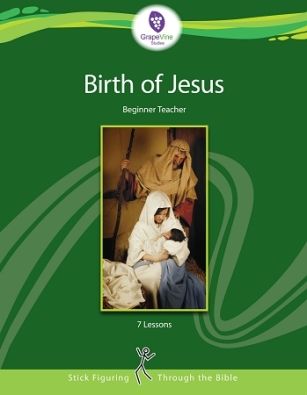
Grapevine Studies: Birth of Jesus (A Schoolhouse Crew Review)

Note: This post may contain affiliate links.  For full information, see here for full disclosure

Grapevine Studies the Birth of Jesus A Schoolhouse Crew Review from Adventures with Jude

 Bible instruction is important to me, but Bible studies for young children can sometimes be difficult.  We've tried a few Bible study programs in the past, but they've not been a good fit for us.  One was better suited to a group setting, and one was just too much memorizing for Jude to be able to handle.  When the Crew gave us the opportunity to try Grapevine Studies' program, we decided to try a different perspective.  Rather than starting "In the beginning..." with Genesis, we decided that fall was a good time to begin studying the story of the Nativity instead.  For the last few weeks, we've been "stick-figuring though the Bible" with The Birth of Jesus (Beginner Level).  Jude has been working with the drawing his own pictures with the Beginner eBook, while Damien has been working with the Traceable for Beginner eBook.

I like that Grapevine Studies is adaptable for all faith traditions.  It does not focus on a single interpretation of the Bible, but instead employs a framework of chapters and verses that allows the parent/teacher to choose the translation to be used.  I think this makes the program as unique as its stick-figure approach.  I've found that most Bible studies that I have looked at rely on the King James Version of the Bible.  There are differences in the translations, and while many would say "Isn't the Bible the Bible? Does it matter?" I would answer that yes, it does matter.  On a practical level, I want to use the Bible I already have and that the boys' catechism studies use, but on a theological level, there are differences and I want to use the translation (NRSV) that my Catholic faith uses.


Have you ever considered at a program that outlines the ages that it's for, and then when you get it find yourself saying, "What?  There is no way this is appropriate for this age!"  Sometimes, it's too easy, but often in my experience, curricula tends to run "ahead."  Programs are labeled for a specific grade, but often the average student for that grade will probably have a struggle with it.  Grapevine's program really is doable for the intended student age range.  The Beginner level is for ages 5 through 7, or students on a K-2 grade level.  Jude's abilities are about at a first grade level, and he had no trouble with this level.  While one could argue "the Nativity story itself isn't that difficult," study guides can sometimes complicate things.  This guide breaks the story of the Nativity down into manageable chunks, and the review questions are simply worded.  This curriculum did not overwhelm Jude at all.  He became excited to hear the next day's reading, because it gave him small bits at a time - enough to keep him interested, but not so much that it became a dreaded subject.  Learning about God should never be a chore!

The curriculum also divided the story by "characters in order of appearance." This really helped explain the Nativity story because we're focused on one person at a time and his or her role in the Nativity.  This curriculum can be worked on one "person" at a time, or one mini-story at a time.  There are 7 (weekly) lessons that can officially be broken down into fourteen daily lessons.  However, we opted to got at an even slower daily pace.  We opted to do one person over the course of a week, so that we were able to break down the story into very small groups of verses to reflect on.  We would read the verses listed in the corner of an illustration box, Jude would draw a picture to help him visualize the story, and then I would dictate the verse(s) for him to write into a notebook.  I think Jude could easily have handled a semi-weekly schedule, but we went at a slower rate because of Damien.

The Traceable for Beginner level is geared to ages 3-6 who many not have the motor skills to draw figures but are able to trace over lines.  It coordinates with the "blank" Beginner level that Jude used, and allowed Damien to be part of our study.  Because he's only 5, he doesn't really have the concrete thinking to be able to listen and then draw what he heard.   Having a picture already present gave him visual clues as he listened, helping him understand what he heard. However, because he still had the the extra tactile sensory input from drawing the picture by tracing it, it helped reinforce the story.

Luke 1:38

We also received a Teacher's Book that includes lesson notes/goals/key points, example stick figure drawings, the memory verses, and answers to review questions.  One of the lesson plan directions is for the teacher to model the story with stick figure drawings.  I did not do this, because I know Jude has a tendency to want to just copy what he sees.  Instead, I used the drawings to help me guide his thinking if he got stuck.  I really wanted to see how he interpreted the stories he heard.  I was really impressed by some of his drawings. Although some of his figures were a bit unpolished, I was really happy to see his level of comprehension.

Luke 1:38

So much for Mary's eloquent, "I am the handmaid of the Lord..."  God doesn't need us to stand on ceremony; a cheerful "Shoor" (sic) works as an agreement to His plan.


Jude explained this one to me: St. Joseph has a smile even though he's sleeping because the angel helped him decide what to do.

Luke 2:1-3

In this scene, the "official" picture is a man holding a scroll, presumably with the King's edict.  Jude's interpretation was to show people going and being counted.  I think he's clearly grasped the content of the Decree, and is more likely to remember this passage because this is what he naturally associated with the text.

Some of his pictures had me laughing.  In this one, he was insistent that Mary have flowers -- because all girls have flowers when they get married -- and the "guy in the middle needed that wedding book."

Matthew 1:24

Here, he asked me, "Does she look round enough to be having a baby?"

Luke 2:4-5

I think so.  Mary even looks ready to topple over...not much unlike I did when I was at the end of pregnancy.

There is no writing "required" with the program.  Although there are discussion questions at the end of each section, they can be completed orally.  Jude wrote answers to them because I wanted him to have an opportunity to work on both his penmanship and writing sentences.  Jude isn't so great at memorizing things just yet, so instead of trying to memorize a weekly Bible verse, he wrote the verse(s) that went with each day's lesson.   I think the Beginner level was actually a little easier for him than I expected it to be, so adding dictation/penmanship to the activity was a good way to challenge him. 

Matthew 1:24

We really are enjoying this study!  It has been a really good way to formally introduce the true Christmas story, without it feeling overwhelming for either of them.  It's easily adaptable for different abilities, even within the "recommended" K-2 grade level, making it a good option for families with multiple young students.  (Note: It is a simplified version of their elementary Birth of Jesus program, and not inherently compatible with the multi-level program.)  I think Grapevine Studies has become our new favorite Bible study program!

Luke 2:7


The Crew has been stick-figuring their way through the Birth of Jesus and the Old Testament.  Click the banner below to read their reviews, or follow Grapevine Studies on social media:

Facebook: https://www.facebook.com/GrapevineStudies
Twitter: https://twitter.com/grapevinestudy
Pinterest: https://www.pinterest.com/grapevinestudy/
Google+: https://plus.google.com/u/0/+Grapevinestudies/posts
Periscope: @Grapevine Studies

Grapevine Studies Review


©2012- 2015 Adventures with Jude. All rights reserved. All text, photographs, artwork, and other content may not be reproduced or transmitted in any form without the written consent of the author. http://adventureswithjude.com

Tuesday, November 10, 2015

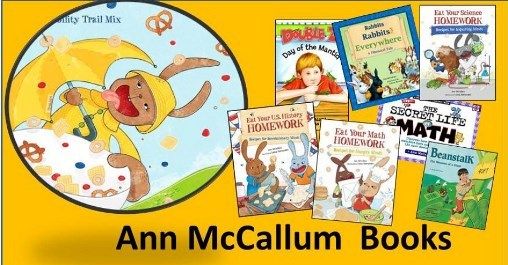
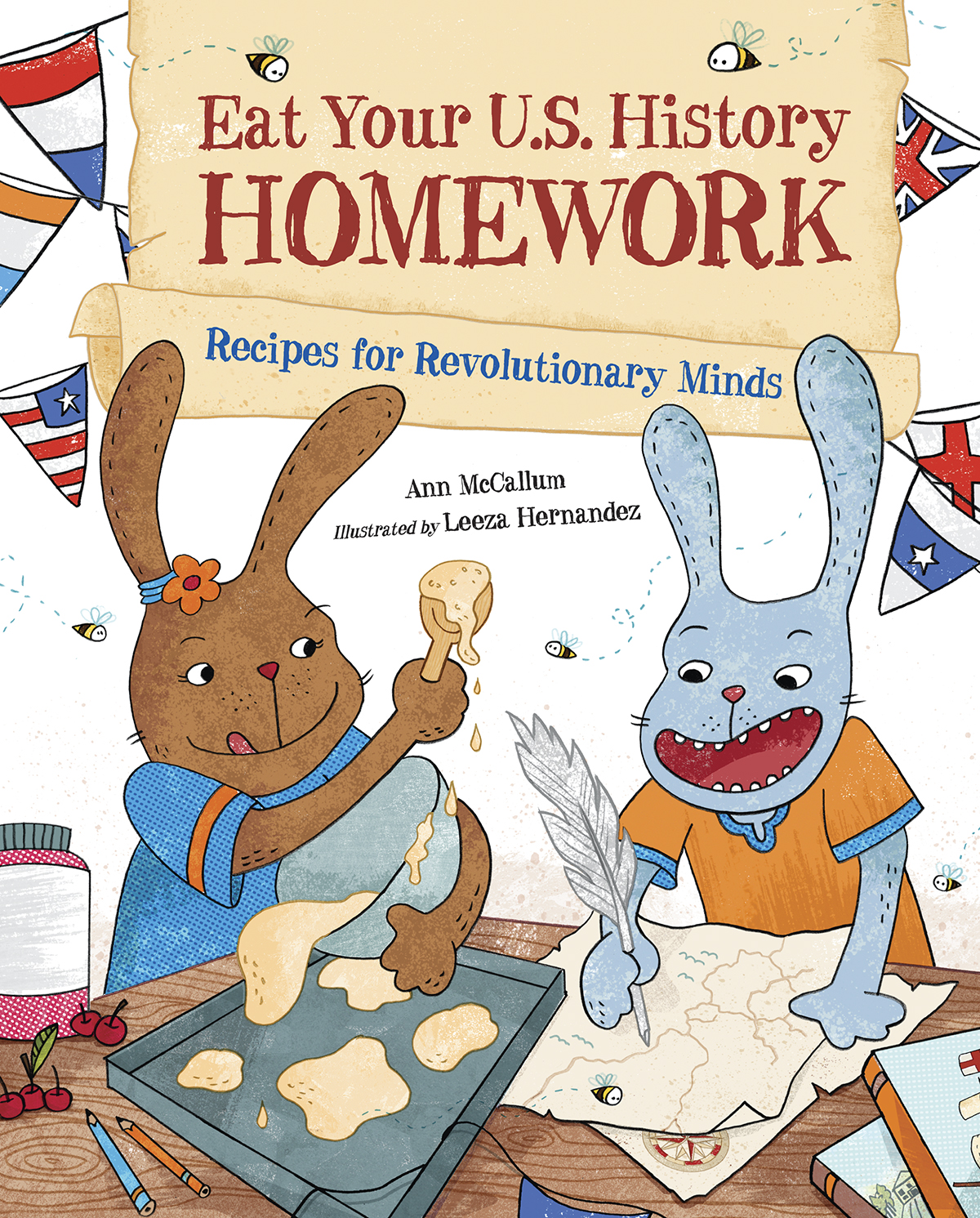
Ann McCallum Books: Eat Your US History Homework (A Schoolhouse Crew Review)


My kids are definitely hands-on learners.  When Jude was younger, he loved doing "arts and crafts" at the end of his lessons, which I think evolved into "I will tolerate this other stuff if you let me make a big mess when I'm done." One of his favorite things for this was to cook.  Little did he realize that he was learning while he was making the mess (and the cookies). The boys aren't really into cut-and-paste any more, but being boys, they have bottomless pits for stomachs.  If there's food involved, they are highly motivated, so that makes Eat Your U.S. History Homework:  Recipes for Revolutionary Minds perfect for our family.  Published by Ann McCallum Books, this short volume incorporates math, science, and history into a fun - and yummy - hands-on experience.

This book features six recipes that may have graced American tables between 1620 and 1789.  Each recipe is coordinated with a brief introduction of a historical event, followed by the recipe itself, and then a second, more in-depth explanation of the event.  The recipes are re-imagined for the modern cook, but retain the spirit of the times they would have first been served.  The recipes  include relatively basic ingredients, even some pre-prepared (like canned pie filling in the Cherry-Berry Grunt), making them easy for kids to make with just a little help from grownups.  This book is intended for mid-elementary students (ages 7-10), but can be used - and enjoyed! - by students of all ages.

The Cherry-Berry Grunt the first recipe we tried.  I admit that we did adjust the recipe a bit --  the pan I had was smaller than the one the recipe called for, so we omitted the berries.  We also had to swap out a few things to make the recipe gluten free.  However...I didn't get any pictures of the finished grunt because it disappeared too quickly!  It was absolutely delicious.  I also think it's a recipe that really personifies the colonial American kitchen - simple but sweet and filling.

A couple of the recipes were vetoed before we began.  Succotash may be a traditional fall/Thanksgiving dish, but even historical accuracy wasn't going to convince the boys to eat lima beans.  True to form, they were more willing to give "Revolutionary Honey Jumbles Cookies" a shot.  These cookies complement the lesson on the Boston Tea Party.  Matthew made these for dessert one night.  Soft, cakey sweets may be rooted in the "veddy veddy British" afternoon tea ritual, but these cookies are a perfect ending to an All-American dinner of BBQ pork with macaroni and cheese.


I was really impressed at how well these cookies adapted to allergy-friendly eating.  Although we swapped out dairy-free margarine for the butter, that usually doesn't affect baked goods too much.  Swapping gluten free flour for all-purpose can sometimes be dicey.  However, these turned out perfectly - using King Arthur's gluten free blend (plus 2 tsp xanthan gum), they were soft and light, with no crumbs at all.  I thought they were a little bland - they probably would benefit from a little vanilla (not in the original recipe), or extra cinnamon in the dredge.  (I recommend doubling the amount for the cinnamon/sugar dip.  We did get 30 cookies from the recipe, but needed to make more dredge to roll them in.) I want to try them (plain) in desserts that call for ladyfingers -- these have a cakey texture that I think would be great as a trifle or tiramisu base.

I enjoyed the recipes that went along with the history events.  We really enjoyed making recipes that helped us understand favorites from long-ago tables, and hope to try some of the other recipes soon.   

The Crew reviewed several books from Ann McCallum Books.  To read their reviews, click on the banner below.


Ann McCallum Books Review


©2012- 2015 Adventures with Jude. All rights reserved. All text, photographs, artwork, and other content may not be reproduced or transmitted in any form without the written consent of the author. http://adventureswithjude.com
Tuesday, November 3, 2015

Standard Deviants Accelerate (A Schoolhouse Crew Review)


Standard Deviants Accelerate is an online supplemental homeschool curriculum.  It allows students in grades 3 through 9 to receive enrichment instruction in nine core courses, and offers AP Exam review and test skills for five specific exams.  To review the program, Crew members received one-year subscriptions to their Homeschool Courses.  For our review, Matthew (grade 9) was the student, and focused on the Biology and US History courses in particular.  I wanted to have Jude work on their grade 3 and 4 math programs, but was unable to because of technical issues (see below).


I know that these courses are meant to be supplemental.  I definitely agree with this, and would not use them as a core curriculum.  Matthew found that the biology lessons really didn't explain what he was learning in his regular course any better.  He thought that it skipped over a lot of information, which contributed as well. I will say that the biology is aimed at grades 7+, so it's possible that this would be better suited to a middle-school student, rather than one taking a full high school course.  I agree with him.  While there is a fairly wide variety of topics covered, they aren't covered in any great depth.  They seemed to amount to a different way of presenting the same information.  Now, I'm the first to say that sometimes seeing things presented differently makes them "click," but he felt that it wasn't really a "new" presentation - it was just another lecture.


As for US History, I felt it was really lacking in a lot of depth. The sections were headlined by broad topics, but I felt like they skipped quite a bit. For example, there was a section on the Presidency.


You can see that instruction ends with Abraham Lincoln.  Considering we are about to elect our 45th president less than a year from now, it seems like stopping with the sixteenth president is a sharp drop.  I would have liked to see more about specific presidents; at the very least, the "gamechanger" presidencies of Franklin D. Roosevelt, John F. Kennedy, and Richard Nixon have each had a huge impact on American history and deserve attention.  The "America at War" sections end with the US Civil War.  Again, I think this is not enough instruction; considering the ramifications of (at least) World War I, World War II, and the Vietnam War on history, these should be included in a high school program (US History is rated for grades 9+). 

I was curious to see how Luke might do with taking some of the AP tests, especially US History. We've done a pretty deep study of American history, and are considering the CLEP exams. I wanted to see how the AP exam compared to the CLEP test. The review was a very brief overview of history, and there were only 5 sample questions in each section (going back didn't generate new questions).  I guess if you got those 10 correct, you knew you'd get at least 10 answers right on the AP exam - if those were among the questions on the test.  I found more sample questions on the tests' example pages than in this program.

Now, back to Jude and why he didn't use the program.  In order to enroll a student in the program, he needs to have his own email address to log in.  For Matthew, this wasn't a big deal, because he has an email account already.  However, at only 8 years old, Jude does not have an email account.  Because my email was already assigned to the "teacher" account, I couldn't use it for him.  Standard Deviants Accelerate is available for use by public/private school students as well, and schools often have the ability to create individual student email accounts, even for younger ages.  (Celia's school participates in a Chromebook program, so even students as young as fourth or fifth grade do have "personal" email addresses.) However, as a homeschooling parent, it just didn't seem practical to create an email/personal online presence for my third grader.

Overall, I wasn't really impressed with the program.  I had hoped it would be more useful for us, because it covered such a wide range of ages and subject.  However, we found it just didn't mesh with our family's needs.

To read about others' experiences with Standard Deviants Accelerate, click the banner below, or follow on Social Media:

Facebook: https://www.facebook.com/SDAccelerate
Twitter: https://twitter.com/SDAccelerate
Google+: https://plus.google.com/+Sdaccelerate/posts
Pinterest: https://www.pinterest.com/SDAccelerate/


Standard Deviants Accelerate Review


©2012- 2015 Adventures with Jude. All rights reserved. All text, photographs, artwork, and other content may not be reproduced or transmitted in any form without the written consent of the author. http://adventureswithjude.com

Tuesday, October 27, 2015

Maestro Classics: The Nutcracker (A Schoolhouse Crew Review)


As much as I love Christmas Carols, the sounds of Tchaikovsky's The Nutcracker evokes the magic of the holiday: images of falling snow, giant Tannenbaum that tower over party guests, and an uncle who is as generous as Father Christmas.  The score is as iconic to the Christmas season as Silent Night and sleigh bells.  Last Christmas, Jude and I worked on a Nutcracker themed unit study, and he was enchanted by a video version of the ballet that included toy soldiers who bravely battled the Mouse King and fairies that danced in the snow.  Maestro Classics has just released a new audio story version of The Nutcracker, and we happily have added it to our holiday collection.

Maestro Classics is a music series created by Stephen and Bonnie Simon to bring quality symphonic experiences to a young audience.  Scores are performed by the London Symphony Orchestra, ensuring an exquisite sound.  Their goal is to make music approachable, and instill a love for it at a young age. The Nutcracker is part of their Stories in Music series, and is suitable for all ages.


The story begins with the overture and and introduction by narrator Jim Weiss.  He gives a summary of the story and both author (E.T.A. Hoffman) and composer (Pyotr Illych Tchaikovsky).   Lush music plays as Weiss animatedly sets the opening scene: excited siblings named Clara and Fritz are awaiting the start of their parents' Christmas party and the arrival of Herr Drosselmeyer and his gifts.  Rich, descriptive language combined with the familiar music transports the listener into the story. Narration flows in and out with the music; once he sets the story, Weiss' voice fades into the background, allowing the listener to imagine the dancers without interruption.

In addition to the CD, there is a 24-page liner notes booklet.  Of course, it contains the standard listing of scenes/tracks.  However, it doesn't end there.  A two-page History of Ballet discusses the origins of ballet as the dance of the 16th century French royal court, and its transformation to the professional ballet companies that so many children dream of joining.  Another section talks about the harp.  Of all the instruments in an orchestra to feature, why the harp?  Because it was one of Tchaikovsky's favorite instruments to feature in a ballet score.  Completing the "academic" features of the book is a biography of composer Tchaikovsky.  Unlike many composers, he was not a child prodigy, and it took years for him to develop his talent to the levels we enjoy today, and we learned a little about his brief life here.  There are also two fun activities included: a word scramble and a crossword puzzle.


We really enjoyed this presentation of The Nutcracker.  It is much shorter than the full-length ballet, clocking in at just under one hour, versus up to twice that for the show. However, it is not missing anything, and all of the familiar pieces are included: the parents' dance, the Mouse King, the dances in the Sugar Plum Fairy's kingdom, and the iconic Sugar Plum Fairy Pas de Deux.  You won't miss any of the story! We enjoyed the narration along with the music; Jude didn't realize that the dancer with all the sweets under her skirts was called Mother Ginger, and the sweets called Polichenelles.  (He had seen seen them in the movie version we had watched, but like most presentations, the story was told only in dance and no explanations.)  With its child-friendly length and adult-quality presentation, this CD is definitely going to be played often in our house this holiday season!


The Crew reviewed both The Nutcracker and Peter and the Wolf.  Click the banner below to read all the reviews, or follow Maestro Classics on Social Media:

Facebook: https://www.facebook.com/MaestroClassics
Twitter: https://twitter.com/MaestroClassics
Pinterest: https://www.pinterest.com/maestroclassics/
YouTube: https://www.youtube.com/user/maestroclassics


Maestro Classics Review


©2012- 2015 Adventures with Jude. All rights reserved. All text, photographs, artwork, and other content may not be reproduced or transmitted in any form without the written consent of the author. http://adventureswithjude.com

Institute for Excellence in Writing: Resource Set (A Schoolhouse Crew Review)


IEW Resources - Timeline of Classics, A Word Write Now, and Teaching with Games Review

Institute for Excellence in Writing is one of the most respected names in homeschooling.  Last year Luke and Matthew started using Fix It! Grammar, and I loved it so much that when Celia needed some extra help, we ordered a different level for her.  I've had my eye on a few of their other programs, but was intrigued by their resource programs.  I was very happy to review copies of Timeline of Classics: Historical Context for the Good and Great Books, A Word Right Now: A Thematic Thesaurus for Stylized Writing, and a Teaching with Games set.


Timeline of Classics


Timeline of Classics was the resource I was most looking forward to, because we don't use pre-set history and literature curricula.  Instead, we have been using a timeline for events for our spine, and then adding in resources that have been either set in that era or written about that era. This way, I can choose books and videos that I think are going to be most engaging and that the boys will be able to really use to their full advantage.  However, there is one major disadvantage to creating our own courses -- it's a LOT of work finding great resources.  I am loving this compilation, because it covers from history from Early Civilizations (c. 5000 BC) to post 9/11 (2001) and spans nearly 90 pages, so nearly every major topic is covered.  The list is divided into four epochs: 

Ancients - 5000 BC - AD 400
The Middle Ages - AD 400 - 1450
Renaissance and Reformation  - 1450 - 1850
The Modern World - 1850 - present

Resources are presented in chronological order, and the spiral binding makes it really easy to hold your place - you don't have to constantly re-search for your next resource.  A date/event leads off the listing, so that you can easily correlate what you're studying with the timeline. The listing then suggests appropriate titles (both books and film), and lists identifying characteristics of the resources.  If it's a book, the author and/or translator is listed; if it's a film, the headlining actor(s) are listed to help identify a particular rendition.  (For example, for the 1757/French and Indian War era, this suggests the film The Last of the Mohicans, specifying the 1936 Randolph Scott version, rather than the more recent Daniel Day Lewis that many might be more familiar with.)  This makes integrating history and literature so much simpler, because it provides both history studies as well as classic literature.


Finally, the list codes what age level the resource is most appropriate for.  I really appreciate this feature because it tells me which child the resource is appropriate for so that the boys are neither overwhelmed nor bored.   When I'm working with Jude or Damien, I want to make sure that I'm not choosing something that isn't appropriate for their ages/levels, but when creating a high school level course that is going to prepare Luke and Matthew for college, I want to make sure that they are being adequately challenged.  This resource, while not exhaustive, will help me choose some really good books for them and make my job as "curriculum coordinator" much easier.

A Word Write Now


A Word Write Now is probably going to be one of the most used resources in our house.  In addition to the assignments I give the boys, Celia has at least one writing assignment every other week. This book contains hundreds of vocabulary words that help new writers.  At a first glance, one might think, "Well, why not just use a thesaurus?"  The problem with just using a thesaurus - especially for new writers - is that sometimes the list of suggestions is overwhelming.  When you're looking to exchange a banal word for a novel concept, sometimes there are just too many words to choose from, or the suggestion list includes words that aren't quite right.  We've had some arguments over "But it's on the list!!" even though the alternative may be a word that is a synonym for a different definition. What makes this resource unique is that it sorts words to concept and part of speech.


 Three sections -  Character Traits, Descriptive Words, and Words for Movement and the Senses - along with an Appendix that includes transitions - help you find the word you're looking for.  It also pairs the words with context examples from classic literature and essays, so that you can see examples in use and understand that it's not just the word but how it is used that creates its effectiveness.  Among the featured authors are William Shakespeare, Will Rogers, Mark Twain, and Claude Monet, showing that bold, rich language is not limited to "books" but is important in all writings. One of my favorites is this excerpt from Paul Bunyan by Steven Kellogg:

"To solve the muddle, Paul built a colossal flapjack griddle.  The surface was greased by kitchen helpers with slabs of bacon laced to their feet."

The accompanying example shows how important word choice is to imagery.  The Appendix includes transition words, as well as definitions and examples of literary device that will help the student become adept at word usage in writing.

 At Celia's school, the same teacher teaches all of the middle schoolers writing.  It's the type of book I can see Mrs. S "strongly suggesting" that the 6th graders acquire, because it will prove itself useful throughout their three years with her with her and beyond. This resource will benefit both new writers looking to enhance their essays and poems as well as more seasoned writers who just find themselves at a loss for a specific word. An older writer might look at this and feel that it is too basic for him, but I can guarantee that it's perfect for all ages.  (I admit that I even found myself searching for a word that explained what I wanted to say more effectively for this review, and I found the word I was searching for in this book!)

 Teaching with Games


The third resource we received was the Teaching with Games set.  I thought I would really like this one because I really think that games can be a great way for children to learn.  Fred Rogers is often quoted as saying, "Play is often talked about as if it were a relief from serious learning. But for children play is serious learning. Play is really the work of childhood."  I believe that play should include learning games, because the novelty of a "game instead of bookwork" helps students see learning as something fun, rather than a chore.  Children also often innately competitive and want to win.  The competition motivates students to put forth their best efforts, and gives the teacher a way to evaluate learning without the stress of "a big exam".  We've recently added several games to our homeschool, and I was hopeful that this resource would give us some great ideas for more.  The 3-disc DVD set was a recorded workshop, and demonstrates how to adapt the games in the accompanying book to multiple subjects and student levels.

I liked this resource, and thought it had a lot of great ideas.  Most games were geared toward elementary students.   The DVDs were helpful in showing ways to use the games, and got me thinking about how to tweak them for other topics.  However, the program ultimately wasn't particularly useful for our family.  Often the games suggested were difficult, if not impossible, for a single homeschool student to play alone.  Most required 2-4 players, so it seemed almost unfair for one of the two to be the teacher, and the boys are too far apart in age/level to be able to play most of the suggested games together.  Although there are a few ideas that I think we could adapt (especially the "Make As You Teach" games that easily translate to study guides), I think this resource set is better suited to group learning (a traditional classroom, a co-op, or several children close in age/studying the same topics) than our family.


Once again, IEW has impressed me with the depth of their resource library.  The Timeline of Classics book is great for finding excellent literature and film sources to help bring a historical era or event to life, and A Word Write Now is an idea resource for writers.  Though I think Teaching with Games is better suited to group schoolers, rather than single-student-grade home schoolers, it still has some good ideas and is a worthwhile addition to a teaching library.   I think all of these would be a useful addition to resource shelves!

In addition to the Resource Set, members of the Crew had the opportunity to use IEW's Phonics Zoo program.  Click the banner below to read the reviews, or follow IEW on social media:
 
Institute for Excellence in Writing Blog
Facebook
Pinterest
Vimeo
Twitter
YouTube
Google+
Instagram


IEW Review


©2012- 2015 Adventures with Jude. All rights reserved. All text, photographs, artwork, and other content may not be reproduced or transmitted in any form without the written consent of the author. http://adventureswithjude.com

Friday, October 23, 2015

Koru Naturals Trio (A Schoolhouse Crew Review)


Koru Naturals is a company that brings select hair and body care products native to New Zealand to the American market. Earlier this year, I discovered their Emu Oil and Lanolin Lip Balm, and was impressed with their quality and effectiveness.  When I had another chance to try other Koru products, I was thrilled.  This time, I received Skin Clear Creme, Manuka Honey & Propolis Soap, and Emu Oil and Blue Tansy Cream.

Skin Clear Creme


Let me start by saying I'm a bit of a cosmetic junkie.  I have sensitive skin (thank you, Irish relatives),  melasma (thank you, children), and moderate eczema (thank you, cranky immune system).  Despite the calendar saying I'm not going to see 40 again, acne is still a pesky nemesis, too.  I'm not sure how many products I've tried in the hopes of finding something that would help at least one of the problems. I've pretty much given up on finding something that works for everything, and happily trade wrinkle creams in the hopes of ditching the often deep, cystic acne.  I've tried creams, lotions and ointments from drug store, department stores, mail-order companies, and even prescriptions. It's safe to say that I was pretty skeptical when I received this one, but I figured it was worth a try.

Most lotions and potions tend to make my acne worse.  Even ones that were specifically made for acne would wind up clogging pores and leaving me with more problems. What makes this one so much better for me? Frankly, I don't know...but I'm not sure I care.  I can tell you what makes this different from every one I've used before is the ingredients.

This cream contains manuka honey, which has antibacterial and anti-inflammatory properties.  It contains a number of emollient oils - coconut, grapeseed, shea - that the allow the skin to hold onto moisture, which in turn helps keep the skin from producing more oil and clogging.  There are also several essential oils that also help to balance the skin. (Note: some of these are not safe for expectant moms.)

I think another thing that makes this work for me is how little I need to use.  There's a fine balance between "enough to cover your skin," and "so much that it's just glommed on in some places to make it stretch to others," and that's something I've struggled with when using other products.  This is how much of this cream you need at a one time.


Seriously.


Ignore the fact that these are probably the worst selfies on the planet.  But you can see how a little bit goes a long way.  You can also see the acne healing, compared to this picture from just before I began using this cream. My skin is definitely still healing, but the near-constant cysts at the bottom of my face are resolving, and the scaling from the eczema between my eyes is lessening.


When Neal and I went away for our anniversary, I transferred some to a TSA-approved container (it comes in a 4 oz tin). I filled it to just shy of the the very top, because I was concerned about running short.  After using this twice a day for four days away, and then for a week at home before I remember to snap a picture, look how much was *still* left in the container.


This is going to last me a long time!  I'm at the point where I don't want to spend a ton of money on skin care products, but if they work, then I'm willing to make the investment.  One tin (US$19.20) will easily last me four to six months, making it a better value than just about anything I've tried.

Manuka Honey and Propolis Soap


This glycerin-based soap contains anti-bacterial/anti-inflammatory manuka honey, but also a second active ingredient, propolis.  Propolis is a resin-like material from the buds of poplar and cone-bearing trees, and usually obtained from beehives.  It's been used since ancient Egyptian times for its anti-bacterial, anti-viral, and anti-fungal properties.  I'm probably one of the staunchest advocates of Western medicine, considering it has saved my children's lives quite a few times. However, I'm also intrigued by natural ingredients that have been used throughout time because they worked, even if the users weren't quite sure why.  Modern studies have shown that propolis' anti-viral properties work very effectively for resolving cold sores (caused by the herpes simplex virus).

Coming into cold and flu season, this is a soap that will definitely get heavy use.  Some studies have shown that propolis does not contribute to microbe resistance, and actually works effectively at eliminating resistant microbes.  While ordinary soap and water are often sufficient to kill bacteria and viruses, I'm intrigued at the idea of using something that could possibly help increase our odds of avoiding being sick this winter.  While it also makes a kiddo feel crummy, viruses throw off everything in our house; a simple cold usually leads to asthma flares while stomach viruses can land Celia and Damien in the hospital because of their nutritional status.  Anything I can do to avoid "Winter Crud" is worth a shot!  It's really moisturizing as well, making it great for helping keep the drying and cracking that accompanies frequent hand-washing at bay.

Plus, it just plain smells good! It has a light floral scent with honey tones. It's the kind of scent where you think "Maybe I need to wash my hands anyway..." just to keep it fresh on your skin.  It's a bit pricey (US$8.90 for a 4 ounce bar), but long-lasting.

Emu Oil and Blue Tansy Cream


Gravity and I are not good friends.  I'm probably the best example of how gravity wins every time you try to oppose it.  A few times, it's even resulted in broken bones.  Unfortunately, while the fractures healed, I still am left with traumatic arthritis in my wrists and elbows.  It's not debilitating, but it's still painful.  Heat is my usual treatment for the ache, but when the weather is particularly damp, a couple of acetaminophen or ibuprofen get added to the mix.  Usually I avoid topical creams because they don't really help and smell terrible.

This herbal cream contains emu oil and arnica, both anti-inflammatory, blue tansy, which can increase blood flow to where it's applied and decrease pain, and methylsulfonylmethane (MSM), which is both anti-inflammatory and analgesic.  Other essential oils that have been used for arthritis, such as peppermint and lavender, are included in this cream.  A warning: If you are pregnant or nursing, do not use this product.  (Arnica and blue tansy are both potential emmagogues and can cause problems.) This product is in a coconut oil and aloe base, making it spread and absorb easily.

I'm open to considering essential oil/herbal treatments for certain conditions, but am very hesitant to do a lot with them because it's hard to separate reality from hype.  Koru recommends using this at least twice daily, but I started with using on an "as needed" basis, and it did seem to work, even with more irregular use.  Did it work because of something in it, or was it a placebo effect?   After a lot of internet reading about each of the ingredients, I've come to the conclusion that it probably is the cream itself that helps, not just the application process.  Each of the ingredients has a history of treating inflammation and pain, so it makes sense to me that when combined, they really do work together to treat the problem.

In addition, this cream has no odor.  The essential oils provide a light but fresh scent -- I don't smell like menthol or camphor or any other "medicine-y" smell that most topical creams have.  I've begun using it daily at night, and that does make a difference in pain management, especially now that our weather is getting cool and often damp.  Daily use helps keep ahead of the aches, rather than constantly working to get it back under control.  If it's a bad day, I'll add a second application during the day, and that is sufficient to rein it in.  Obviously, how long it lasts depends on how frequently and how widespread you use it, but a 4 ounce jar ($14.80) will likely last me 2-3 months of daily use on both wrists and one elbow.  It's cut my need for oral painkillers down as well, which is definitely a good thing!

Koru Naturals has become one of my favorite personal care companies. I'm really happy to have found a moisturizer that works well with my skin, and an anti-inflammatory cream that helps treat my arthritis.  However, even ranking third among these products for me doesn't mean the soap isn't great, too!  The Crew reviewed several Koru Naturals products, including other skin care products and hair care items, so make sure to click the banner below to find out about all of them!  You can also follow Koru Naturals on social media:

Facebook: https://www.facebook.com/korunaturals
Pinterest: https://www.pinterest.com/korunaturals/


Koru Naturals Review


©2012- 2015 Adventures with Jude. All rights reserved. All text, photographs, artwork, and other content may not be reproduced or transmitted in any form without the written consent of the author. http://adventureswithjude.com

Thursday, October 22, 2015

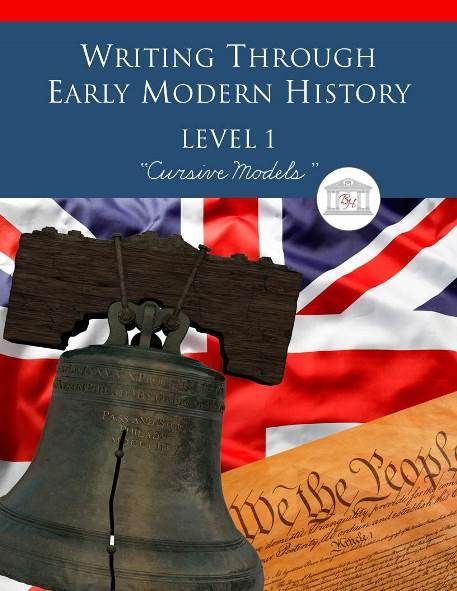
Brookdale House: Writing Through Early Modern History (A Schoolhouse Crew Review)

This post contains affiliate links. Please see our PR & Discosure page for full details. 

Brookdale House is a curriculum provider that specializes in Charlotte Mason style programs. Their elementary-level history curriculum is titled Write Through History, and encompasses Ancient, Medieval, Early Modern, and Modern History Eras.  Because it is designed for students in grades 1 through 5, it has been further divided into two levels.  Level 1 is geared to first and second grade students, while Level 2 contains text more appropriate for third through fifth graders.  Jude has been working with the Level 1 Writing Through Early Modern History program.

Are you familiar with the Charlotte Mason style of teaching and learning?  It's named for the founder of the movement.  Miss Mason was a late 19th century educator who sought to remove the idea of learning being "only during the school years." She strove to teach students to create a lifestyle of learning, where they didn't only learn during their time in a desk but through every experience in life.  A hallmark of her teaching style was to use so-called "living books," rather than dull, lecture-style textbooks.  Her favorite books were books written by a single author who immersed himself in the subject, creating a well-rounded, well-researched study on a topic, rather than texts that tended toward a buffet-style overview.  She also refused books that watered topics down for children, calling them "twaddle."   (Note: Charlotte Mason-style learning is not about handing your child an adult text and expecting him to comprehend it.  There is a difference between "level appropriate" and "dumbed down".) She believed that children were born as innately intelligent persons and should be treated as such; they would rise to whatever was expected of them, so therefore expectations should be high. By reading quality texts (both prose and poetry) and copying passages from them, the student would simultaneously learn reading, the subject matter, composition, grammar, spelling penmanship.

Writing Through Early Modern History
is a clearly Charlotte Mason style program.  It presents historical texts that are clearly not written at a child's level, but that are taken from original texts and strong translations. This particular section of the program covers early modern history from about 1600 to 1850 AD.  While this is a history program, it is not a chronology of history.  It contains historical narratives, tales from the Brothers Grimm, poetry from or about early modern history, and cultural folk tales.  The program is over 300 pages, and meant to last the course of at least a full school year (8 months).  While you could print the entire PDF at one time and bind it, we found that it was easier to print one section at a time.  (Use the "Find" feature to go to the page number in the table of contents, and then just print the block corresponding pages.)


It takes a unit-study approach to a text, working with it over the course of a five-day schoolweek.  Yes, they are very short tasks, but that is part of the method; lessons should not be overly long and focus more on quality of work than quantity or time spent; Miss Mason's view was that it was better to form six letters correctly than write an entire sloppy paragraph. I like how each option was given a(n approximate) time in history, so that an entire moment in history could be studied nearly simultaneously. For example, "On a Circle" by Johnathan Swift was written at approximately the same time as William Penn's founding of Pennsylvania; where there is no date-corresponding text, you can choose to skip to a folk tale or poem for diversity.  It allows you to easily intersperse different styles of texts to avoid becoming fatigued with one genre.

A benefit to a split-grade level design is the lower level texts are simpler, so it was more appropriate for Jude's age and reading level.   They were still challenging, however.  This paragraph is taken from a passage about Thomas Jefferson, one of Jude's personal heroes:


You can see the vocabulary is not "made simpler" -- the innkeeper mistakes Vice President Jefferson for a "clodhopper" and calls himself a "dunce" for his behavior.  Through this single page, Jude has been introduced to at least four new-to-him vocabulary words, (clodhopper, dunce, lodging, bespattered).  In addition, he's learned two important character lessons -- to not judge one by his appearance, and while an apology is may be sincere, there are consequences to actions.


After each passage, there is a page for the child to write his comprehension of the questions.  A true CM approach would be for the student to summarize a passage, to gain experience writing in complete sentences and paragraphs.  Because Jude is just beginning to work in sentences, we utilized the study questions at the back.  I would ask him a question, and he would write an answer.

The program is available in two writing styles - manuscript and cursive - to provide the penmanship practice that is appropriate for your student. Although we chose the cursive option so Jude could work on that writing style, both cursive and comprehension are still emerging skills for him. We compromised with manuscript writing for the comprehension section, and cursive for copywork.  These are his answers to questions about The Four Friends by William and Jacob Grimm.


There are two handwriting passages for each lesson.  The first one is meant to be an outright copy.


The second one is ideally meant to be used as a dictation piece.  Through dictation, students learn to sound out spellings where possible, and listen for where punctuation should be.  We opted to used these a copy pieces still, because Jude is still modeling cursive form.   He is still learning spelling, where punctuation belongs, sentence formation, etc. -- just visually instead of through auditory learning.


If you asked me what our homeschool style was, I'd agree that we have Charlotte Mason tendencies - preferring expert books and multisensory learning - but we are definitely not purists.  While I agree with the idea of children rise to expectations, our philosophy is more "confidence first, challenge second."  As much as we enjoyed the topics of the program, Jude really struggled with the length of the passages.   Generally, they were two to three pages of fairly small text, so if you're considering this program,  the first question I would ask is "Can my child focus intently for 5-10 minutes of reading, and grasp concepts from what he has just read?"  There are no pictures, no visual cues, just pure reading and comprehending. The passages challenged Jude.   If I read the selections aloud, comprehension is almost impossible for him because of his learning disabilities. He does better with reading aloud himself because he is visually engaged, but sometimes he became more focused on "Am I done yet? How much more?" than the content of the text.  I think that while this program's content is designed to content that is age-appropriate for a six-year-old, it is not necessarily going to be skill-appropriate just because he's six. (Jude is eight, on a first grade reading level.)  I would say that a child really needs to be at the upper levels of emergent reading to be able to do this program well because it does involve so much language coordination.

There is also a lot of writing.  That was no surprise, because of the teaching style, but the passages were longer than Jude was used to - he was used to a single medium-length sentence.  He was torn between wanting to make them shorter and not leaving them unfinished.  The idea is that by modeling good sentences, students will innately learn how a sentence should be written.  A grammar study is also included in the program. It focuses on one part of speech each month, allowing a solid understanding of one concept before adding the next.


This is a program we will likely stick with for Jude, but perhaps going a slower pace. I would like to see him gain confidence in one of the areas of the program before we pick up the pace and really challenge him with the others.  We will probably stay with a question-and-answer format for comprehension, focusing on answering one or two of the questions with a full sentence before expanding into writing proper paragraphs.  I'll also likely rewrite the copy sentences into smaller chunks for him to work with, so he is only seeing one at a time and not becoming anxious that there "should be" more than that one completed and slowly lengthen them into longer passages.   I was considering using this program with Damien next year, as he will be in first grade, but I don't think he will be developmentally ready for it by fall (even if we switched to the manuscript program).  I'll put it aside until he has both the behavioral and language skills to succeed, and likely begin with the same modifications I'm trying for Jude rather than just saying, "Ok, you're in first grade, here you go!"

The Crew reviewed several programs from Brookdale House.  Click on the banner below to see the full listing of these programs (and reviews for each), or follow Brookdale House on social media:

Twitter:  https://twitter.com/BrookdaleHouse
Facebook:  https://www.facebook.com/brookdalehousehomeschool
Pinterest:  https://www.pinterest.com/BrookdaleHouse
Google+: https://plus.google.com/107691583736742187981/videos


 Brookdale House Review


©2012- 2015 Adventures with Jude. All rights reserved. All text, photographs, artwork, and other content may not be reproduced or transmitted in any form without the written consent of the author. http://adventureswithjude.com
Related Posts Plugin for WordPress, Blogger...
Pin It button on image hover