Showing posts with label holidays. Show all posts

Friday, November 4, 2016

Homeschool Legacy: Thanksgiving with the Pilgrims (A Homeschool Crew Review)

I'm always torn between trying to keep up with "regular" school work and adding in "fun" programs.  It's tricky for us to balance new projects with our usual lesson plans, because when we digress from the routine, it can be hard for us to get back into it, but I hate to "add on" too much because then we have rebellion. One of our successes from last year was a unit study from Homeschool Legacy -- it's once-a-week format struck the right balance for us.  The boys are studying American history, so combined with the time of year, it seemed an excellent opportunity to try out their five new Once-A-Week Micro-Study offerings, Thanksgiving with the Pilgrims.


What makes a Micro-Study different from Homeschool Legacy's traditional Once-a-Week Studies? The easiest way would be to call them "Studies Light," but I hesitate to leave it at that because that connotates they are more "fluffy," with less substance.  By no means! These studies are of equal quality to the full-length ones, but the coursework is less intense.  It can be completed quickly -- each week's assignment takes about 90 minutes, either all in one afternoon or spread across three days, as compared to their regular studies that can be used daily or take a full school day to complete a single week's lesson.
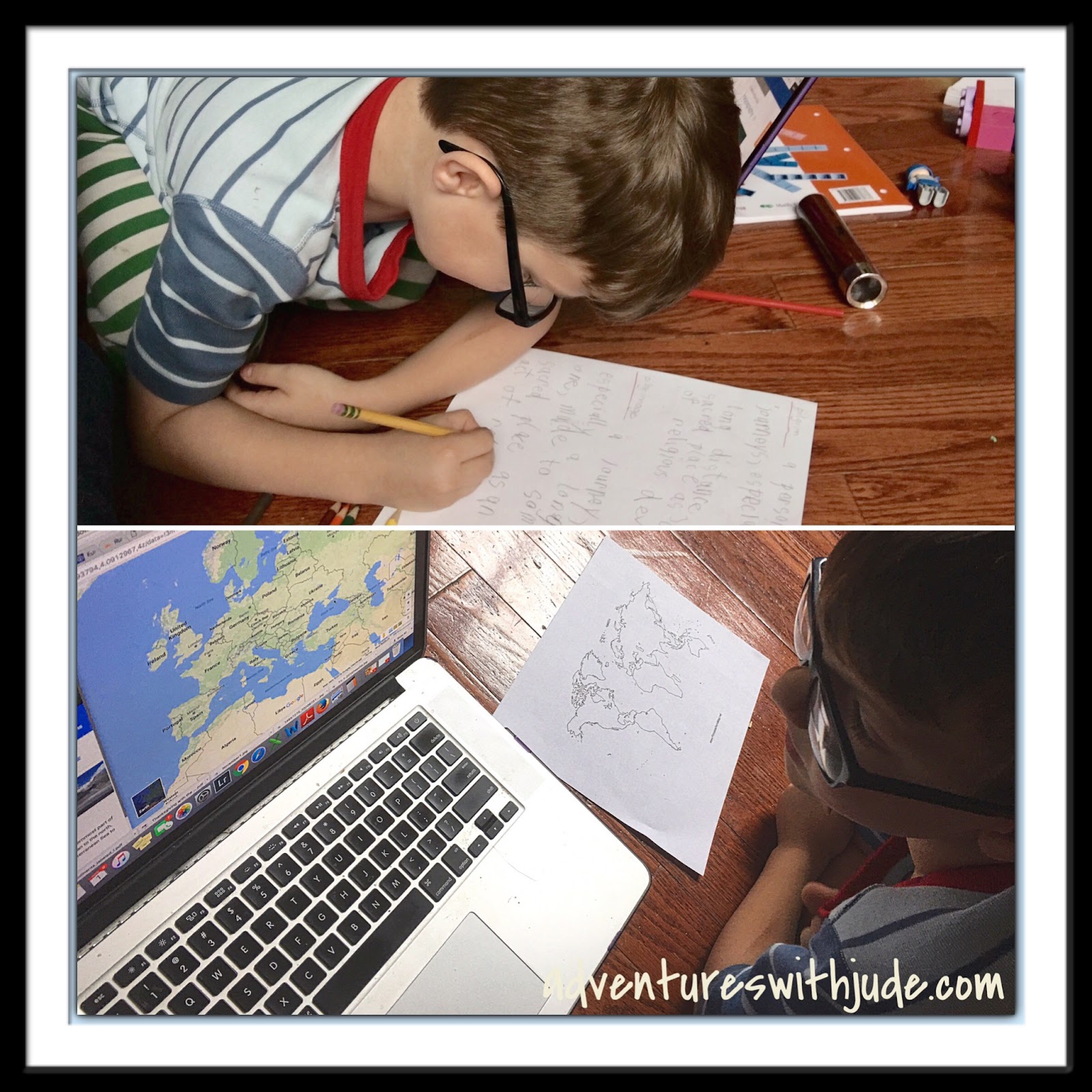

The Micro-Studies are geared towards students as young as first grade and provide more of an "overview exposure to the topic" than the in-depth study of Homeschool Legacy's traditional program.  The lessons still can be spread across six weeks,  but we found that since we could complete a week's worth of tasks in a day, it was easy to do the entire program's activities in a little over a week -- perfect for us for a holiday-themed unit study! The only task we couldn't finish in a week was the suggested reading. There are three books listed (choose one, two, or all), and at 80+ pages each; since we couldn't complete even one in under a week, we opted to just continue with it as our daily read-aloud until we were finished.   However, we've been able to get back to our "regularly scheduled afternoon work" quickly -- important for boys who think that four days without their usual work list means they are done with grammar forever!

Each day's work consists of reading about a half page of information about the Pilgrims and completing an activity that goes along with the passage.  The passages are easy to read -- they score at Grade 4.4 on the Flesch-Kinkade grade level.  This puts them right in the middle of Homeschool Legacy's target of Grades 1 through 8 for these studies.  Jude (grade 4) read them easily, and even Damien (reading at a 2nd grade level) had few difficulties.  Most of his stumbles were actually over  Native American words (names) like "Tisquantum" and "Massasoit" that even I had to slow down to read.

 The activities range from practicing map reading skills to stringing popcorn and cranberries.  The popcorn and cranberries actually highlight a difference between Puritan life and modern celebrations of Christmas; we learned that the Puritans spent Christmas Day, 1620 building homes.  Why?  Because to them, it was just a Monday, and the day after the Sabbath.  They didn't celebrate Christmas as a holiday! (The boys decided they wouldn't have been so happy to leave the Netherlands -- and Sinterklass -- behind to build houses in America!)


Micro-studies from Homeschool Legacy are available as downloadable files.  This means that many of the activities are hyperlinked for easy study -- just click the highlighted text and poof! you are where you need to be.  While we actually changed what we did for the map skills activity and opted to use Google Maps, I appreciated the hyperlinked virtual field trips to Plimoth Plantation (and yes, that's now going on our "real life field trip" bucket list!)  Yes, I could have googled it and found the link, and I probably would have pinned it on Pinterest, but it was nice to not have to find it when we were up to that part - we could just click and keep on going!


 My only complaint is that there isn't quite as much "come back next year" potential as the full-length studies.  I think we could probably do another Thanksgiving with the program if I added more research to it as they got older -- for example, instead of just mapping the towns in England and the Netherlands, I would consider adding a little bit of "tell me about those countries," or "look up more about the Massasoit tribe that helped the Pilgrims."  There are several other Micro-Studies, but given the choice, I would invest in the full-length Native America study versus the Many Nations Micro-Study.  I would love to see a full-length Thanksgiving study, along the order of their Christmas Comes to America, to be able to circle back to the holiday each year and study it a little more deeply each time.

Overall, we enjoyed this short unit study. It was enough information that the boys were excited to learn, but not so much that it was overwhelming for them, and it fit into our schedule nicely.  I'd call it a success when both mom and student are happy!

For more about Homeschool Legacy, follow them on Facebook.  You can also read about the other studies the Crew has been working on by clicking the banner below.


Once-a-Week Studies {Homeschool Legacy}


Crew Disclaimer

©2012- 2016 Adventures with Jude. All rights reserved. All text, photographs, artwork, and other content may not be reproduced or transmitted in any form without the written consent of the author. http://adventureswithjude.com

Tuesday, October 27, 2015

Maestro Classics: The Nutcracker (A Schoolhouse Crew Review)


As much as I love Christmas Carols, the sounds of Tchaikovsky's The Nutcracker evokes the magic of the holiday: images of falling snow, giant Tannenbaum that tower over party guests, and an uncle who is as generous as Father Christmas.  The score is as iconic to the Christmas season as Silent Night and sleigh bells.  Last Christmas, Jude and I worked on a Nutcracker themed unit study, and he was enchanted by a video version of the ballet that included toy soldiers who bravely battled the Mouse King and fairies that danced in the snow.  Maestro Classics has just released a new audio story version of The Nutcracker, and we happily have added it to our holiday collection.

Maestro Classics is a music series created by Stephen and Bonnie Simon to bring quality symphonic experiences to a young audience.  Scores are performed by the London Symphony Orchestra, ensuring an exquisite sound.  Their goal is to make music approachable, and instill a love for it at a young age. The Nutcracker is part of their Stories in Music series, and is suitable for all ages.


The story begins with the overture and and introduction by narrator Jim Weiss.  He gives a summary of the story and both author (E.T.A. Hoffman) and composer (Pyotr Illych Tchaikovsky).   Lush music plays as Weiss animatedly sets the opening scene: excited siblings named Clara and Fritz are awaiting the start of their parents' Christmas party and the arrival of Herr Drosselmeyer and his gifts.  Rich, descriptive language combined with the familiar music transports the listener into the story. Narration flows in and out with the music; once he sets the story, Weiss' voice fades into the background, allowing the listener to imagine the dancers without interruption.

In addition to the CD, there is a 24-page liner notes booklet.  Of course, it contains the standard listing of scenes/tracks.  However, it doesn't end there.  A two-page History of Ballet discusses the origins of ballet as the dance of the 16th century French royal court, and its transformation to the professional ballet companies that so many children dream of joining.  Another section talks about the harp.  Of all the instruments in an orchestra to feature, why the harp?  Because it was one of Tchaikovsky's favorite instruments to feature in a ballet score.  Completing the "academic" features of the book is a biography of composer Tchaikovsky.  Unlike many composers, he was not a child prodigy, and it took years for him to develop his talent to the levels we enjoy today, and we learned a little about his brief life here.  There are also two fun activities included: a word scramble and a crossword puzzle.


We really enjoyed this presentation of The Nutcracker.  It is much shorter than the full-length ballet, clocking in at just under one hour, versus up to twice that for the show. However, it is not missing anything, and all of the familiar pieces are included: the parents' dance, the Mouse King, the dances in the Sugar Plum Fairy's kingdom, and the iconic Sugar Plum Fairy Pas de Deux.  You won't miss any of the story! We enjoyed the narration along with the music; Jude didn't realize that the dancer with all the sweets under her skirts was called Mother Ginger, and the sweets called Polichenelles.  (He had seen seen them in the movie version we had watched, but like most presentations, the story was told only in dance and no explanations.)  With its child-friendly length and adult-quality presentation, this CD is definitely going to be played often in our house this holiday season!


The Crew reviewed both The Nutcracker and Peter and the Wolf.  Click the banner below to read all the reviews, or follow Maestro Classics on Social Media:

Facebook: https://www.facebook.com/MaestroClassics
Twitter: https://twitter.com/MaestroClassics
Pinterest: https://www.pinterest.com/maestroclassics/
YouTube: https://www.youtube.com/user/maestroclassics


Maestro Classics Review


©2012- 2015 Adventures with Jude. All rights reserved. All text, photographs, artwork, and other content may not be reproduced or transmitted in any form without the written consent of the author. http://adventureswithjude.com

Tuesday, November 25, 2014

A Thankful Nation: The History of Thanksgiving


Luke's American Adventures: The Story of American Thanksgiving

Thanksgiving in the United States is a unique national holiday. It honors no group of people, as Presidents’ Day or Memorial Day do, nor does it celebrate a pivotal event in history like Independence Day (July 4th and the signing of the Declaration of Independence) or Patriot’s Day (memorializing the horrific events of September 11, 2001). The fourth Thursday in November is commonly celebrated with families around a groaning dinner table crammed with favorite family dishes and turkey at its center, parades followed by football on TV, and planning Black Friday shopping with the precision of General Eisenhower coordinating Operation Neptune's landings at Normandy. Where did this holiday come from, and how did it grow to such an iconic celebration of Americana?

Colonial America and the Early Republic Years


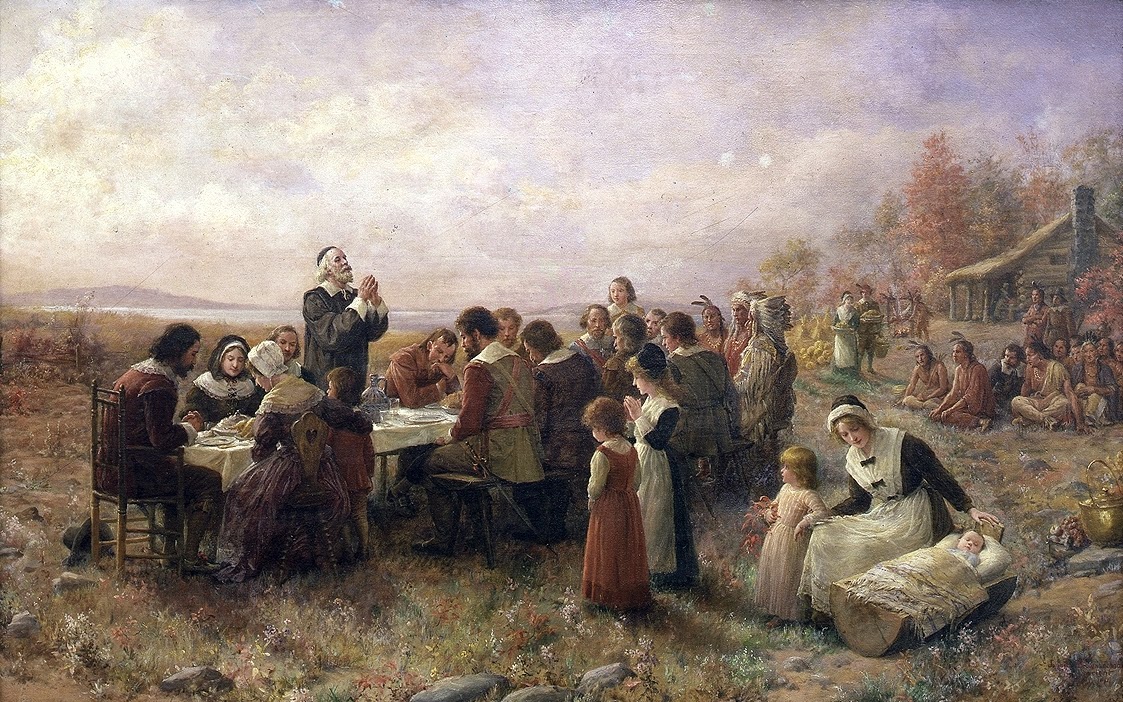
Native Americans had held ceremonies to give thanks for many occasions: successful harvests, the hope of a good growing season in the early spring, and other good fortunes such as the birth of a child. Giving thanks was, and still is, the primary reason for Native American ceremonies or celebrations. The Pilgrims, the first colonists in New England, were also accustomed to regularly celebrating "thanksgivings"—days of prayer thanking God for blessings such as military victory or the end of a drought. In the late fall of 1620, the Pilgrims arrived in America and found themselves horribly unprepared for the New England winter; more than half their party died before spring. After the thaw, they befriended some local natives who taught them how to survive in this new land. 90 Native Americans and 53 Pilgrims shared in the first "American" Thanksgiving,  a three-day feast in the fall of 1621 celebrating friendship and a bountiful harvest.

First Thanksgiving
The First Thanksgiving (1914)
Jennie A. Brownscombe
U.S. Public Domain
 
Days of thankfulness continued during the American Revolution. The Continental Congress issued several proclamations declaring a Day of Thanksgiving, often coinciding with military victories. These were not specifically national celebrations, but generally observed only in the areas local to the battle. In 1789, a newly inaugurated George Washington called for a National Day of Thanks to celebrate both the end of the war and the recent ratification of the U.S. Constitution. Both John Adams and James Madison issued similar proclamations of their own, but fellow Founding Father Thomas Jefferson felt the religious ideals surrounding the event were out of place - the nation had been founded on the separation of church and state, so thanking God for blessings was out of place with a federal holiday. There was no preclusion to local municipalities establishing events, but because of this philosophy, no formal national declarations were issued after 1815.

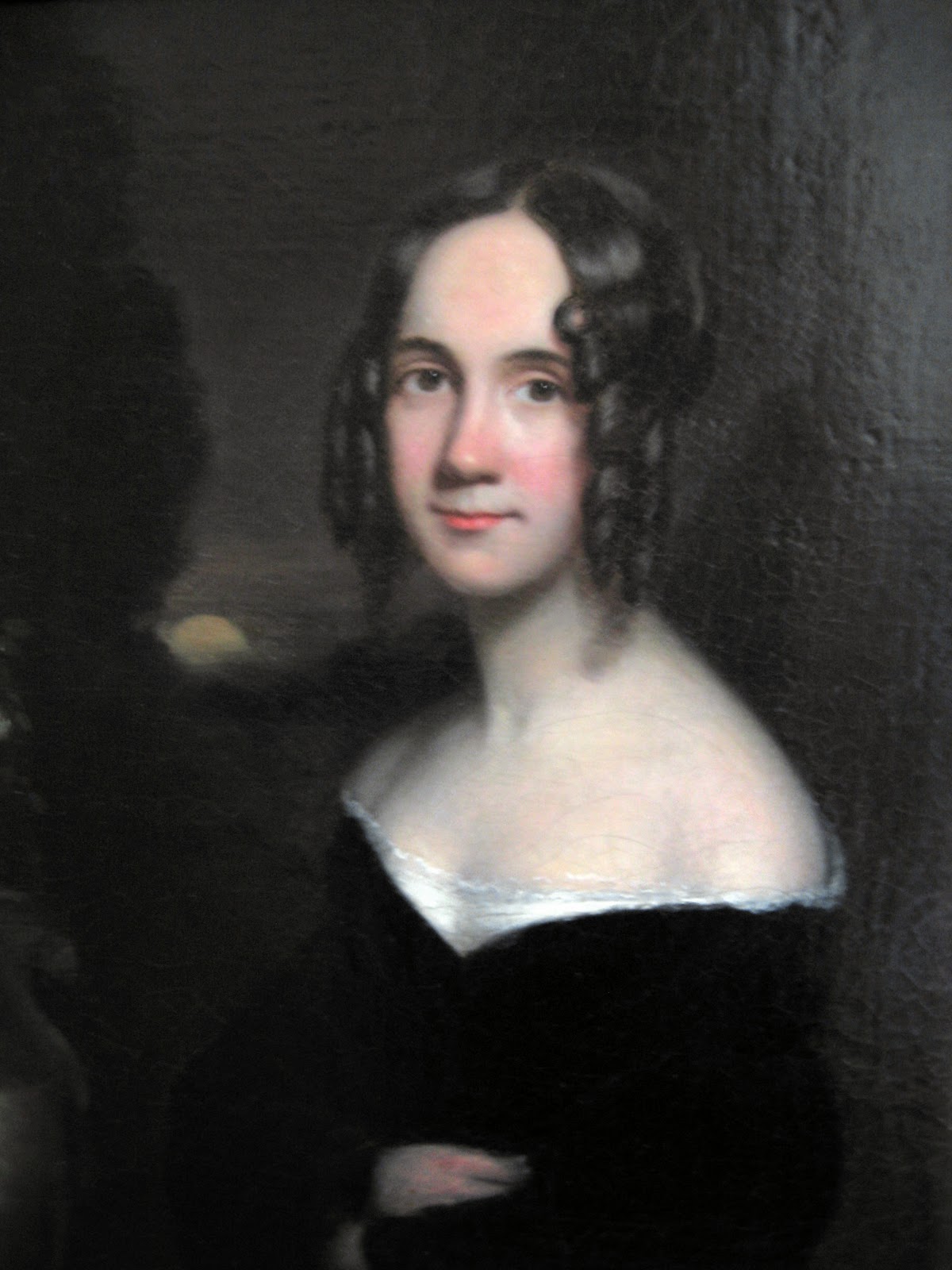
Sarah Hale


Sarah Hale
Sarah Josepha Hale (c.1831)
James Reid Lambdin
U.S. Public Domain

Much of the credit for the modern Thanksgiving day goes to a woman named Sarah Josepha Hale. A prominent writer (she authored the nursery rhyme "Mary Had a Little Lamb") and newspaper editor, the New Hampshire-born Hale had grown up regularly celebrating an annual Thanksgiving holiday. Hale often wrote editorials and articles about the holiday, and she lobbied state and federal officials to pass legislation creating a fixed, national day of thanks on the last Thursday of November—a unifying measure, she believed that could help ease growing tensions and divisions between the northern and southern parts of the country. Her efforts paid off; by 1854, more than 30 states and territories had a Thanksgiving celebration on the books, but Hale’s vision of a national holiday remained unfulfilled.

The outbreak of the Civil war in April 1861 did little to stop Hale’s efforts to create such a holiday, however. She continued to write editorials on the subject, urging Americans to “put aside sectional feelings and local incidents” and rally around the unifying cause of being thankful for blessings. Though the practice of thanksgiving continued in both the Union and the Confederacy, it was far from Hale’s ideal of a unified event. In 1861 and 1862, Confederate President Jefferson Davis had issued Thanksgiving Day proclamations following Southern victories; United States President Abraham Lincoln himself called for a day of thanks in April 1862 following Union victories at Fort Donelson, Fort Henry, and Shiloh, and again in the summer of 1863 after the Battle of Gettysburg.

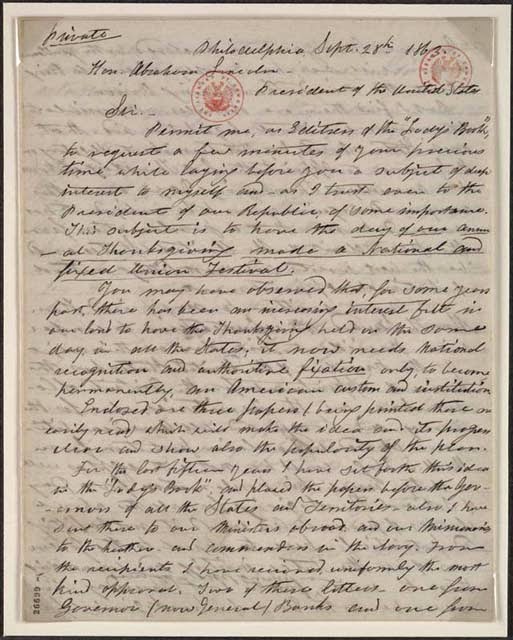
Sara Hale's Letter to President Lincoln
Sarah Hale's letter to President Abraham Lincoln
Library of Congress
Shortly after Lincoln’s summer proclamation, Hale wrote to both the president and Secretary of State William Seward, once again urging them to declare a national Thanksgiving, stating that only the chief executive had the power to make the holiday, “permanently, an American custom and institution.” Whether Lincoln was already predisposed to issue such a proclamation before receiving Hale’s letter of September 28 remains unclear by historians. What is certain is that within a week, Seward had drafted Lincoln’s official proclamation fixing the national observance of Thanksgiving on the final Thursday in November, a move the two men hoped would help “heal the wounds of the nation.” After more than three decades of lobbying, Sarah Josepha Hale (and the United States) had a national holiday. Though it still held some religious undertones, it was less of a “God hath blessed us Christians” event from the Pilgrims’ era. With so many families broken by the War, as well as an increasingly industrial society, this new national Thanksgiving was becoming a secular “thankful for family and friends gathered here today” celebration.

The 20th Century and Beyond


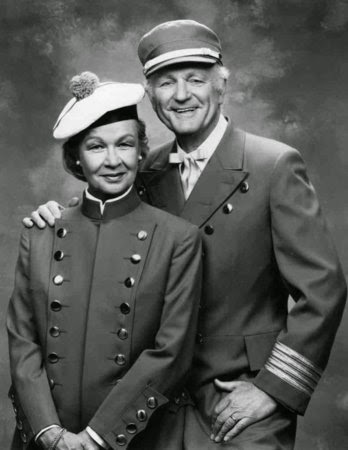
Captain and Mrs. Noah
W. Carter and Patricia Merbreier
"Captain and Mrs. Noah"
Philadelphia media icons
and frequent participants in the
Philadelphia Thanksgiving Day Parade
Image Source: Philly.com
If you look at modern calendars, Thanksgiving isn’t always at the end of the month. How did there get to be an extra week between Thanksgiving and Christmas some years? In the early 1900s, proud first-generation Americans wanted honor their parents and heritages and recreate the festival-type atmosphere that surrounded the harvest and ushered in the holiday season. The Gimbel family, proprietors of the Gimbels Department Store, established the first Thanksgiving Day Parade in Philadelphia. It was first held on Thanksgiving Day 1920, and though it has seen several sponsors since the demise of the department store, it remains the longest-running Thanksgiving Day parade in America. (Though it has become the iconic American parade, the Macy’s Thanksgiving Day Parade did not begin until 1924.) The sponsoring merchants were canny -- at the end of the parade, Santa Claus made his first appearance for the year, ushering in the “holiday shopping season.” However, there were five Thursdays in November 1939, with Thanksgiving now falling on November 30, 1939. With only 24 days to shop and an already shaky Great Depression economy, President Franklin D. Roosevelt moved the holiday to the fourth Thursday in November, extending the shopping season by a week. While several states followed FDR’s lead, others balked at the blatant consumer twist to a day that focused on family, friends, and a successful year. 16 states refused to honor the calendar shift, leaving the country with dueling Thanksgivings. Despite continued opposition from traditionalists, he moved the 1940 holiday ahead as well, placing it on the third Thursday in November. Faced with opposition from constituents ranging from the average citizen to college football conferences, the U.S. Congress passed a resolution in the fall of 1942 codifying the federal observance of holiday to the fourth Thursday of November. Though some states continued to observe Thanksgiving on the final Thursday of November, by 1956 all states had amended their observances to be in line with the federal holiday. Five out of every seven years, the “fourth” Thursday is also the “last” Thursday, while the remaining two years have a fifth Thursday in the month.


The concept of setting aside time to give thanks for one's blessings is older than the settlement of the North American continent itself. Americans commonly trace the Thanksgiving holiday to a 1621 celebration at the Plymouth Plantation, where the Plymouth settlers held a harvest feast after a successful growing season. Often called the “Mother of Thanksgiving,” Sara Josepha Hale persuaded President Lincoln and Congress to pass legislation that set the last Thursday in November as an official Thanksgiving Day for the entire nation, rather than a hodgepodge of days set by individual communities. Following further legislation in the 1940s to help the country recover from the Great Depression, Thanksgiving Day is now held on the fourth Thursday in November. While the celebration itself has changed since the Pilgrims’ time - instead of a three-day feast, most families have a one-day gorge timed between parades and football games - the core idea of setting aside a specific to gather together and acknowledge our thankfulness for family, friends, and blessings remains.

I’m thankful for all of you who have been supporting me and reading the Luke’s American Adventures series. Happy Thanksgiving!


©2012- 2014 Adventures with Jude. All rights reserved. All text, photographs, artwork, and other content may not be reproduced or transmitted in any form without the written consent of the author. http://adventureswithjude.com

Wednesday, November 5, 2014

If He Had Not Come (A Schoolhouse Crew Review)


I've got a storage box of holiday-themed books going, and each year I try to add a few to my mini-library as each holiday of the year rolls around.  It's been interesting watching the titles change as our homeschool grows.  When we first started, they were all cute picture books; this year, Matthew added On Hallowed Ground: The Story of Arlington National Cemetery to our "Memorial/Veteran's Days" section.   As much as I love colorful picture books, it's been interesting to age into ones that start leading to deep discussions.  The upcoming Christmas holiday is no exception to the add-a-book tradition, and this year, one of the ones we've added is If He Had Not Come. Part picture book, part discussion, it's a good book for the multiple ages here.

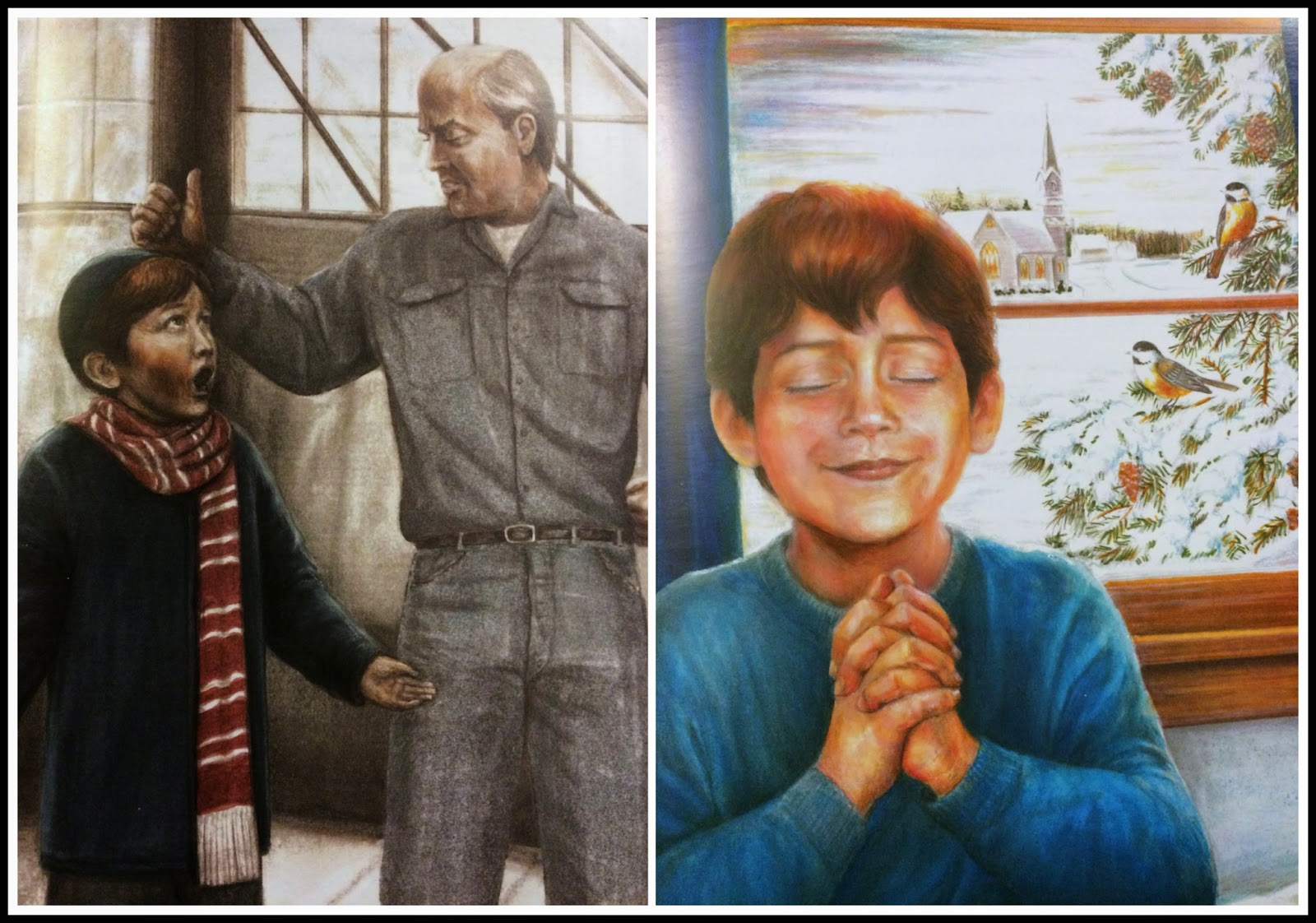
If He Had Not Come is a classic story, originally written by Nan F. Weeks in 1938.  It has been retold by David Nicholson and contains new illustrations from Charles Jaskiewicz.  The story begins with the protagonist, Bobby, and his father reading from the Bible at bedtime, and a quote from the Gospel of John preying on Bobby's mind as he slept --  "If He had not come..." (Jn. 15:22) In his dreams, Bobby encounters people who have no concept of Christmas.  It explores how different life would be if Jesus had never been born.  Bobby goes from place to place, and finds a different world -- factories and stores open on Christmas, no hospitals, no homeless shelters.  He returns home and finds the New Testament missing from his Bible.  When he awakes and realizes it all was a dream, he is even more thankful for the gift of the Christ Child.

The illustrations in the book highlight the story well.  During Bobby's dream, there is a hazy, dark quality to the drawings, almost like a smoky miasma.  When he awakens from his dream, the colors are crisp and bright.  The white snow gleams and the depth of color in Bobby's blue sweater rivals the Caribbean Sea in tone.  The visual contrast is stunning.


This book is intended for children ages 6 and up.  I found that most of it went right over Jude's head - he just doesn't have the ability for such philosophic/abstract thinking.  In the back of the book are several interactive questions that were good discussion questions for a younger child, but I think were better suited to an older elementary student (grades 4-5) and up.  Most of the discussion questions requires some pretty significant abstract thought, but make the book very friendly for use both as a family or in a religious education setting.
 
The book really was better appreciated by the older boys (ages 13 and 16), once they got past the "little kid storybook" format.  We actually had two different types of discussions. The first was a hypothetical "If He hadn't come...then what?" that explored the role of Christianity in many of the scenarios presented.   Many modern institutions from hospitals to homeless shelters now have secular incarnations, but are rooted in earlier Christian life.We discussed the role of the Benedictine monasteries and their "Welcome all" philosophy that much of the modern hospitality industry emerges from, and how medical hospitals and hospices are also descendents of the monastery system. I'd like to hope that we'd still have hospitals and shelters - Christian or not, it's the right thing for ANY person to care for a fellow human being -- but the monks and nuns certainly got them going.

The second was discussing religion in the United States and how Bobby found a factory and stores open and running on Christmas day.  I know there are many people who feel that because it is Christmas, everything should be shut down -- but I grew up on the edge of a Jewish section of Philadelphia, PA.  While some places were closed in recognition of Christmas, not all were -- because a large portion of the local population didn't celebrate Christmas.  I purposely led the boys into a discussion of American practices; I think it would be very easy to read this book and conclude "But it's Christmas, everything should be closed!" One of our debates was, "Even though the US separates government from religious practices, the majority of the country is Christian so should things be closed on Christmas? Or should it be up to the individual business owner, according to his beliefs?"  Cliché as it sounds, yes, most of my Jewish friends in high school went to the movies and got Chinese take-out on Christmas day. Is it right to force them to stay home to "celebrate" a holiday they have no part of? At first Luke thought that "majority rule" should apply, but then realized that it wasn't a far-fetched thought that should Jews attain "majority" status, he could be forced to sit at home on Saturdays because Kashrut forbids driving on the Sabbath.  It was definitely an interesting conversation.

If He Had Not Come is available as both a hardcover ($18.99) or an eBook ($3.99).  Our hardcover copy will join the rest of our Christmas classic books to be pulled out year after year.  Click the banner to read other reviews, or connect with the author on Facebook.


Click to read Crew Reviews


©2012- 2014 Adventures with Jude. All rights reserved. All text, photographs, artwork, and other content may not be reproduced or transmitted in any form without the written consent of the author. http://adventureswithjude.com

Monday, November 3, 2014

Our Thanksgiving Studies


I've been hunting down some short Thanksgiving unit studies.  There are SO many options out there, that it gets a little overwhelming sorting through them.  It's also hard finding pre-made studies for older students.  For the older boys, rather than being a cute "turkey-themed" holiday, they are exploring the Native Americans and Pilgrims.  However, they're still kids at heart and are enjoying helping the little boys with some of the crafts they're doing.  These are the ones we're planning on basing our work on for this month.

1.  T is for Turkey Multi-Age Pack from All Our Days


Jude is at an awkward stage -- not ready for the "big kid" packs but too advanced for the PreK/Tot ones. This one has puzzles and matching/memory games that can be made easier for little ones like Damien and a little harder for Jude.

2.  Thanksgiving Preschool Pack from 1+1+1=1


This is more for Damien's level, but there are a few activities for Jude.  He's still working on his fine motor skills, so the coloring and cutting are right for him.  He particularly likes the color-by-number turkey. 

3.  Upper Elementary Native American Unit Study from Noah's Ark Homeschool Academy


This is a lovely unit study that is geared for grades 4-6, but can easily be adapted up for the middle and high school students.  Bonus for us - there is some reading, but a lot of videos linked, so we can SEE what Native life was like, not just try to imagine it (very good for literal kids!).

4.  Thanksgiving Theme Activities from Enchanted Learning


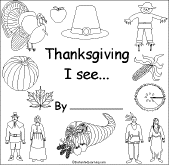
The target grade range for the crafts listed is K-3, but they look like they'll be easily adapted to bigger or smaller kids.  I also love the printable Early Readers.


5.  Plimoth Plantation online activities


We've discovered just how much we love hands-on learning this year.  After "The Great American History Field Trip" this summer and our fall travels hosting our Australian family, we're planning where we'd like to go next.  We're adding Plimoth Plantation to our "Want to Go There" list for next summer.  In the meantime, the big boys are checking out their online activities.  They're speaking Pilgrim these days!


©2012- 2014 Adventures with Jude. All rights reserved. All text, photographs, artwork, and other content may not be reproduced or transmitted in any form without the written consent of the author. http://adventureswithjude.com

Wednesday, October 29, 2014

Clued In Kids (A Schoolhouse Crew Review)


Clued in Kids is a company started by a woman who wanted to see children spending time having fun, without a TV or device screen in front of their faces.  Drawing on childhood memories of setting up countless treasure hunts as a child, she created the Clued in Kids program.  It's a compilation of many treasure hunts - some educational, some holiday-themed, but all of them easy to set up (under eight minutes!) the provide fun for small groups.  We received two treasure hunts to review:  Christmas Treasure Hunt - Gift in a Greeting Card ($9.95) and Gluten Free Treasure Hunt ($5.99).


Christmas in a Greeting Card


We have spent a lot of time on the road during the review period, traveling with visiting family.  I purposely left this one for while we were away.  Though the idea is that they hunts can take less than 10 minutes to do, I decided to draw it out and give them something to look forward to each day in a hotel.  It's geared for kids 4 and up, but even the older boys (13 and 16) got a kick out of it (even if they won't admit they did). 

This hunt was a packet that we received in the mail.  Inside our treasure box pouch were clue cards and two sheets of temporary tattoos.  It was small - less than 5x7 inches, so it slips easily into my purse for the trip.  I admit, it took a little more effort to do it this way.  For example, it's been too warm for coats most days.  Instead, I just hid one clue where the coats *belonged* which forced them to think and not react.


 (We had jackets in the car, and one kid dove for my car keys before I said the clue was in the hotel room, NOT the car.)   It also had us being more creative - one clue said to hide it in the clothes dryer.  Not having one of those nearby, I hid it in the suitcase and simply told them to look where the laundry was.

This clue belonged with the pajamas. Instead of having to pick one child's jammies to risk a clothing explosion in hunting for, this clue was left on the bed, held down by Jude's bear, Bluey.


Originally, I had planned to do this hunt before our friends came, including decorating at least one tree with lights to create the hunt-required "Christmas tree."However, I had a lot more cleaning to do than I had anticipated, so when we ran out of time, rather than adding "put up a tree" while we were trying to get ourselves ready, I decided to let others put the "tree" up for me.  We haven't quite finished the hunt yet, because we're on the hunt for any lit-up tree.  We actually passed by one yesterday, but nobody noticed it (or at least, when I said, "Hey! There's a tree with Christmas lights on it!" nobody took the bait.)  I will have to be more obvious when we go by the next one.  This is a hunt that would be really cute to do if you're traveling over the Christmas Holidays (you don't have to knock on your neighbor's door to sing a Christmas carol when you have a "captive audience" at the hotel's front desk!).  We are using the tatoos and some candy as a prize when the last clue is sorted out (again, because we're not home and a prize is one more thing to pack), but you could even use it as a lead up to Christmas with a small gift under the tree on Christmas Eve when the last clue is found.

Gluten Free Treasure Hunt


This hunt is designed for PK/Elementary students. We decided to try it because due to allergies we have a generally gluten-free diet, and received a PDF copy of the clues to print out. Working in two-man teams of one big/one lilttle kid, the older boys sort of enjoyed it (even they were a bit over the hunt-the-clue part, they were interested in the science-y part) but it was way over Jude and Damien's heads.  It was far too much information for them, even when broken into teams with Luke and Matthew.  This is one that I'd leave for older elementary students, maybe as part of a health lesson.  The older boys felt a bit contrived - I think mainly because we tried to work on it as a standalone thing, rather than as a fun activity as part of something we were already doing.  I think Celia (age 10) might have enjoyed it, but it was too much for the little boys (ages 7 and 4) and deemed "kind of silly" by the teen boys. 

I also have to admit, I wasn't enamored with the "No Hot Dogs/Cookies/Pizza" artwork.  Sure, we don't eat your standard hot-dog-cart or pizza-shop fare, but there are more and more gluten free options for familiar gluten-laden foods.  (Frozen gluten free pizza is a staple on our shopping list, and Amazon delivers gluten free cookies on auto-ship.)  I think either a wheat sheaf or labeled flour bins would be a better choice.

We enjoyed the Christmas-themed Clued in Kids treasure hunt, even if we weren't crazy about the Gluten Free hunt.  Less than eight minutes of planning leads to an hour (or more!) of fun, making it a great activity for the entire family.  Click the banner below to see what other families thought about their hunts, or connect with Clued in Kids via social media!

Twitter: @cluedinkids
Facebook: https://www.facebook.com/cluedinkids
Pinterest: http://www.pinterest.com/cluedinkids/


Click to read Crew Reviews


©2012- 2014 Adventures with Jude. All rights reserved. All text, photographs, artwork, and other content may not be reproduced or transmitted in any form without the written consent of the author. http://adventureswithjude.com
Monday, September 22, 2014

Honey Cake: A Rosh Hashannah Tradition


By definition, a custom is a traditional and widely accepted way of behaving or doing something that is specific to a particular society, place, or time. Customs are handed down through generations, but the “why” of the custom sometimes becomes lost. “Tradition,” often becomes the answer. The truth is, the reason behind the tradition is more profound than we may realize. With the Jewish Holy Days of Rosh Hashanah and Yom Kippur coming up, I wanted to explore the traditions that my Jewish relatives observe. The custom is to dine on foods laden with honey, but why?

The simple explanation is that as Judaism spread from the Middle East, in order to fulfill the laws and customs, people adapted their recipes to use what foods could be found locally. The Ashkenazim lived throughout Central and Eastern Europe beginning in the Middle Ages. The “honey” of the Bible times is believed to be more of a date paste or syrup, but dates do not grow in cooler European climates. They adapted their recipes to what was available - bee’s honey, so apples are dipped in honey, and tzimmes and cakes are made with honey as the sweetener. However, the honey is not just used as a culinary substitute for date sugar; the sweetener holds a religious significance.

File:Liten askenasisk sjofar 5380.jpg
A Shofar, blown to announce
Rosh Hashannah
Image Courtesy Olve Utne
Rosh Hashanah is a two-day celebration and begins on the first day of Tishrei. The day is believed to be the anniversary of the creation of Adam and Eve, the first man and woman, and their first actions toward the realization of humanity's role in God's world. In addition to liturgical observances, the holiday is celebrated with meals shared by family and friends. The customary greeting is “L'shanah tovah tikatev v'taihatem" - "May you be inscribed and sealed for a good year." These meals include enjoy symbolic foods such as apples dipped in honey and tzimmes - fruit or vegetable tzimmes cooked in honey - to ensure a “sweet” year, and round cakes made with honey symbolize the continuity and circular nature of the year.

Yom Kippur, or the Day of Atonement, falls ten days after Rosh Hashannah. During the period of Days of Repenteance between the holidays, it is customary to ask for and receive "lekach", or sweet (honey) cake. The reason behind this custom is twofold. On Yom Kippur, the book of God’s Judgement is sealed. In order to be sealed favorably, one must have atoned for his sins against Him, but in order to be prepared to do so, one must atone for his sins against others first. In asking for cake, you are humbling yourself and begging a kindness of the person you have wronged; in giving the cake, you are granting forgiveness. Simply asking is not enough; you must also give when asked and show you will not hold others’ wrongs against them. Secondly, it reinforces that all things come from God -- the cake is given by a human, but the resources to make it are a gift from God. In having the cake to give as a gift of forgiveness, the giver and receiver rejoice in the blessing from God.

There are as many recipes for lekach as there are families.  This is one we found and adapted.  We'll eat ours at snacktime, while we read two books Mom bought for Jude and Damien:  The Hardest Word: A Yom Kippur Story by Katherine Janus Kahn and New Year at the Pier: A Rosh Hashannah Story by April Halprin Wayland.


L'shana tovah titatev v'tahatem, friend! 

Lemon-Honey Cupcakes


 Note: Ingredients with brand names are what we use because these companies are currently safe for our allergies.  Please double check they are safe for you, too.

Ingredients:


1 1/2 cups King Arthur Gluten Free Flour mix
1 tsp xanthan gum
1 teaspoon baking powder
1/4 teaspoon salt
1 teaspoon cinnamon
1/2 cup (1 stick) Earth Balance margarine
2/3 cup light brown sugar
2 eggs
1 teaspoon vanilla extract
Finely grated zest of one lemon (reserve 1/2 tsp if making the Lemon-Honey Buttercream)
1/3 cup honey
1/3 cup SoDelicious unsweetened coconut milk

Directions: 

Preheat oven to 350. Line a cupcake pan with paper liners. Set aside.

In a small bowl, whisk together the flour, xanthan gum, baking powder, salt and cinnamon.


In the bowl of an electric mixer, cream together the margarine and brown sugar until smooth.

Pare the zest from the lemon.  Chop finely if it comes off the lemon in longer strips.  Add to the mixer bowl.

Add the eggs and vanilla extract and beat until smooth.


Mix in the honey.

Hint:  Use the wrapper from the margarine to grease the measuring cup and the honey will not stick.


 Turn the mixer down to LOW SPEED and slowly stir in the flour mixture.

Add the milk and stir until all of the liquid has been absorbed.

Divide the batter evenly among the 12 cupcake liners. Bake at 350 for 18-20 minutes.


Note: Check them for doneness with a wooden pick.  If you're using wheat flour, check them at about 15 minutes.  (Gluten Free baking sometimes takes a few extra minutes.)

Remove from oven and cool completely.


Lemon Honey Buttercream Frosting


Note: for this one, I'm including the weight measurements.  We weighed out the ingredients because all of our spoons were already in the dishwasher from the cake.

3/4 c Spectrum Shortening (180g)
5Tbsp Honey (75g)
1/2tsp Lemon Zest
1/2 tsp Vanilla
1/4tsp Salt
3 c powdered sugar (360 g)
juice of one lemon

Place all of the ingredients EXCEPT the lemon juice in a mixer bowl.  Mix together on low speed until combined, then increase the speed and beat until light and fluffy.

Add juice, one teaspoon at a time (we just used an iced tea spoon) until the frosting is the consistency you like.

Try not to eat it all while you wait for the cupcakes to cool!

Frost cupcakes.  If you have leftovers, store loosely covered.


Special thanks to our friend Sara for all of her help with research on the tradition of the lekach,  and the blogs  Overtime and To Serve, With Love for inspiration.


©2012- 2014 Adventures with Jude. All rights reserved. All text, photographs, artwork, and other content may not be reproduced or transmitted in any form without the written consent of the author. http://adventureswithjude.com
Monday, January 6, 2014

2013: Broken, Yet Blessed

It's the start of a new year, and lots of bloggers are looking back on 2013.  Most are making lists of their favorite posts or their most popular posts, and when began to consider what I'd write as my look-back post, those ideas just didn't strike a chord with me. That seemed too simple...too sugarcoated to really explain our year.

After 2012 containing so much upheaval, I thought 2013 was going to be easier.  I was wrong.  It was a crazy hard year.  If you said, "Name the first things that come to mind that shaped your year," they would be moments where we saw some of our deepest lows:


I think if I wanted to, I could easily be mired in despair.  And some days, it does feel better to wallow -- while I know I'll eventually put one foot in front of the other and march forward again, sometimes a good cry is in order.

But if I stop to think about what has shaped my heart, it hasn't been teary trudging, but joy in unexpected places.


Bob Hope said,
 "When we recall the past, we usually find that it is the simplest things - not the great occasions - that in retrospect give off the greatest glow of happiness."
 While the big events could easily overshadow the whole year, the smaller events bring forth joy that even the buckets of tears can't wash away.   Now that 2014 is underway, what would I call 2013?  A year that was broken, yet blessed. 


looking back at 2013


©2012- 2013 Adventures with Jude. All rights reserved. All text, photographs, artwork, and other content may not be reproduced or transmitted in any form without the written consent of the author. http://adventureswithjude.com
Related Posts Plugin for WordPress, Blogger...
Pin It button on image hover