Showing posts with label On the Road ABC Blogging. Show all posts

Monday, June 23, 2014

5 Internet Resources for Planning a Field Trip


5 favorite internet resources for planning a field trip


One of the best things about the internet is there are so many resources for planning field trips.  Starting with the website of your destination, you can find answers to almost any question you have about a place you'd like to visit.  From attractions to nearby snack shops, you can find whatever you need to have a great trip.

One of the worst things about the internet is there are tons of resources for planning field trips.  It can get overwhelming, because you can easily find yourself distracted by all links.  Sometimes this is good - I discovered that not far from our route between Antietam and Gettysburg is the National Shrine of St. Elizabeth Ann Seton, and we're now planning a short detour there to study her more in depth.  (Luke researched Mother Seton earlier this spring as part of his writing series.)  However, you can wind up getting bogged down in sites, especially if you read travel reviews and get engrossed in those. 

These are the top 5 types of sites I visit when planning an excursion.

1.  The destination's website.

Often, you can just type "name of your destination.com" into your browser and you'll be led to the destination's home page.  If it's a long name that I think might be shortened, or may not be a dot-com, I'll type it into a search engine.  For example,  The Franklin Institute in Philadelphia's website is www.fi.edu - FI for Franklin Institute, and dot-edu because it's an educational institution.

If you type a destination name/site guess and it's not correct, then try a search - it might actually be part of another site -- for example, Independence Mall National Historic Park's homepage is not "independencemall.com" but rather is a sub-page of the National Parks Service website.

Important things to check: admissions, open hours, what to do/how long to expect a visit to last, and suggested age ranges.  Many places will also give you suggestions of things in the area, in case you're looking to make a longer trip. 

2. Google Maps or Mapquest

Check a map to confirm your scheduleYes, I have a GPS in my car, and apps for each of the two map sites on my phone.  They're great for once we hit the road.  However, before I even say, "Get a sandwich and into the car!" I need to know how far from home we're venturing.  (You know, so I can answer, "Is it a one-sandwich or two-sandwich-and-dessert ride away?") Once I know my destination, I need to find out if it's a reasonable distance.  On our wish list of places to go was the Harriet Tubman Underground Railroad Byway, but we realized that it was just too far to do as a day trip (3+ hours one way), and staying overnight near the head of the trail and working our way home just wasn't possible for us this summer.  Going back to Step 1, I then searched the keywords "Underground Railroad Delaware" to see if there were any specific sites that might be a little closer.  I found out there is a limited engagement  Underground Railroad exhibit at the First State Heritage Park in Dover, DE.  A check of the map shows Dover is less than 90 minutes from here, and doable as a day trip.

3.  Regional Visitors' Center Sites

These are a treasure trove of information.  Some are web-based and will give you online details and reviews; others will send you free travel information.  For our upcoming Antietam-Gettysburg trip, I went to VisitMaryland.org and was able to order a stack of pamphlets and maps about the area.  Sure, I could use Google Maps to find out how to get there, but the site doesn't tell me the routes the Union and Confederate armies took, and a big map for everyone to study at the same time is much more fun than crowding around the computer screen trying to see around each others' heads.  While I like the ability to have information at my fingertips through the internet, having the glossy brochures and maps to pore over and plan our own battle strategy is great for my pint-sized planners.

Because these sites highlight areas beyond a single site (like your destination's web page), they are great for planning trips to an "area."  We know our time is limited when we go to Antietam - our plans are to travel to Sharpsburg on Monday, spend a full day each in Harper's Ferry and Antietam and then travel to the Gettysburg area on Thursday, so I wasn't as interested in what other things there are to do.  (I also am the only licensed driver with five kids in tow, so wineries in the Sharpsburg area aren't an option on this tour.  If it was just hubby and I going to view the battlefield, we'd find that useful information.) However, they can also tell you what events are going on, so you can plan to go and experience them -- or reschedule and avoid the crowds.

Make sure to dig around a little and see if there are any deals for admission.  Sometimes a venue will offer discounted tickets through the visitors' center sites to draw more people. 

4. Tripadvisor.com

This site is one-stop-shop for destination reviews, accommodations, transportation, etc.  It's a huge site, so getting lost is possible, but I like that you can check out so many aspects at once, and from real life people.

I admit, I like to check to see what others think so I know if it's worth going or not, but try look at them neutrally - it might not have been someone else's cup of tea, or they had unrealistic expectations.  Look at reviews and try to glean out facts -- "my kid was bored" isn't as helpful as "There was a lot of breakable objects on the tour, and it was tough to listen to the guide and hold onto my two-year-old at the same time."

5.  iTunes App Store  (Android if you have one of those phones/tablets)

Ok, may this one isn't *officially* a website. But it's still a good resource.
Travel Apps can give you information on everything from toilets to trivia
First, there are basic travel apps, like USA Rest Stops (there is ALWAYS someone saying "I need to stop!!") and Gas Buddy to find the cheapest (and most convenient) gas on the road.  The "Around Me" App is a practical app - it will locate the closest <gas station, ATM, restaurants> to where you are.

Check to see if there is an App for your destination.  Some places may have official apps, while others have third-party created ones.  Though not "official" NPS apps, we've downloaded two from Civilwar.org for Antietam and Gettysburg (there are others.)   Even if there isn't an "official" app, it's possible that there is an App that someone has developed for the area.

GPS My City is a good app for many cities, including Philadelphia.  I'm planning on using this one when I take Jude to the newly refurbished Franklin Court this fall - we can create our own walking tour that includes Franklin Court, Franklin Square, and a new pier that extends along the Benjamin Franklin Bridge.  (Can you guess his favorite Founding Father?)  The History Channel has an app called "History Here" that uses GPS to locate you and then gives you information about the history surrounding you.  You'd be surprised what you're in the middle of!  

How do you plan for a field trip?


Ben and Me

©2012- 2014 Adventures with Jude. All rights reserved. All text, photographs, artwork, and other content may not be reproduced or transmitted in any form without the written consent of the author. http://adventureswithjude.com

Friday, June 20, 2014

H is for Hotel Picnic

H is for Hotel Picnic: Eating on Vacation


Normally, when we come home from Disney World, we attempt to drive straight home, get hung up in traffic, and by mid-Georgia are trying to figure what's a realistic stopping point for the night.  Several times we have made hotel reservations via the Marriott hotel app; one time I actually had to text my dad to make reservations for us because we got stuck in an area that didn't have a strong enough internet or phone signal to do it ourselves.  This spring, we decided to just make a reservation ahead of time.  Normally, we choose suite hotels that have at least a mini-kitchen; with seven people in our party, we need two bedrooms.  The hotel we preferred to stay at did not have any suites, and comparing other local hotels,  it was cheaper to just stay there and get two hotel rooms.  We figured we'd eat dinner on the road before stopping.

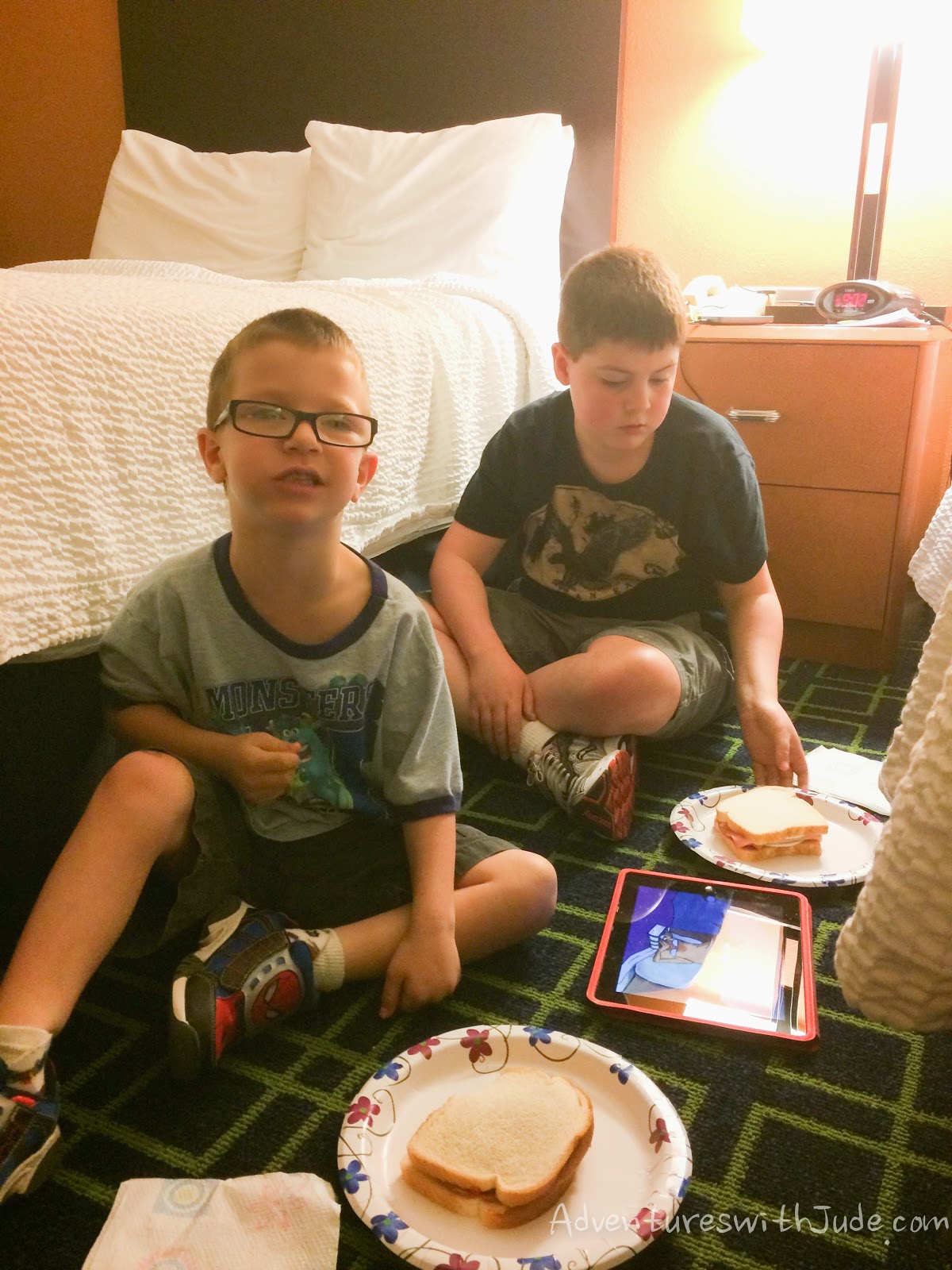
Our timing was off much of the day, and by the time we pulled into the hotel, nobody felt like hunting out a restaurant.  I had packed a cooler with leftover food from vacation, so I figured we could cobble together some sandwiches with fruit and call it good enough; Neal offered to go across the road to a gas station and grab a few drinks and bags of chips to round things out. When we got settled into our room, I realized we had a microwave.  Jackpot!  Not only were we able to make basic cold sandwiches, but I had a leftover pound of bacon that we cooked up plus a hot dog for Jude.  Squished into one room to eat, people spread out on every flat surface -- most of us were on the floor to try to keep the beds clean.  Jude declared our dinner a "Hotel Picnic."

Hotel Picnic


This summer, the kids and I are going on a five-day mini-Civil War battlefield tour. (Neal's business is in season and he can't be gone that long in July.)   We're planning on going to Harper's Ferry in West Virgina, and then up through Antietam (Sharpsburg, MD) to Gettysburg (PA).  Because I want to limit the expenses and we only have one official grown-up plus one "big-enough" person to herd smaller people,  Luke was charged with planning picnic meals for the week.  Although I opted for suite hotels to keep everyone together, the ones that were most convenient and reasonably priced do not have kitchens - just a mini-fridge and microwave in each. His job was to plan reasonably balanced lunches and dinners that could be stored & prepared with only those two appliances. (Our hotels include breakfast, though we will take a box of cereal in case somebody wakes up picky or there isn't enough safe-for-our-allergies food.) I told him that while we could pick up some more snacks or pass a farm stand for more fruit, or I would prefer not to have to go grocery shopping mid-week for the rest of dinner.

Luke's plans:


Picnic Lunch Ideas Sandwiches are going to be the mainstay of our lunches out. They’re simple to prepare, easily portable, and the fixings won’t take up a lot of room in the fridge. We’ll bring a few kinds of fillings - meats, cheeses, Sunbutter and fluff - to keep from being bored. Before we leave the house for the trip, we will freeze most of the juice boxes. They’ll work as ice packs in the cooler, and then will defrost over time to be used later in the week. Plus, once we drink the juice boxes, we can dispose of the containers, and not have to drag ice packs home. Some potato chips, fruit, and cookies or something else sweet will round out those meals. I thought about yogurts, main-dish salads, and other similar ideas, but they either take up a lot of space in a lunchbox, need utensils, or are more elaborate to prepare. Packing for six people means space is limited, and streamlined is best. Plus, it will make packing easier in the morning - it won’t be so crucial to remember to pack forks or spoons. If we were leaving from home, or someplace with a full kitchen, we would be able to consider some of the fancier options, but they won't work for this trip because of our limited kitchen resources.

With lots of activity planned for each day, we’re going to have simple, heat-and-eat dinners. This way, we can come back to the hotel and get everyone fed quickly. Instead of having to cook things while we’re there, we’ll mostly rely on previously cooked foods and reheat them in the microwave. I’m planning on cooking ground beef before we go, and using it for two meals - nachos on one night (we’ll pack tortilla chips, cheese, and salsa) and for pasta (pre-cooked pasta can be reheated with tomato sauce and meat). One of our favorite “hot lunches” at home is chicken nuggets, so one night we’ll microwave them and some veggies. We’ll even have breakfast for dinner while we’re away - pre-made pancakes, fruit, and freshly made bacon. (The bacon takes up less space uncooked, and can easily be cooked in the microwave.)

We’re hoping to be heading out on our day trips by about 9 am, and do not expect to be back to the room until dinnertime. However, planning just lunch isn’t going to keep tummies full all day, and everyone is used to having a snack before bed. While we need to plan enough food for meals, we’re also going to need some snacks. We are planning on bringing extra of some of the meal items (fruit, chips, desserts, etc.) to have for between meals while we’re out, and then other small items such as yogurt and gelatin cups for in the hotel.

There is also other non-food supplies we will need to pack. We will also need paper products, as well as something to put our trash in both on the road and at the hotel. On our “picnic bag” list are:
-Paper towels
-Napkins
-Paper plates
-Plastic silverware
-Plastic cups
-Zip-top Bags
-Trash bags
-Lunch boxes/picnic cooler to carry food & snacks for the day
-A tablecloth/picnic blanket for if we eat outside

At home, we mainly use plastic containers to store spare food or leftovers. However, we are planning on mostly using zip-top bags for the trip (the brownies will be crumbs otherwise). Because they conform to the shape of the food, it will help fit more in the cooler, so we can pare down how much luggage we are cramming into the car. After we use the bag, it could be rinsed out and reused, or just discarded if it’s really messy. Plastic containers take up a static amount of room, no matter how full they are, and we could wind up with a lot of empty space inside a container. The other major benefits to bags here is they are disposable; we can use sandwich bags as individual trash bags after we eat lunch, plus won’t have to keep track of container pieces until we get home. 

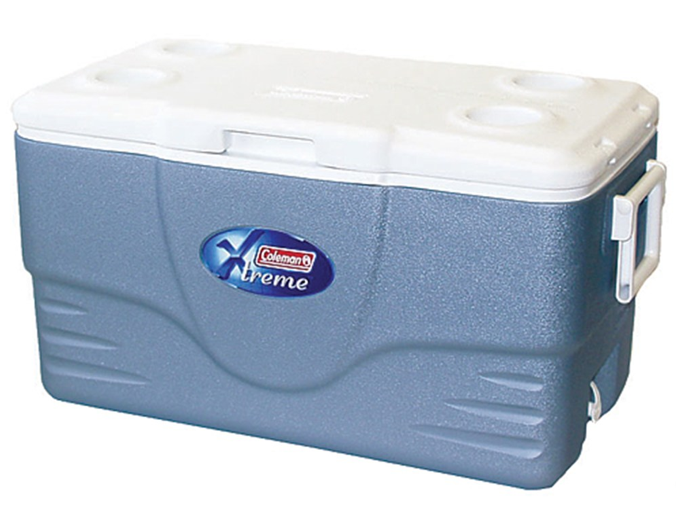
Coleman 36 Quart Xtreme 5 Cooler
Coleman cooler similar to ours
Image: Coleman.com
A mini fridge probably won’t fit all the food we need for the week. We’ll put the stuff we want frequent access to in there, and keep the “for later in the week” food in our main cooler. This way, we’ll be able to keep the cooler cold and preserve the food that is in there. As food is eaten, we can fill the empty space in the cooler with bottles of juice or other items to help fill the empty space. The new items will help fill the cooler and keep things cold longer (too much empty space does not help insulate), and when we switch hotels we will have less to carry in and out.

A “hotel picnic” is an easy way to provide less-stress meals for your family while on vacation. Simple lunches and snacks will keep people filled up during the day, and with a little planning and cooking ahead, even spartan kitchen facilities can produce a hot and filling dinner. Zip-top bags help keep packing tight. Disposable tableware, while a bit more expensive than bringing regular plates and cutlery, is a worthwhile expense that makes packing easier. Don't forget larger trash bags; in the day you will be able to picnic and "leave no trace" while back in the room you won't have teeny trash cans overflowing. Bringing food allows us to save a few dollars, eat healthier meals, and will lead to less herding children in and out of busy, tourist-filled restaurants.

Homeschooling Home Ec: Real Men Make Quiche http://benandme.com/2014/06/h-honor-word-study.html   Photobucket

©2012- 2014 Adventures with Jude. All rights reserved. All text, photographs, artwork, and other content may not be reproduced or transmitted in any form without the written consent of the author. http://adventureswithjude.com
Friday, June 13, 2014

5 Ways to Survive The Gift Shop


5 ideas to avoid aggravation in a gift shop

 It seems like everywhere you go, there is a gift shop.  Disney? Of course. We joke that it doesn't seem like a legal ride unless you exit through the gift shop.   Zoos?  Yep.   The middle of the Chesapeake Bay?  There too.  Sometimes you wonder if you've gone on a field trip or to the grocery store!

One thing to remember is that for many places, the gift shop is a source of much-needed revenue.  Sure, museums have generous donators, and often the docents are volunteers, but to keep the collections pristine -- and even the lights on --  it takes a lot of money.  Admissions, if the site charges them, often aren't nearly enough to pay the bills. Enter the gift shop.  We've seen some pretty pathetic ones that are barely more than chintzy tchotchkes and T-shirts, but I could spend hours exploring the books alone in the Smithsonian's stores.  I'm still not crazy about gift shops, but tend to be more benevolent when I know it's for a good cause.  Here's how we survive them without spending a fortune.

1.  Discuss ground rules you leave the house.  Even if you don't think there will be one, don't let on.  Always assume there will be.  I didn't expect there would be one out at Hopewell Furnace, and while it was small, it was still there.  It doesn't matter what your rules are; discussing them before leaves clear expectations.   Make sure they're either repeated back to you, or the listeners some how affirm that they've heard and understand. I don't guarantee that there won't be any voice piping up "Mommy, can I get...?" but you can then remind the owner of the voice "Remember we discussed...?"

If the rule is, "We're not going in the gift shop today," then remind them before you leave, and then when you get there, so there aren't any surprises when you leave.  

2.  Set expectations about what is allowed to be purchased.  My personal rule is it has to reflect where we have been.  I will allow a t-shirt (if you look through Luke's and Matthew's dressers, you can tell where we've visited), but draw the line at a random/generic knicknack that just has the place name slapped on it.  I can be convinced of a "science kit" that I know I've seen in Target if it is from the Franklin Institute, but if we've been to the aquarium, no stuffed giraffes.  Also,  keep your expectations to the child's age -- when we went to the Smithsonian's Natural History Museum, my teen chose a T-shirt but my younger boys wanted miner's helmets. 

3.  Remove the urgency.  Allow them to look all day, but purchase only after a specific, pre-determined time.  "Later" doesn't go over so well, because it's too vague.   Usually I check to see how much time visiting somewhere should take (check the "Plan a Visit" section of your destination's webpage) and then set an alarm on my phone for the middle of the suggested time.  An alarm instead of the statement "When we leave,"  helps avoid the "Can we be done now?" every few minutes.  I can always surreptitiously reset it if there is less to do or if we are taking extra long exploring, but the cue isn't the time on the clock, it's the chime.

If it's a multi-day excursion, like Disney, don't be tempted leave your souvenir shopping until the end of the week, because then you will have the responses "But what if we don't get back here?" and "But what if they run out?"  If your kids are bigger, they might be understanding of how long it is to the end, but pretty much if they're under 10, saying "You can shop on Friday," when it's still Sunday afternoon guarantees a lot of "Is it Friday YET?"  We have found "On our last day in <a particular park> is when we'll shop," is a good rule.  There are some parks we will visit twice, so there is some delayed purchasing, but some that we will only make it to once. 

3.  Set quantity limits.  I generally do not like setting hard price limits in advance because I never know exactly what things will cost.  I've had tears over a $10 budget and an $10.95 book. (Yes, I paid the extra...maybe it was a bad precedent, but it was a book!) Usually I will say you can choose ONE item, and then when I've had a chance to see the price tags, will approve/deny based on the cost of items, pulling out my "not more than..." reserve.  Mine know I usually will not allow them to spend more than $15 on average, but there's always the one who wants something inexpensive that frees up a few dollars for the other child and it balances out in the end.

There's also the option of them paying the difference.  While our kids don't get an "allowance" (my philosophy is "You live here, you help out here."), sometimes there are one-off chores they can earn a dollar or two, or they have gift money that they can contribute if they want something that is significantly more than I'm willing to spend.

4.  Encourage a specific collection.  When we go places, Neal always keeps an eye out for tree ornaments for me.  I like decorating the tree each December and seeing the places we've been, or telling the kids stories about them.  Sometimes it's an item that has the place name on it, but sometimes it's just a seemingly random ornament that I know is from special place.  Or, an item that isn't even an ornament -- a reproduction teacup in Martha Washington's Mount Vernon china pattern that I've put a ribbon through the handle to hang.

5. Tell the unimpressed he doesn't HAVE to get something if he doesn't find anything exciting.
  This helps avoid the "getting something because I'm here, but I don't really want it," junk.  We've been to some gift shops that were pretty unimpressive, or were to a place that wasn't exciting in the end.  Coming home empty handed is OK, too.  Once Matthew was almost in tears - on a school field trip, all of his friends had bags, but there was nothing he wanted.  I told him that he didn't have to bring home more stuff -- the most important souvenir was his memories of the day.


Ben and Me G is for Gift Shop

©2012- 2014 Adventures with Jude. All rights reserved. All text, photographs, artwork, and other content may not be reproduced or transmitted in any form without the written consent of the author. http://adventureswithjude.com

Wednesday, June 4, 2014

Exploring like Ben Franklin

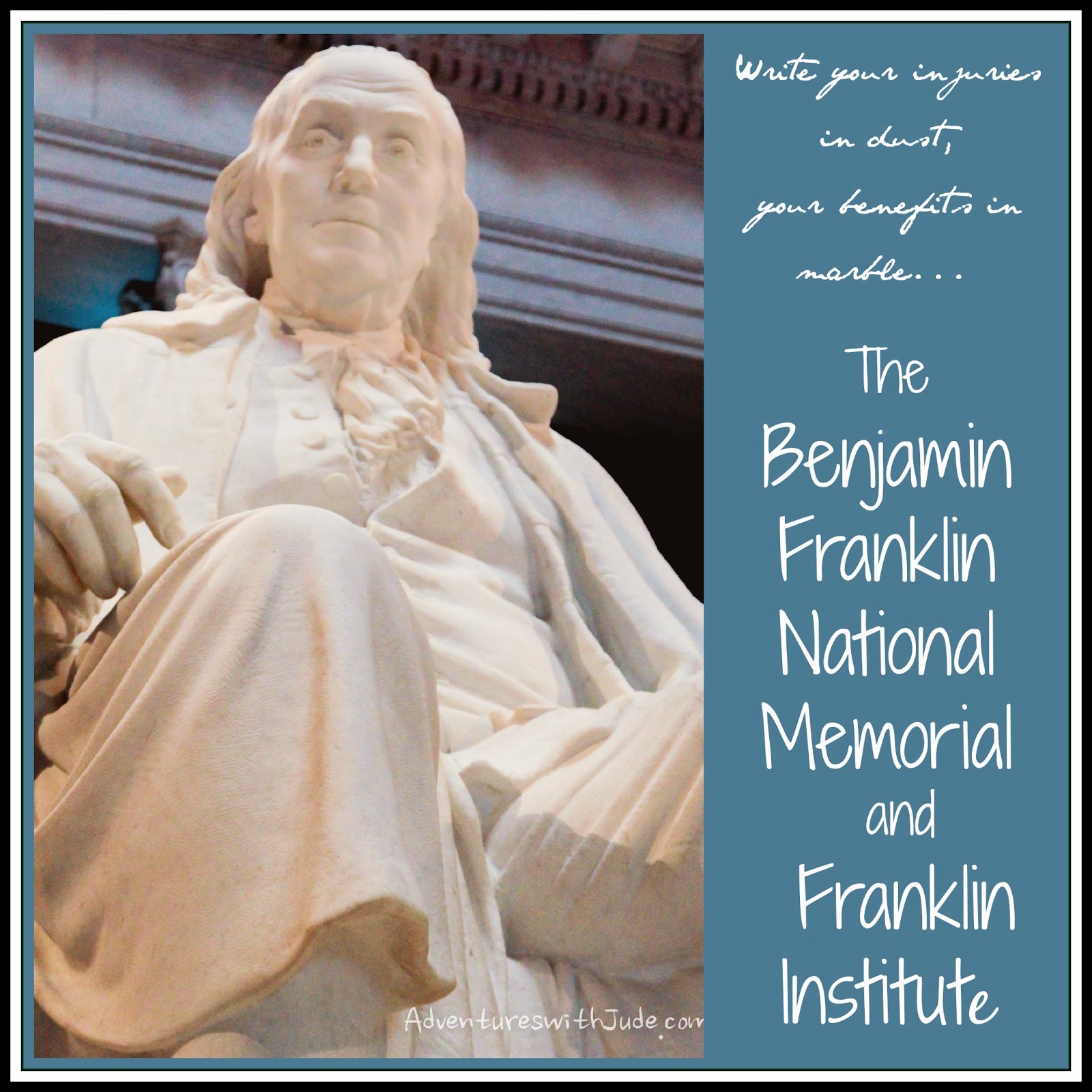
Write your injuries in dust, your benefits in marble - Ben Franklin

In this house, Ben Franklin ranks pretty high.  Jude thinks he's probably the greatest American ever (though George Washington ranks pretty close behind).   Ben edges everyone out because he did everything.  He was a printer.  He went to France (during the American Revolution).  He flew that kite in a thunderstorm.  He invented bifocals.  When it comes to pedestals, Ben Franklin's is pretty tall.

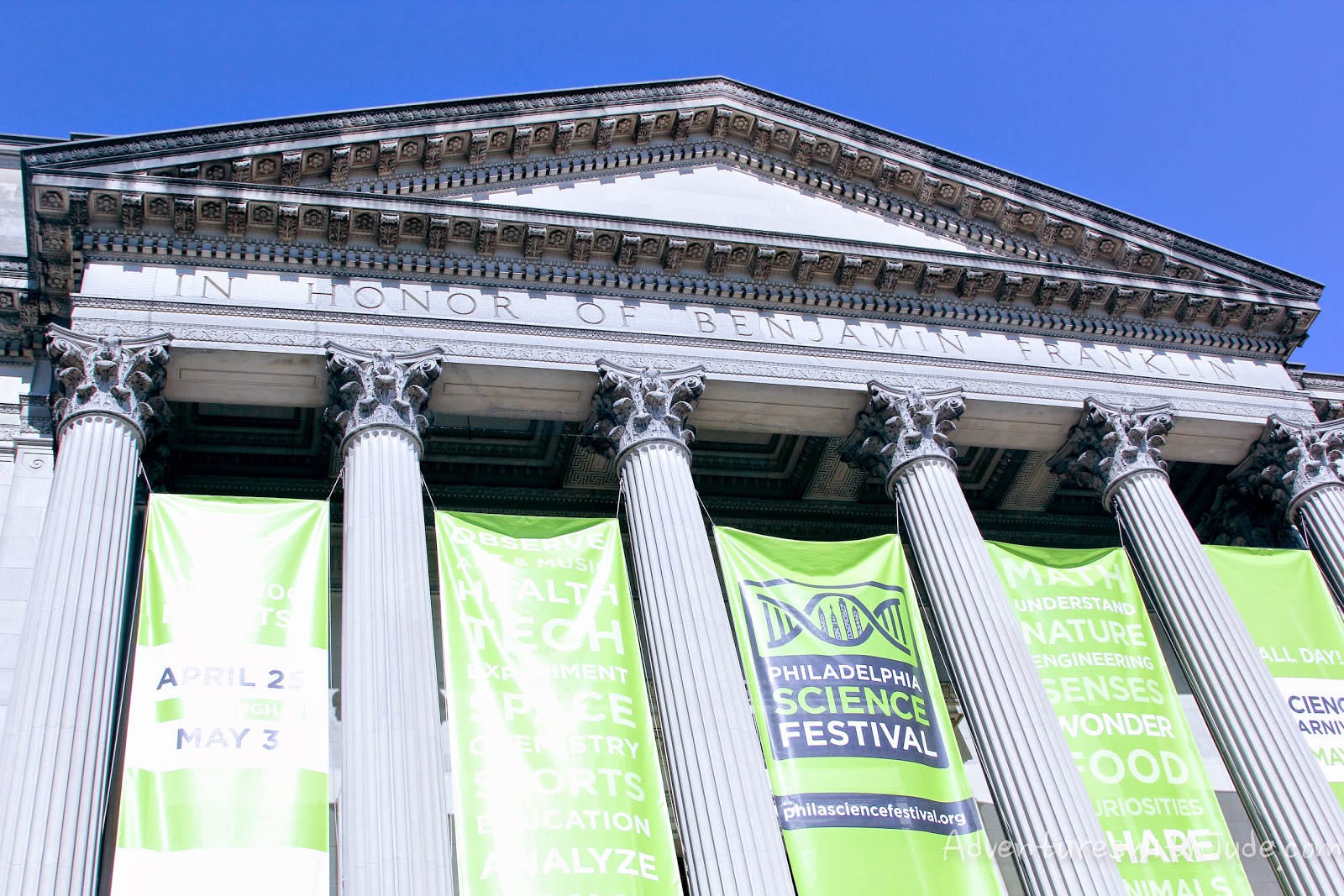
For Celia's recent class trip, the school chose the Franklin Institute for their destination. (Jude was jealous -- though we've been there as a family, he was disappointed he didn't get to go this time, too.  Maybe one day in the fall we'll have a homeschool trip!) The Franklin Institute is a twofold venue: a free National Memorial to Benjamin Franklin and a paid entrance hands-on Science Museum.

Ben Franklin National Memorial and Franklin Institute

The centerpiece of the Benjamin Franklin National Memorial is a 20-foot (6.1 m) high marble statue, sculpted by James Earle Fraser.  The Memorial was designed by architect John T. Windrim and modeled after the Pantheon in Rome, and opened to the public in 1938.  The floors and walls created of imported Italian, Portugese, and French marble soar into a 1600-ton yet self-supporting dome.  Projections of many of Ben's well-known phrases light the walls.  Dedicated in 1976, the Benjamin Franklin National Memorial is the only privately owned National Memorial in the country.  It is maintained by the museum.

Statue of Ben Franklin


In 1824, Samuel Vaughan Merrick and William H. Keating founded The Franklin Institute of the State of Pennsylvania for the Promotion of the Mechanic Arts. The Franklin Institute was established to honor Benjamin Franklin's contributions to science.  This museum was built at 15 South 7th Street in Center City Philadelphia.  By the 1930s, a new venue was necessary.  The Franklin Institute and the Poor Richard Club began to seek funds to build a new science museum and memorial hall. Despite the throes of the Great Depreession, 5.1 million dollars was raised in just twelve days.  In 1932, the cornerstone of the new Franklin Institute was laid at 20th Street and the Benjamin Franklin Parkway. In 1933, construction began on the Fels Planetarium, donated by Samuel S. Fels. It was to be only the second planetarium in America.  The new museum opened to the public in 1934. 

One of the most wonderful things about the Franklin Institute is children learn much as Ben Franklin did -- by doing.  As the tenth and youngest son (who still had 16 siblings in total), the price of a formal education was too dear.  At age 10, young Ben began working in his father's candle shop; he later apprenticed with his brother James as a printer.  A true Renaissance man, Franklin may have left school but he never stopped learning.  His inventions are legendary; his contributions as a Statesman were pivotal in establishing the United States as a sovereign nation.   However, what almost everyone recalls about Ben Franklin is his experiment with a thunderstorm, a kite, and a key.

Ben Franklin flying his kite

The Franklin Institute has ten permanent exhibits that showcase every area of science.  Among the exhibits (and their science branch):

Electricity (Electricity & Technology) 


Electricity doesn't just power the lights.  It moves us, too!


The Frankin Airshow (Aviation & Technology) 

Explore principles of aeronautics in this section.  Pretend to pilot an Air Force plane, or build and launch your own (paper) airplane.


If your plane is made right and properly balanced, it will shoot out of the launcher directly into the recycle bin!

The Giant Heart (Anatomy, Biology, & Chemistry)

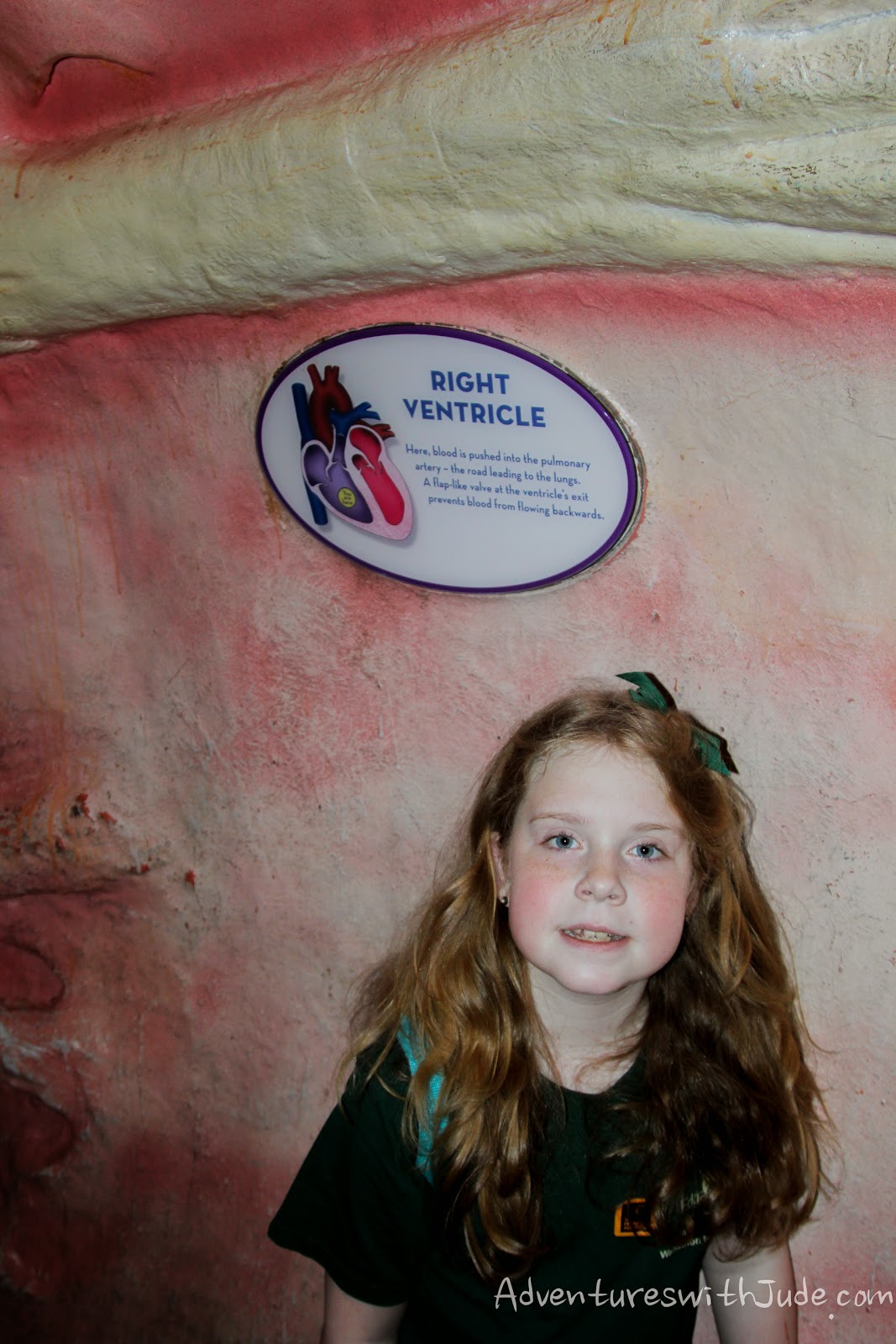
The centerpiece of this exhibit is a giant, walk through reproduction of the human heart and lungs.  Follow the path blood takes as it leaves enters the heart, becomes oxygenated in the lungs, and returns to the body.


We have a warped sense of humor here: 

The Heart at the Franklin Institute

Look!  I'm a catastrophic cardiac thrombus!

Now I'm a pulmonary embolism!

Other exhibits explain the cardiac system, and the importance of cardiac health.


Ever wonder how much blood you have? Generally speaking, it's about 8% of your total body weight.   This scale measures your body weight and then the appropriate volume of liquid is shown.  Celia was shocked to learn that Mom's blood volume was more than three times hers.


If you're looking to rest your feet, have a seat.  It's modeled to show the marrow that resides in our bones.  Celia's first impression -- "Look Mom!  A Bacon Bench."  Ironic considering the topic...it's a good thing Philadelphia hospitals have some of the best cardiologists in the nation on staff!

The Sports Challenge (Physics & Technology) 

This exhibit uses sports and activity to show science.  From the motor planning of wall climbing to a figure skater needing managing centrifugal force in a spin to the role of aerodynamics in a racing wheelchair, you can learn how sports is a specialized science.


Chase Utley's uniform


Philly's hometown sports heroes are also featured. This uniform was worn by Chase Utley, the second baseman for 2008 World Series Phillies team and Matthew's favorite player.  (Celia was disappointed that there was no feature for her favorite Phillie, pitcher Cole Hamels, so she settled for a photo with Utley's uniform, to make Matthew wish he had been on the trip, too.)


The Train Factory (History, Engineering, and Technology) 

Baldwin Locomotive 60000

This Baldwin 60000 locomotive was built just outside of Philadelphia in 1926.  It gives visitors the opportunity to climb aboard a real steam engine.  You'll also have the opportunity to explore electric and magnet trains.

Forensic science is also on display.  Solve the mystery of why a train derailed.


Space Command (Astronomy, Mathematics & Technology)


The Amazing Machine (Machines)

Machines of all types - from pendulums to pulleys - are featured in this area.


Pull the lever, release the bowling ball...and don't flinch!!

Sir Isaac's Loft (Physics)

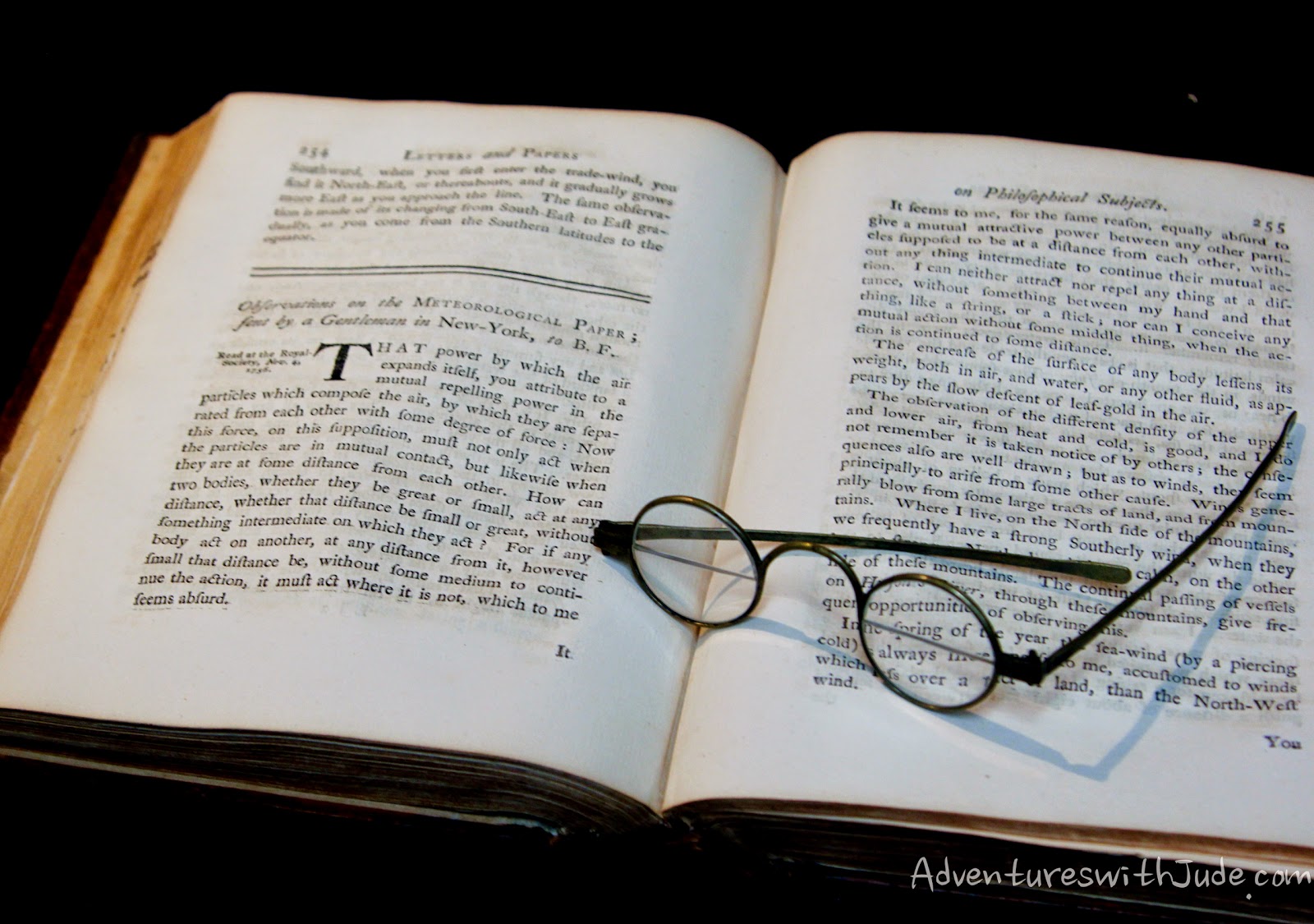
Other areas to explore in the museum include  The Joel N. Bloom Observatory (unfortunately closed during our visit), and the Samuel Fels Planetarium.  There is also a center marble staircase that highlights the Fulcrum Pendulum, and several smaller display cases along the outside of the stairs.  One of them is this exhibit that honors Franklin's contribution to optometry:  bifocals!

Ben Franklin's bifocals


The Franklin Institute was one of Celia's favorite trips so far.  We were sorry when we had to head back to the bus to come home.  We'll definitely be heading back again soon!

http://benandme.com/2014/06/f-faithful.html
F is for Franklin Institute


©2012- 2014 Adventures with Jude. All rights reserved. All text, photographs, artwork, and other content may not be reproduced or transmitted in any form without the written consent of the author. http://adventureswithjude.com
Tuesday, May 27, 2014

On the Way to Cape May...


Staycation Day Trips in Southern New Jersey

We live in southern New Jersey, just outside of Philadelphia.  Most people think of Philadelphia and the western countryside when planning day trips in the area.  There are lots of things to do in the surrounding Philadelphia metro area (check out our list here), but there are plenty of things to do without leaving the state.  Here are some great day trip ideas, all of them east of the Delaware River.

Inland Adventures


Adventure Aquarium - Camden NJ
Sure, there's lots of fish to see, but what makes this Aquarium special is wandering over to the West African River Experience.  Meet Genny and Button, two enormous (3000 pound) Nile Hippos! Adventure Aquarium is the only aquarium with a hippo exhibit.  Other favorites are Stingray Beach Club (pet one of four different stingray species!) and Penguin Island.

Fort Mott State Park - Pennsville, NJ
Fort Mott is one of three post-Civil War forts built to protect the Delaware River.  Construction began in 1872 and was suspended in 1876.  Though never completed as planned, the fort was used by the US military until 1922, when Fort Saulsbury was built.  (Ok, if you're feeling adventurous you can go a little bit west - from Ft. Mott, you can access the other sentinels, Fort Delaware and Delaware City, Delaware, by ferry in the spring and summer.  But it's passengers only, so your car never leaves the state!)

The Garden State Discovery Museum - Cherry Hill, NJ
This hands-on learning experience is for children ages infant through ten years old.  A special zone for the under-3 set allows them to crawl, toddle, and explore without being pushed around by bigger kids.  Learn about construction, broadcast TV, the Jersey shore ecosystem, and more through play.

In addition to these, there are plenty of state parks in the Delaware River, Greater Atlantic City, and Southern Shore zones.  Pick Your Own farms abound, as well as roadside markets boasting fresh Jersey Produce and baked goods made with local produce.  If you'd prefer to go fishing, catch one of 300+ charter boats and head out onto the rivers or the ocean.  

 The Jersey Shore


Unlike what you may have seen on television, what a Philly girl considers "down the shore" are the resorts from Ocean City and south.  If you'd like a quick musical tour of what I call the "Jersey Shore," check out this video.  It features the song, "On the Way to Cape May" made famous by Philadelphia's own Al Alberts and the Four Aces.


Ocean City - Ocean City, New Jersey
Called "America's Greatest Family Resort,"  this shore town features a boardwalk and Gillian's Wonderland Pier, with amusement rides for the young and young at heart.  It's also the home of the Miss New Jersey Pageant - the winner then represents New Jersey at the world-renowned Miss America Pageant just up the Parkway in Atlantic City, NJ.  

Sea Isle City - Sea Isle, NJ
Lazy days on the beach in Sea Isle are some of my most treasured memories.  This quiet town features a Promenade instead of a boardwalk, featuring quaint shops and beachcomber tours. 

Avalon - Avalon, NJ
Avalon is a great place to set sail from for a day of deep sea fishing.  With a number of dayboat opportunities, you're bound to find lots of chances to catch your supper.

Stone Harbor - Stone Harbor, NJ 
A Tuesday excursion to Stone Harbor this summer (2014) provides a special treat. Spend the day on the beach, eat dinner at one of the cafes on the main throughfare, and then listen in to The Jersey Shore Pops concert series.

The New Jersey Wildwoods - North Wildwood, Wildwood, and Wildwood Crest, NJ
These three towns, along with Diamond Beach, make up the Wildwood barrier island at the southern end of the Jersey shore.  Wide sandy beaches (nearly a mile at some points!) provide lots of space for building sand castles and relaxing with a summer novel on a summer afternoon, or bring your surfboard and catch some waves at Rambler Beach.  After the sun sets, head up to the famous Wildwood Boardwalk.  Three piers of neon-lit amusements provide mild attractions for the little ones and wild rides for the more daring.  Bobby Rydell sang it best:  "Every day's a holiday, and every night is Saturday night!"


Cape May County Park and Zoo - Cape May Court House, NJ
This combination is a year-round favorite of ours!  Open daily starting at 10 am (closing depends on season), and located near the Jersey Shore, this FREE activity is a local favorite as well.  An 85 acre zoo adjoins a park complete with two huge playgrounds (one for big kids and one for tots),  picnic grounds, wooded walking paths, and open green space.  A small lunch stand offers quick meals, or pack a lunch and spread out at a table or on a blanket beneath a tree.  Check out some of the animals we saw on one of our previous visits.

I'm excited for summer to start, because many of these are on our "day trips to take" list!  Bonus:  No bridge toll!  If you're from New Jersey, there's plenty to entertain you on your Summer Staycation!


The Crew is sharing their favorite staycation ideas. This button goes live on Wednesday May 28. Favorite Curriculum Choices

http://benandme.com/2014/05/e-education.htmlThoughtful Spot Weekly Blog Hop http://hsbapost.com/2014/06/20/june-2014-homeschool-blog-tell-hsbat-staycations/


©2012- 2014 Adventures with Jude. All rights reserved. All text, photographs, artwork, and other content may not be reproduced or transmitted in any form without the written consent of the author. http://adventureswithjude.com
Related Posts Plugin for WordPress, Blogger...
Pin It button on image hover