Showing posts with label first grade. Show all posts

Wednesday, June 7, 2017

Memoria Press: Prima Latina (Homeschool Review Crew)

Jude has wanted to learn a foreign language for a few years now.  We tried French, but it was impossible for him. The biggest issue was that it's definitely not a phonetic language. There were too many "can't-sound-out" letter combinations that it left him frustrated and dejected. After watching Matthew study Latin, both he and Damien thought that might be interesting.  After all, if it was good enough for big brother, then why not them? Prima Latina is Memoria Press' absolute entry-level Latin course. It's geared for students in first through fourth grade, which made it not-too-hard for Damien (he's just finishing first grade) but also not too simple or babyish for finishing-fourth-grade Jude.   We received a Prima Latina Complete Set to review, which includes a consumable spiral-bound Student Book, a Teacher Manual,  DVD instruction, and an audio CD of Latin hymns.  The set also contains a set of Latina Christiana I flashcards.


(Note: though most of the items can be used for multiple students either simultaneously or sequentially, the Complete Set contains only one Student Book.  So that the boys could work together,  I purchased a second Student Book for Damien.)

Why learn Latin? Isn't it a "dead" language? Well, for starters, it's a phonetic language, and both the sounds and alphabet are very close to what the boys are used to.  There are a few changes, but it wasn't a "learn a whole new way of speaking" thing.  Most of the time, it's them needing to be aware of the differences between English and Latin vowels (where "e" makes an "ay" sound, rather than "eh").  There are a few different consonant sounds, but again, it's more a matter of being mindful than having to learn a whole new phonemic grouping.   Jude sometimes struggles to recreate sounds that he hears; often he doesn't process the sound correctly, and what goes in isn't always what comes back out.   Leigh Lowe, the magistra teaching from the DVD, speaks carefully and enunciates sounds slowly and thoroughly, making it easy for him to process.  However, be aware that she does have a very pronounced US South accent. Damien, who has always had a good ear for accents, now also speaks Latin with a bit of a twang.


Each lesson is between 15 and 20 minutes long, which is a perfect time for this age/level. It's long enough that the boys feel they've actually learned something by the end, but it doesn't go on for so long that it becomes overwhelming.   There are four pages within the student workbook for each lesson: two are "follow along" pages for the video, and then two are practice pages to be completed after the lesson is completed.

Memoria Press is a classical-style curriculum, and I have become very impressed with how well the boys have done with this style of learning. Structured lessons and repetition seem to work well for them, and Prima Latina follows a very set routine.

After the first lesson (where students are taught a simple greeting), each lesson begins with "Salvete!" or "Hello!" and ends with "Valete!" (Goodbye!).  Following the greeting are words to create simple phrases (Salve, Magistra -- "Hello, Teacher!", etc.). As lessons go on, there is an interactive section, where Mrs. Lowe will greet her class with "Salvete, discipuli!" and then she pauses for the students to reply "Salve, Magistra!"  Jude prefers to compartmentalize his schoolwork for during school, while Damien now greets even the checkout clerk with a cheerful "Salve!" Neal and I went out to dinner one night, and he waved us off with, "Vale, magister! Vale, magistra! Valete, parents!"


Next comes a brief review of what was taught in the prior lesson(s). This is a hallmark of a classical education - revisiting and repeating until you can't help but have it all in your head.  (It's not unlike being able to sing a pop song from your high school days after twenty years have passed -- you've heard and repeated it so often that it's just permanently etched into your brain.)  The repetition of key things helps a student remember them long after they first learned them.


The new material starts with a short grammar lesson.  I think that while this program is listed for students as young as first grade, I think waiting until Damien was closer to a grade-two level has helped.  I think having had a year of English grammar has helped him understand when learning verbs; to learn both the vocabulary and grammar simultaneously might be a bit overwhelming. He's very clear on what is a verb vs. what is a noun, etc., so when Mrs. Lowe talks about "invisible" verbs, he understands the difference between types of verbs rather than still trying to figure out that a verb is an action word. As we get further into grammar, I think having a good foundation of English grammar will help the boys not feel so overwhelmed as they are expected to understand more of Latin's conventions.

Next, new vocabulary words are introduced.  There are five words in each lesson.  This section of the lesson focuses on learning the Latin and English words, and then the English derivatives that a student might know.


Here is my second reason for opting for Latin over a language like Spanish, which is also phonetically spoken. Latin is the base for a large number of English words.  Prima Latina shows this from the very beginning of the program.  Mrs. Lowe leads the students in discovering these words, and finding their Latin roots within them.

 I have very few overall complaints with this program, but I want to point out that there may be a few derivatives that aren't pre-printed in the book. In theory, this isn't a big deal; you can see we just added them to the list. However, if you have a student who thrives on routine and everything being just so...well, be prepared for moments of slight panic and re-focusing.


I also wish the derivatives were not printed after the Prayers.  Again, for students who like to follow things in order, having to jump over the Prayer for the derivatives was another "Oh no!" moment.  After a few lessons, the boys usually relaxed, knowing they weren't missing anything, but every time they remind each other "Don't forget, we'll go back!"

The final section of each lesson is the Prayer. Each lesson, a new line was introduced, allowing the student to learn a line and practice with it between lessons before adding the next, rather than feeling overwhelmed by a huge amount of memorization all at one time.  I was definitely impressed by their skills!  They've since learned the remaining lines of the Sanctus, but I'm impressed at how much they had memorized and how good their pronunciation was only about three weeks into the course.


The next two workbook pages are completed without the video.  They provide a short review of prior lessons and practice with the current words.

I admit, we haven't had much use for the flashcards yet.  They do contain Prima Latina words, but the set contains far more than is in the program. It's actually part of the Latina Christiana set, and the Prima Latina words are mixed in, meaning I'd have to sort through the entire pack to find "this week's" words.  I'm also not a huge fan of pre-printed flashcards.  I think for cards to be effective, there needs to be some sort of student involvement, and studies show how the tactile input of writing something helps cement it to memory.  For lesson reviews, each boy is probably going to be making his own study cards.  The Prima Latina CD is an additional resource for the new student.  On this disc are a pronunciation guide, Latin hymns, and prayers. While you don't use it during the lessons themselves (at least as far as we have gotten), it does provide added support for the student, and the hymns are beautifully sung.  (They remind me of attending High Masses, where the Latin was the vernacular.)

I'm pleasantly surprised and impressed with Prima Latina.  When Luke first wanted to learn Latin a few years ago,  I purchased the First Form Latin set, and it just didn't seem to click.  We went on to use a different program, which Matthew later used as well.  I admit that after the French disaster, I was a little gun-shy.  However, I think this has been the perfect pace for the little boys -- and maybe even a good review for Matthew.  I've noticed him listening in as well from time to time.  We had a quiz-bowl style vocabulary study session recently, and there were a few times where Matthew couldn't resist chiming in.  (I think I've hit on a way to get Jude to focus. He was struggling to remember when I was quizzing him from the list, but as soon as I pulled out a bag of pennies to use as point chips, he suddenly was remembering things at lightning speed, including random words from in the middle of the Sanctus!) Often when we review products, the boys' interest fades over time, but they are still as excited now as they were when we started a few months ago.  This is a program we are planning to continue with until the end, and maybe into the next levels!

In addition to Prima Latina, crew families were also working with:
Latina Christiana
First Form Latin
Second Form Latin
Third Form Latin
Fourth Form Latin
The Book of Trees
Nature's Beautiful Order

Click the banner below to read their reviews.


Latin, Nature and Trees {Memoria Press Reviews}


©2012- 2016 Adventures with Jude. All rights reserved. All text, photographs, artwork, and other content may not be reproduced or transmitted in any form without the written consent of the author. http://adventureswithjude.com

Sunday, October 16, 2016

Damien's First-ish Grade Program

Recently I talked about my plans for Jude and fourth grade, so I thought I would talk about Damien next.  I've had this post drafted for a while, but the "what I'm planning" part keeps changing.  He's moving along faster than I expected in many areas, so it's become a scramble to stay ahead of him! Officially, he's starting first grade, but a large portion of his work is at an early second-grade level.  I think it's a result of being everybody's younger brother -- he's listened and absorbed everything.  We'll call him a first-ish grader!


He has a pretty relaxed program -- after all, he's only six.  Math and Language Arts are the two "must accomplish daily" items on his to-do list.

Current Daily Program

Math
Math-U-See
Beta

Language Arts
Spelling 
Spelling You See Jack and Jill

Grammar
Growing with Grammar

Currently, Damien is working on Level 1.  He would be happy to do three or four exercises a day, and I think he could handle that, but for the moment, we're going very slowly. He's been doing one page each day, mostly to let Jude get farther ahead of him.  Jude is finally ready for formal grammar lessons, so we're starting at the beginning. He and Jude started the program at the same time, but Jude has been going at a "review" rate, and is about a third of the way into Level 2.  Once Jude has moved up to Level 3, I'll let Damien loose and let him work at whatever pace he decides. It's a balance between not holding one back and not letting the other feel left behind.

Literature
Veritas Press More Favorites
Progeny Press literature studies

More Favorites is our current literature guide book, but I think it will probably last us until Christmas or so. I like how it's a gentle bridge between 1st and 2nd grades; he's reading at an early 2nd-grade level, but isn't quite ready for the depth of higher level studies.  After he finishes this, he'll switch to some early elementary Progeny Press literature studies, and then maybe back to second grade Veritas Press guides.

Copywork
Currently he's working his way through A Child's Garden of Verses by Robert Louis Stevenson.  I'm not certain what we'll do when he's done that, but probably another book of poetry.

Reading
His choice of book, for approximately 15 minutes each day.  It's plus or minus a few minutes depending on the length of the book/chapter.  He's currently reading Book 2 of the "My Father's Dragon" trilogy, Elmer and the Dragon.

Once he's done those tasks for the day, if he's still up for more work,  we are doing some worksheet style programs.  They're generally something seasonal, so the topic is pretty random. The aim is for a 2-3 sheet packet three days each week.   He'd like to add more art - drawing, painting, etc. so that's become the currency for completing his must-do list -- if he finishes in time, we are able to get the paints out.

Damien also gets involved in review products and big kid science projects, so I'm not too worried about rounding things out formally.  He's also participating in the National Park Service's Junior Ranger Program. In this post's picture he's wearing badges from our summer trip and holding new Junior Paleontologist and Valley Forge Junior Ranger badges.

Coming soon:

Bible
Grapevine Studies

We'll start this with their Birth of Christ study, and then continue on with New Testament Catechism. 

Writing
180 Days of Writing - Grade 1


©2012- 2016 Adventures with Jude. All rights reserved. All text, photographs, artwork, and other content may not be reproduced or transmitted in any form without the written consent of the author. http://adventureswithjude.com

Wednesday, June 11, 2014

Learning Wrap-ups (A Schoolhouse Crew Review)


Learning Palette Online Program Review from Adventures with Jude

The Crew recently was given the opportunity to review several products from Learning Wrap-ups.  Learning Wrap-ups is a mathematics program developed by a teacher looking for a way to help her students.  Some of her students were not succeeding with memorizing multiplication facts with "traditional" flash cards, so she developed a different way that would work.  The product line has grown from the initial multiplications facts manipulatives kit to encompass other areas of mathematics and other subjects, such as language (English and Spanish), science, and even music theory.  It also has expanded into the Learning Palette program; instead of string and sticks, a round "artist's palette" style base is set with interchangeable cards and colored disks are used to indicate answers.  This program has also been independently expanded into the Learning Palette Online language arts and math program for students in K through 5th grade.  Our family received a full online family subscription from LearningPalette.com  Subscription costs are $25 per year for a single user, or $60 per year for up to five students in one family. Two students in our family,  Jude (1st/2nd grade) and Damien (PK) have been trying it out, with mixed success.  (Note: They are currently offering a 20% discount if you use the coupon code HOMESCHOOL.)

From an academic angle, I think this is a very good program.  The online series contains two sections - Language Arts and Math, and each subject is divided into different levels. The divisions are pretty logical (generally by expectations for that grade), and you can move around within the level/activities.


I also like that you can do different levels within the program.  For example, Jude easily completed the Level 1 math activities, and then started in on Level 2.  However, because his language skills are far behind his math abilities, so it was good to be able to start in the Basic level cards for those.


 The some of the Basic level skills for language arts corresponded with some of the things we have on our "Speech Therapy" activities summer/home program list - matching pictures with sounds, rhyming, etc.


 I foresee us using the language side of the program more as a "speech therapy" activity, rather than an actual "school" activity.

Damien started with Basic levels, and did OK with a few activities.  He didn't get much beyond "Match the Letters" in language arts or matching colors & shapes for math.  I'm ok with that, given he's only almost 4, however, unless you have a really advanced kid, I wouldn't start this earlier than the "manufacturer's suggested age" of Kindergarten.  Schools have been using the Learning Palette program for a long time for independent learning centers, and I agree with this practice. It's really more of a review/drill game, and less of a learning activity -- if the child doesn't know that the word jam starts with a /j/ sound, which is written as the letter j, it's not going to be an independent program.  I think if the boys were just reviewing and able to work on their own, this would have been easier.  Damien even struggled with understanding the "split card" idea - where the colored rings made the top matches and the colored disks matched the bottom. I think because their skills are so limited, it was frustrating because they didn't have a lot of variety to work with, and both needed help figuring out even just how to get from card to card.  For example, Jude eventually figured it out by where/what buttons he clicked on in the past, not by decoding that that shape he clicked said "Next Card."

We had an opportunity to review the physical product but I decided to request only the online program.  Given we spend a lot of time working away from home, I thought that the online version would suit us better because it was a lot less pieces to worry about losing in our travels.  LearningPalette.com works on the HTML5 platform, so it can be used on a computer or tablet, or even an iPhone! (The last one is little small, but it will come up.)  Having used it on both a MacBook and iPad/iPad Mini, I am reconsidering the "it's a lot of pieces" stance.  The trade off for having it online is having to drag the "chips" into place.  On the computer, if Jude resized the window mid-card (usually making it bigger so he could see the farthest top and bottom edges), he had to re-place the tokens.

Regular screen
Resized to full screen

On the iPad, we struggled with moving tiles around.  Sometimes, Jude lifted his finger too soon, an a chip would drop into the wrong space.  Once it was there, we couldn't move it.  (This did not happen on the laptop.)  He got very frustrated, because he knew the answer was wrong, but he couldn't fix it.  Damien struggled moving chips around - his fine motor skills aren't there yet, even using a touch screen.  I think the physical product, with the truly hands-on manipulation would have been better suited to them.  (Plus, it would have been a fantastic fine-motor development exercise.)

Jude also needs a lot of sensory input to maintain focus.  One day, we tried working draped over a Bosu ball.


It was really awkward using the computer, and I think having the physical program would have helped with being able to position himself and the item, plus given him a broader range of movement (picking up chips and moving them to another space/into the palette) rather than having only a 4" x 3" trackpad to move only his finger.


Overall, I liked the concept of the Learning Palette but the online version ultimately didn't suit our needs as well as I would have hoped.  Since the boys will be in the age range for quite some time (math skills are covered through fifth grade, language arts to third), not counting therapeutic use, once our subscription runs out I may consider investing in the physical product.  I'm definitely going to check out the reviews that other crew members did of the physical product Learning Wrap-ups activities - click the button below to join me!

Click to read Crew Reviews


©2012- 2014 Adventures with Jude. All rights reserved. All text, photographs, artwork, and other content may not be reproduced or transmitted in any form without the written consent of the author. http://adventureswithjude.com

Wednesday, May 21, 2014

Learning in the Fast Lane: Our Favorite Carschooling DVDs

We spend a LOT of time on the road.  Last year, we drove 10,147 miles from home to duPont for doctor and therapy appointments.  I was letting the boys just watch videos on their iPads, but then we were offered videos from Curiosity Quest to review, and I had an "AHA!" moment.  If they're going to be staring at a screen, why not make it something educational and count it for schoolwork?  However, "just two DVDs" was not going to work for all the time we spent on the road.  The "bridge hospital" (DuPont Bryn Mawr) is a bit over an hour each way, and we blew through both of the review videos in one trip!

Our Favorite Carschooling DVDs (PK & early elementary)

It seems like a lot of kid videos now are much more "entertainment" than learning.  Understand, I'm not saying you can't learn from SpongeBob.  Luke and I recently discussed the characters as a personification of the seven deadly sins, but I think that's a bit above Jude and Damien's grade levels.  It was a bit tricky to find videos that suited both of them.  Damien is still good with preschool shows, but Jude is between age groups - a little beyond the Blues Clues phase, but not quite ready for the re-enactments of the History Channel.  I also didn't want to buy DVDs of shows they watch on TV.  Yes, there are some great ones on these days, but can I be honest?  I'm so tired of them, and the "official" rules of the road says the driver gets final say on what sounds come out of the radio, right?  Over the last few months, I've been adding to our "school DVD" Collection.  While our library contains several other educational DVDs, here's our list of favorites:

Where on Earth is Carmen Sandiego?

1.  Where on Earth is Carmen Sandiego?    

These have become Jude's second favorite shows (next to Liberty's Kids).  He's become a real history and geography buff, and these suit him perfectly!  The collection is a 4 DVD set, with 40 episodes of Carmen (the entire series) plus bonus features: a full length movie (The Secret Garden) plus the first episode of Liberty's Kids.   This has become our favorite program to watch in the car, and I love how episodes encompass so many fields - history, literature, geography, music, and more - without being overwhelming.

Super Why!

2. Super Why!

I am giving this series full credit for Jude's ability to sing the ABCs.  We had tried just about everything to practice learning the alphabet in order, and he just couldn't grasp it.  He fell in love with Super Why!  I have no explanation for it - because he's seen plenty of other shows, but this one just works for him.  Damien also loves the show, and thanks to it can identify letters and their sounds, sing the alphabet, and is starting to recognize cluster phonemes (like /ch/ and /sh/).


Bear in the Big Blue House

3.  Bear in the Big Blue House

I admit, this shows just how many generations of preschool TV we have been through.  Bear was one of Luke's favorite characters when he was a toddler and preschooler, and of all the shows we've seen, this is one of the few I miss.  Finding suitable Bear DVDs was a little tough, because most really are focused on preschool themes.  The first one I ordered was "Dance Party" and it quickly became a favorite. (Who doesn't love a good "Bear Cha Cha Cha" to groove to?)  Much to my surprise, Mr. "I-don't-interact-with-videos" Jude has been singing along!  Since then, we've added "A Bear for All Seasons" and "Storytelling with Bear" to our collection.


Disney Animation Classics The Wind in the Willows

4.  Walt Disney Animation Collection: Classic Short Films

The Wind in the Willows was the first of these we added.  I chose it purposely for its literature angle - this disc contained not just the title story, but also included
  • "The Grasshopper and the Ants"
  • "The Ugly Duckling"
  • "The Wise Little Hen"
  • "The Robber Kitten" 
  • "The Golden Touch" (the story of King Midas)
Disney's American Legends

We will be adding others from this series soon, so that we have a variety of these short stories to enjoy.   Luke just finished a unit on the American "Tall Tale" genre, so we added Disney's American Legends to our stash as well.  He liked watching the different interpretation of the stories -- these legends have taken a life of their own and he has enjoyed hearing their version of theses tales.


Old School Sesame Street

5.  "Old School" Sesame Street 

Who doesn't love Sesame Street?  I got these particular DVDs because they are of "old school" Sesame Street.  While Children's Television Workshop has compiled some "themed" videos (featuring vignettes of letters or numbers grouped onto a single offering), I love these classic episodes of a live action story interspersed with single-concept skits.   They don't necessarily fit a particular class category (like our Bear DVD for "music" and phonics from Super Why?), but they are a great "learning but you don't really know it" show for relaxing with on the ride home.


Educational DVDs are a great way for us to not feel like we are wasting hours of driving time.  While the boys think they're getting away with a treat and watching a video, it's a practical way for us to cover some of the subjects I want them to learn in a way that doesn't leave us overwhelmed with ground to cover in the appointment-shortened days. As everyone gets older, we can add in other videos - like the History channel ones or movie adaptations of literature and play. I've already got my eye on some classic Schoolhouse Rock! videos...


Sharing with:

blogging through the alphabet sm. The Pebble PondThoughtful Spot Weekly Blog Hop
D is for DVDs


©2012- 2014 Adventures with Jude. All rights reserved. All text, photographs, artwork, and other content may not be reproduced or transmitted in any form without the written consent of the author. http://adventureswithjude.com

Wednesday, May 14, 2014

Golden Prairie Press (A Schoolhouse Crew Review)


Jude adores American History.  He's been studying Colonial America and the Revolutionary War this year, and I think it's probably the highlight of the school day.   He's absolutely obsessed with the "George Washington and the Bluecoats," and Ben Franklin is his hero.  This coming summer, I'm planning to take the kids on a week-long Civil War battlefield tour.  At first he didn't want to go, but when he learned that we were going "where the Bluecoats beat the Graycoats," he was racing to pack his toothbrush.  (Please don't tell him the current Army uniforms are green!)  When the opportunity to study Heroes and Heroines of the Past American history curriculum from Golden Prairie Press by Amy Puetz came our way, I was thrilled.  Heroes and Heroines of the Past American History is a thirty week/full year history curriculum for 1st through 6th grades. It begins with the Native Americans and early explorers, and continues through to events of 2013.  To capitalize on Jude's current interests, we started with the American Revolution.

The lessons are adapted for the student's grade level.  First, there is a basic overview of the lesson written for younger students (about a page for 1st/2nd grade), followed by a more detailed text (2-3 pages) for those in grades 3 to 6.  However, not every lesson has two levels provided; depending on the topic, there may be a combined lesson text for all grades that may approach three pages.   Because Jude cannot read, I had to read everything to him.  This was a real struggle for him.  First, there was very little illustration of the story itself.  While there may have been an illustration with the text, it was a fairly static image, and not often something that helped explain the story.  Jude struggles to keep up with auditory learning when there isn't a detailed visual input, and this was no different.  Even when there was only one page to read, often we could only read a paragraph at a time, or repeat passages, for him to grasp the whole idea.  Even when he was familiar with the story (for example, Caesar Rodney's ride to cast a deciding vote for independence), he just couldn't remain focused long enough to hear it all.  Following the text, there is a set of comprehension questions that are appropriate for all levels.  I think these would be easier for a child who can read independently, because they would be able to refer back to the text and skim for the answer; Jude often struggled with them because he was dependent solely on memory.

Following each text, there was an activity to go along with the lesson.  The activities in this book include:  
  • Examining Historical Art
  • Games of the Past
  • Cook Up Some History
  • Sing Some History
  • Listen to Some History
  • Crafts
  • Experiments
Some of these were hits for us - examining art, cooking, and crafts are all among Jude's favorite activities.  Some were harder for him - singing and listening were not popular.  With nearly all of the lessons, there were writing activities, which we skipped over (I felt they were more appropriate for older students).  Many lessons also included map skills, which Jude really enjoyed.  I think what made some of this difficult is he is at the younger age (finishing first/beginning second grade).  I think a lot of these activities are really more appropriate for an older elementary student.  If we hadn't been asked to try out the activities, I would likely have skipped many of them because of his age.

To me, history is history, and I am admittedly suspicious when history is revised to reflect a particular viewpoint.  I didn't think there was too much revision in the sections we worked on, but noticed that there was a definite conservative and Christian viewpoint presenting the 20th century sections.   I don't have a problem with Christian viewpoint - in fact, the program Luke is using has a Biblical view. However, it presents historical events neutrally and not with any religious or political "spin." I feel there are several sections where there is a conservative political undertone, rather than a neutral facts presentation.

Included in the program are stories for further reading, with some of the literature edited by Amy Puetz to align it with her vision for this faith-based curriculum.  They were a bit above Jude's level,  so we looked at some books for younger students about the figures of the Revolution.  Had Jude been at a reading level that was more appropriate, or if we choose to use this for him in the future, I would definitely want to read and compare the original editions with the program edits.


This curriculum package costs $98.99 and is available as a digital download.  It includes three ebooks and three CD downloads:

Heroes and Heroines of the Past: American History Part 1 ebook
Heroes and Heroines of the Past: American History Part 2 ebook
Historical Skits ebook
Additional Materials Downloads CD
Sing Some History CD
Listen to Some U.S. History MP3 CD

    I really had hoped that this would be a program for Jude to move forward with as he finished his current course.  I think he did enjoy some of the activities, but the single-sensory presentation of the core lessons were a struggle for him.  The multisensory activities that went with the programs were easier for him, but they were really supplemental (cooking foods of the era) and not learning the actual historic events that shaped the United States.   If he was either a stronger reader or an auditory learner who could be read to, this would have been a more successful program for us.

    Read all the other Crew reviews about this program by clicking the banner below.

    Click to read Crew Reviews


    ©2012- 2014 Adventures with Jude. All rights reserved. All text, photographs, artwork, and other content may not be reproduced or transmitted in any form without the written consent of the author. http://adventureswithjude.com

    Logic of English Foundations A (A Schoolhouse Crew Review)

    Logic of English Foundations A Review from speech therapy viewpoint

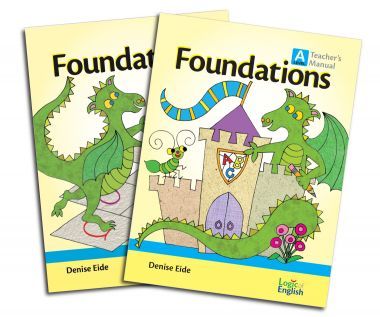
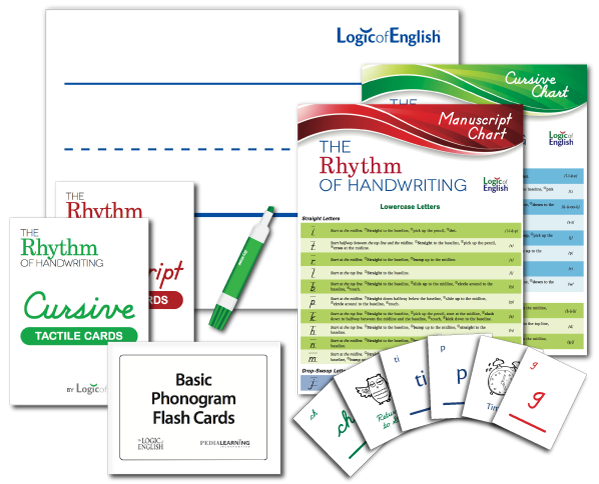
    Logic of English is a language arts curriculum program for all ages.  It is divided into two levels: Logic of English Essentials for students ages seven and up, and Logic of English - Foundations for students ages four through seven.  Foundations focuses on phonemic awareness and early writing skills, and is further divided into three sections.   We received the Foundations A program for Jude to work with. The three core texts are the scripted Teacher's  Manual, the student workbook (available in both manuscript and cursive writing), and the book Doodling Dragons: An ABC Book of Sounds ($71, all necessary printed texts).  We also received The Reusable Resource Set.  This $85 package contains Basic Phonogram Flash Cards, Handwriting Tactile Cards, two sets of  Phonogram Game Cards, the Rhythm of Handwriting Quick Reference Chart, and a small Student Whiteboard.  The package contents are also used with Foundations Programs B and C).

    LOE Foundations A
    Language and reading are a struggle for Jude. I've lost track of how many programs we have tried already, plus we intentionally took a six month break from formal reading lessons. His most recent course of speech therapy started in August, and his therapist (Miss Jaime) and I agreed that before he could learn to read, he really needed to get stronger expressive language skills. Because we are coming to the end of this round of therapy (the clinical model is to alternate intensive therapy with periods of rest in order to allow the child to practice skills and avoid burning out), we decided it was time to start re-attempting a reading program that might help him keep up with the skills he's been learning in therapy. One of Jude's weaknesses is articulation. For example, to him, the words "mud" and "mug" come out the same.  Being able to read a word doesn't mean anything if you don't know what the sounds you are saying mean - even if he can figure out the word on the page is "mug" it makes no sense if his brain is saying "Why are you pouring the root beer into the mud?"

    For speech purposes, we needed a program that was phonemic based to help him work on sounds both in isolation and words.  Miss Jaime wasn't familiar with Logic of English, but felt that as long as it was truly phonemic based (vs. "a little phonics and then ultimately memorizing the words"), it was worth a shot. Our philosophy was if it helps him read, great, but right now, let's work on knowing what word you're saying.  After our books arrived, I took them to one of our therapy sessions, and she worked on one section with him. She was very pleased with the program, so that was the first point in it's favor.  She was honest and agreed it was going to be a lot of work for him, but it was definitely compatible with our overall language goals.   We both liked how short each lesson was (less that ten minutes).  For a child with a low frustration threshold, keeping lessons short helps. 

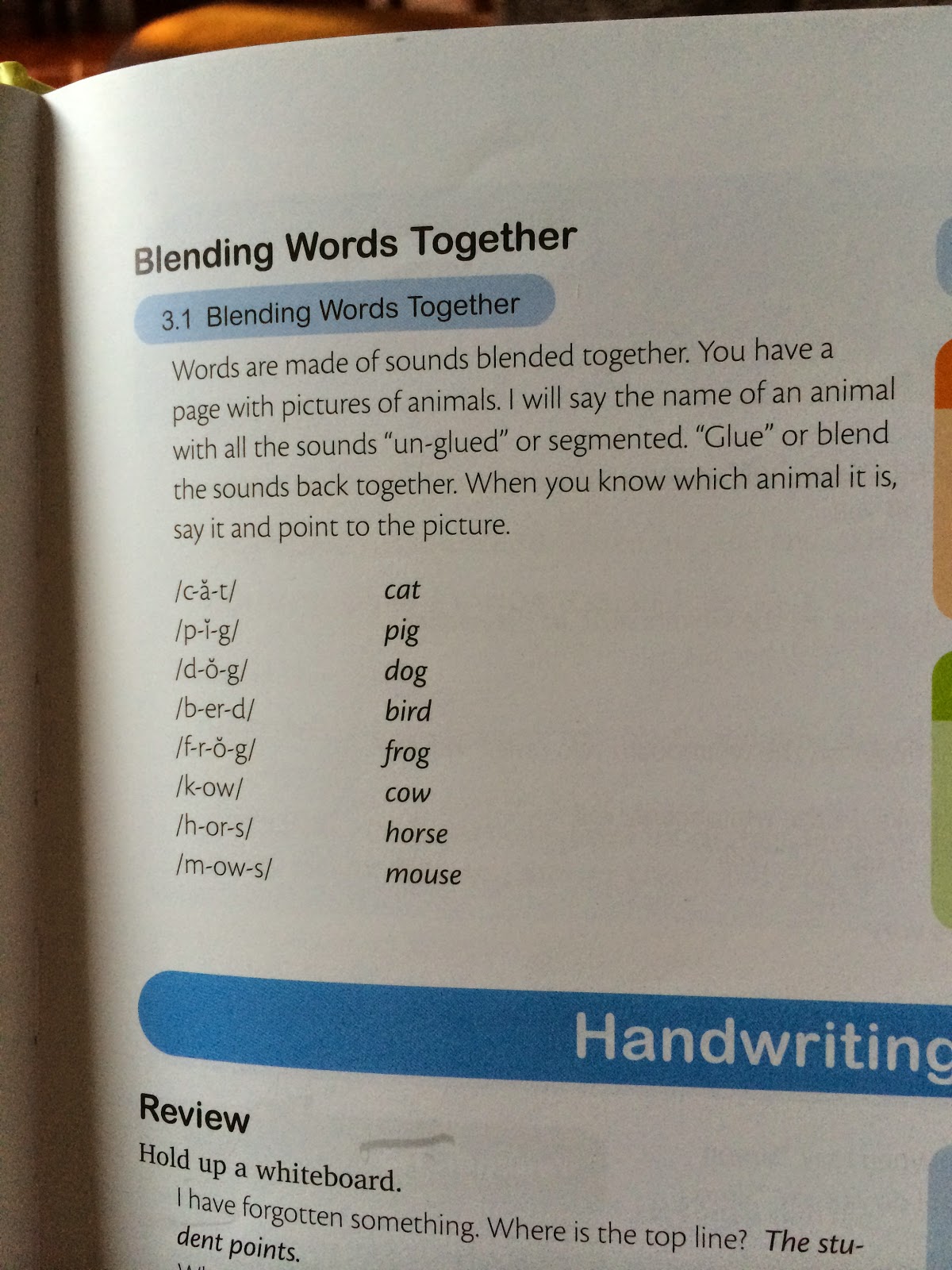
    blending phonemes into wordsHowever, one thing she was concerned about was the pace of the program.  For a neurotypical child, the lessons were a suitable pace.  However, Jude has some serious language deficits, and needs a lot of modeling.  She was concerned that he could fake his way through the harder-for-him parts.  For example, blending individual sounds together was something that would be difficult for him to do on his own, but if we practiced enough times, he would just memorize the patterns, not blend the sounds.  I agreed with her (for all of Jude's irregularities, this is definitely one behavior that occurs nearly all the time), so we approached this a little differently.  While most students would be able to complete a lesson a day, we were definitely going to have to go at a slower rate.  We repeated lessons several times, often rearranging the words so he didn't have the pattern to support him.  At the end of the six weeks' review, we are actually only at Lesson 8, having spent almost two weeks just on Lesson 3.  It took him three days to be able to hear sounds in isolation, and then about eight school days to be able to put the blended words together. Between listening, motor planning, and making the sound, the words were just a huge struggle for him.  I don't think it was that the words were inappropriate -- after four days of getting nowhere, this was one of the lessons Miss Jaime looked over, and she agreed that they were reasonable words.  It just was Jude's brain not keeping up - we just needed to keep trying.  In order to keep them fresh, one day we would start at the top of the list and go down, another day we'd go in reverse. I'd mentally number the words, and one day we'd do evens followed by odds, or odds followed by evens, just so that he didn't learn "say cat then pig then dog," and really had to work to put the sounds together.  She also wanted us to use her criteria for "success" - 90% accuracy, three consecutive sessions.   We were all thrilled when Jude hit that...I think by week three of the same words, we were all tired of those words!

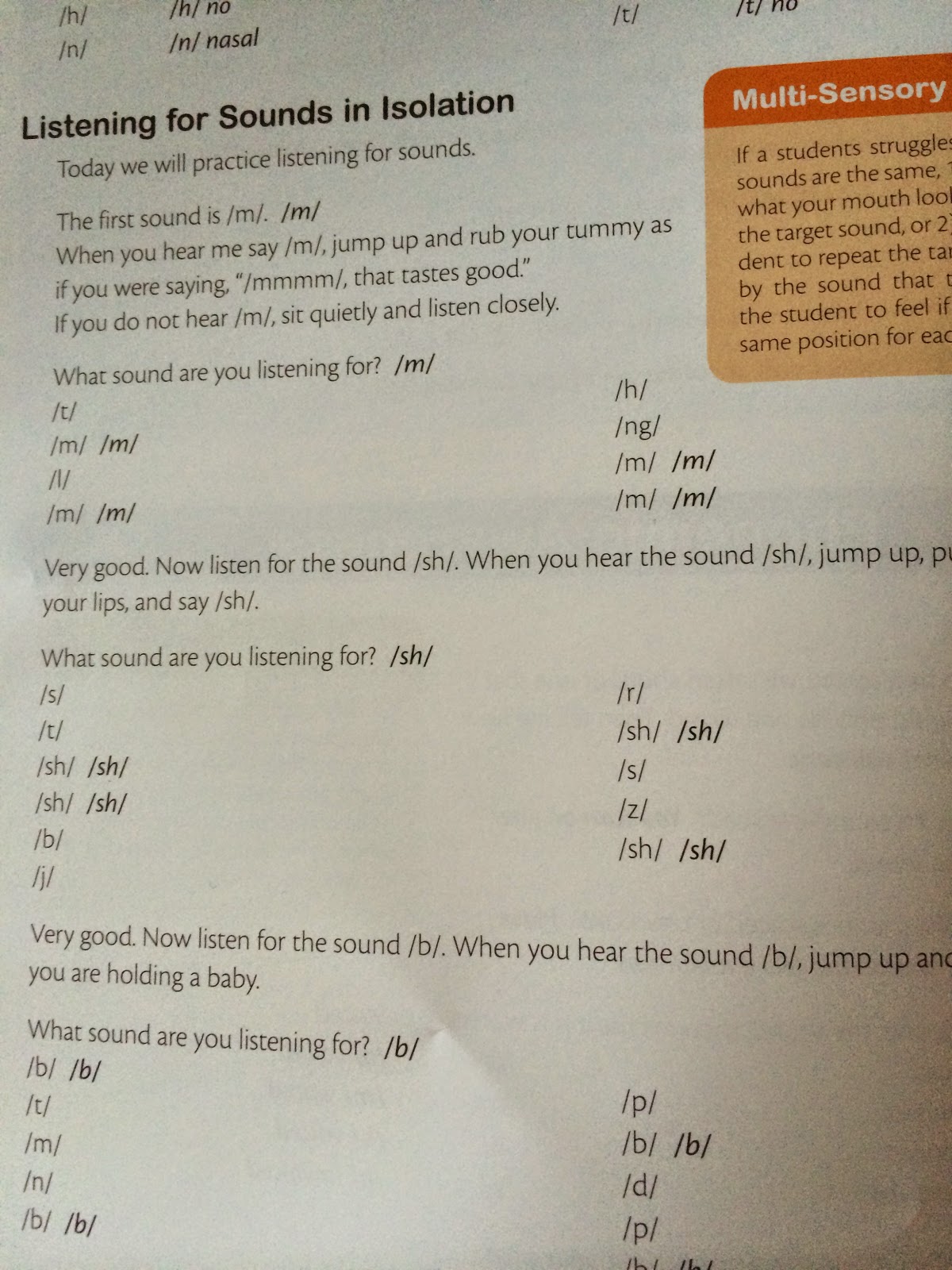
    isolating voiced and unvoiced soundsThe Teacher's Manual is very well scripted.  Foundations is supposed to "[Equip] teacher to combine the art of teaching with the science of reading."  This definitely is true here.  For example, the terms used are speech science based - using the terms voiced/unvoiced for sounds, explaining pronunciation (/k/ means "say the sound, not the letter"), and explaining the location of the sound and the placement of the mouth/tongue/teeth.  While this is not going to be an overall substitute for Jude's speech therapy, it is definitely a great "between" program that builds on familiar-to-him language.  If you are a parent/teacher with little/no speech training, it is easy to understand - while using "therapeutic" language, it's not so full of jargon that it becomes overwhelming. There are 48 lessons in all - 40 "new material" lessons along with a "review" every fifth lesson to make sure that the student has learned the skills being taught (it's much easier to go back and repeat one or two lessons than try to figure out after Lesson 30 that he didn't quite catch all that was in Lesson 12).


     Each lesson combines listening and repeating sounds, focusing on blending sounds into words, and then learning the proper strokes for writing.   One thing we both were impressed with was that it actually started with listening.  Before the child even begins putting oral sounds together, the lessons start with blending two words into compound words.  The parent/teacher begins by saying two individual words, pausing between each, and the child looks at the provided images to decipher what the words become when combined. Using familiar words and images, the child learns that "sounds go together."  For Jude, who tends to drop middle sounds, this was a perfect exercise.  He could hear, and eventually repeat, all of the phonemes contained in the word.  For example, one of the blends was "butter" and "fly." Instead of saying "bu er fy" he was starting to recognize that there are /t/ sounds in the middle of "butter."  In general speaking, he tends to garble the /l/ sound and now will say the last syllable as "fwy" but with intense focus on the syllable structure will now say "but ter fly."   For him, just recognizing there are sounds in the middle is huge.


    LOE Reusable Resources pack
    We have been using the Manuscript Workbook  I was torn on which to go with - cursive is supposed to be easier for children with motor skill issues, but Jude's occupational therapist has been focusing on printing with him, because it forces him to be more aware of spacing and line limits.   In order to reinforce the same skills, we opted for manuscript.  Unlike other programs we have used, it doesn't begin with "write this letter" but instead with component strokes.  This is where the whiteboard was really useful.  While the workbook has a space for practicing strokes and letters for each lesson, I found that using the whiteboard helped keep the book "empty" until we were ready to move on from the phonemic section.  Once Jude mastered how to do the sounds, he was very proficient with the strokes/letters.  Yes, the penmanship in his book may be a bit "artificially" beautiful, but using the board kept us from the "but I already DID this, I want to move to the next page" fight.  Though the set comes with a marker, I purchased a set of dry-erase markers, so that each day we were using a different color.   This helped keep it different as well ("We haven't done orange yet!").   Some days, instead of actually pen-and-paper work, we worked with the Tactile Cards.  This program is definitely flexible enough to accommodate many students' paces.   Due to copyright issues, we were unable to copy the workbook pages.  Therefore, instead of circling the images on the first go-around, Jude would simply point to them.  Circling was an "earned" privilege - once he had achieved oral proficiency on that blend, he got to circle it.

    While we haven't worked directly with Damien, just being around as we work on things has helped his speech as well.  He is also a patient of Miss Jaime - he receives feeding therapy from her, and she also has been monitoring his speech. (He has not yet had a formal speech evaluation for therapy, but she keeps tabs on his progress so that if we find he does need it, he will be able to start as quickly as possible.) She has definitely noticed his articulation getting better -- at the start of his current round of therapy, we discussed ending the block with a full speech evaluation.  We've since decided that his speech has gotten strong enough to not warrant testing!  I'll likely use this program with him in the fall as well, because it's clear that it's working for him, even indirectly. 

    I will admit, this program is not going to be a "magic bullet" for Jude.  Frankly, I don't think any program is going to be -- he just needs a lot of time and practice.  However, of all the programs we have tried, so far this has been the one that has worked best for his disabilities.  We are able to control the pace of the program, from how much is presented at one time to how quickly we move forward.  While each lesson has a small number of sounds/words to work with, keeping him from feeling overwhelmed, there are enough to be able to mix them up so Jude can work on learning the sounds of the words, not the pattern that they are presented in.  He is about to be discharged from speech therapy for the summer (we will take about three months off and then start up again in September), and this is a program that I feel will definitely help reinforce concepts that he has been working on in therapy.  Clearly, the Level A program alone is going to take much longer than average - I'll be shocked if we complete it by September - but I think that it's a program that will work for Jude when taken at his pace. 

    Crew members have been working with a number of Logic of English curricula from both programs.  Click the banner to read about the other products reviewed.

    Click to read Crew Reviews


    ©2012- 2014 Adventures with Jude. All rights reserved. All text, photographs, artwork, and other content may not be reproduced or transmitted in any form without the written consent of the author.  This post may contain affiliate links, please see the Disclosures page for details.  http://adventureswithjude.com

    Thursday, April 24, 2014

    CTC Math (A Schoolhouse Crew Review)


    CTC Math is an online math curriculum that provides tutoring for all ages - from newly minted Kindergarteners to upper level Calculus students.  Each lesson starts with a short tutorial video and continues with a practice session to help hone skills.  Created and voiced by a homeschooling dad, Pat Murray, this is a program for homeschool and in-school students alike; everyone in our home was able to participate in this review of a 12 Month Family Plan.

    Damien started with the Kindergarten level.  Given he's still an early preschooler (he's not quite 4), I was really surprised that there were lessons he could do.  However, that doesn't mean that this program is watered down.  We've worked on other programs that have a Pre-K level that contain similar lessons, but in comparing them, CTC Math actually expects more of students.  It doesn't create a level that asks the student to count to 5 in preschool, and then to 10 in kindergarten.   It gives young students the credit they deserve -- that most four- and five-year-olds are smart enough to count to ten, and don't need to stop at five.  It doesn't create an artificial level for younger students, and ask them to re-prove competence in Kindergarten.  It will probably take Damien until next summer (when he turns 5) to complete the course, because there are some things he just isn't developmentally ready for at 3 1/2.  However, I'm really impressed at how well he is doing with the early lessons in the program.

    Jude is coming to the end of first grade.   There have been some activities that we haven't had an opportunity to actually sit and work though in his regular workbook, so I've been hesitant to move him up, but he's getting frustrated working through his program.  CTC came along at a perfect time for us.  For students through sixth grade, CTC Math can be used as a full curriculum, so we used the first grade course to evaluate Jude's readiness for second grade.  For some units (like addition and subtraction), we were able to use the overview test, while for others I wanted to evaluate him on individual skills.  Sitting with him as he works through the units, I feel he does have a good handle on things, and his overall score of 95% for the first grade level is accurate.  We've already started moving on to second grade work!  I haven't fully decided if we are going to use a a book-based program or just continue with CTC Math for next year, but we will definitely be using this!  The well explained video examples really make sense for my visual learner!


    One of our issues last year was the program we were using was aligned with the Common Core.  I know everyone has their own philosophical take on the Common Core, but our biggest hiccup with it was practical - it wanted Jude to show he could do something three or four different ways, and he was getting frustrated.  To him, if he could add five and five and get ten, he didn't understand why he had to add dots, pictures, strokes and numbers - he knew "five plus five equals ten."  CTC Math hits on all the concepts, so you can be confident that your student can add proficiently, but it is not "aligned" with the CC.  Jude was much happier with learning something, proving he could do it, and moving on.  He did have to use/practice those skills later (for example, using addition to count up area on a graph), but he wasn't bogged down in "proving" he could add six different ways.

    Luke is currently "officially" studying Geometry.  I asked him to attempt the Algebra II section - something that was new.  I wanted to see how it would work as a teaching program, as opposed for supplemental/tutoring work. There is a fair amount that he recalls from Algebra I, so that helps him (since Algebra II builds upon Algebra I, of course), but for the most part, he is doing well with the Algebra II program.  At this time, however, it is not considered a full program (the company is working on building the current program into a full curriculum in the future).  While he will have to complete another program to earn full credit for Algebra II, Luke is very interested in continuing with CTC Math.  Overall, he feels it does a very good job of explaining concepts to him.

    Celia and Matthew used this as a supplemental program.  Celia used it to practice her math skills (4th grade).  Rather than following the course as outlined, she tended to skip around, searching for topics she was currently working on to review.  Every section was logically described, so that she was able to easily find a matching unit.  Matthew found it helpful for explaining Algebra I concepts he was struggling with in school.  We had a slightly more difficult time finding correlating sections, but that is possibly because the program may use slightly different lingo.  There were a few concepts that the process made sense but the language did not.  Because this is an Australia-based program, some of the dialect just is a little different that what we are used to in the US.  We didn't find it a huge barrier, just a bit of a speed bump.

    At the end of each section, a certificate of proficiency is issued.  We had a bit of a battle going on here with who was going to have the most by the end of the six weeks.  Sometimes, Jude can be a bit...let's say stubborn...about wanting to do an entire day's planned schoolwork.  Often, getting him to do more than one short section of something can be a struggle.  He doesn't quite realize that ten minutes isn't an entire day's worth of math.  Often, he would insist on continuing, especially when he saw the there was a certificate in the near future.  In the little boys' levels, there three or four sections per unit and certificate, and there were several days where he'd complete "just one more to get [my] medal."  However, there were two areas where he didn't get certificates, despite 100% accuracy.  I felt pretty confident that he knew addition and subtraction well enough to attempt the overview tests for those units.  He received 100% scores on both tests, but no certificate.  In order to receive certificates, he would have had to go back and complete all the tasks in each section.  I wish there was a certificate option with overview tests, since a successful test indicates competency.

    I have to say that CTC Math has incredible service. I emailed customer service one afternoon (just about 6 pm Eastern) with questions about their scoring system.   I got an email back almost immediately asking for my phone number -  Matt wanted to call me and explain it directly.  Unfortunately, I didn't get back to him until close to 10 pm my time, and I never expected him to jump on the phone literally a few minutes later! (Because the company - and Matt - is in Australia, the time difference put it mid-day there.  He was hoping I was still up since I had just emailed him, but unfortunately, I had already turned my phone off.)  He rang back the next day around 5 pm our time.   The reason he wanted to call me was so that he could walk me through the program while we were both logged into the system, rather than try to describe everything via email and leave me trying to figure out where he was talking about.  Good idea, because things totally make sense now that he's described it.


    The K-6 averages the student's "last" three scores, throwing out any priors.  Jude had one unit where he had three 100%s for the first sections, and then on the final section missed a question and ended the fourth with an 88%. He really wanted a 100% ribbon, so he kept retaking the test until he earned it. This explains how got the 100 score when the "average" of those four grades would only be 97% - the 88% was thrown out.


    For the higher levels, it averages all the scores, but your first one or two attempts are weighted more heavily than the later ones. The reason is because after either the student passes the test or completes a third attempt, the "See Solutions" option unlocks.  It gives more weight/credit towards "cold" attempts than later ones where the student has had practice and/or have been able to use the Solutions page.  It was created that way because when it started in schools (it's a very popular in-school program in Australia), kids were (unfortunately) just filling in anything until it was unlocked, and then copying answers and getting 100s. It's their workaround to prevent kids from playing the system.  (And it makes total sense to me.) Matt walked me through Luke's student account, and showed me how it was unlocked on ones where Luke had a passing score, locked where he didn't, and never locked on ones that are self-checked (they say "n/a" in the Efficiency Rating column on the dashboard).

    One thing I really like is that the pricing for CTC Math is per family, not per student.   I know when I've looked at many online programs, the cost is per student, and even with "multiple student discounts," it still gets expensive. With eight children of his own,  CTC Math's founder, Pat Murray, totally understands this and welcomes large families!  When you initially sign up for a family account, there is space to enter up to five students, but you will be sent a "Welcome to CTC Math" email that will tell you how to enter additional students.  Subscriptions for one student or for a family are available on a monthly, semi-annually, and annual basis.  Regular pricing is $29.97/$127/$197 for one student, and $39.97/$197/$297 for families.  However, as of April 2014, is currently a special for homeschoolers, with a discount of 60%!  We received a one year family membership, and while I would be very happy with it at full price, you can bet I'll be extending while it's still on sale!

    You're probably thinking, well, this sounds great but my kids use a tablet, not a computer, for schoolwork.  No problem!  CTC Math uses HTML 5, not Flash, so it's compatible with both iPad and Android systems.  We've tried it out on an iPad 2 and iPad Mini with no problems.  In theory, it will work with an iPod as well, but it's really too small a screen to work with.

    We really love this program, and definitely plan to continue using it.   My first thought was "this is pricey," but divided among five children, it's very reasonable.  It's a program that can be used by students at any grade level  and will give them solid math practice.


    Click to read Crew Reviews


    ©2012- 2014 Adventures with Jude. All rights reserved. All text, photographs, artwork, and other content may not be reproduced or transmitted in any form without the written consent of the author. http://adventureswithjude.com
    Related Posts Plugin for WordPress, Blogger...
    Pin It button on image hover