Showing posts with label faith. Show all posts

Monday, March 31, 2014

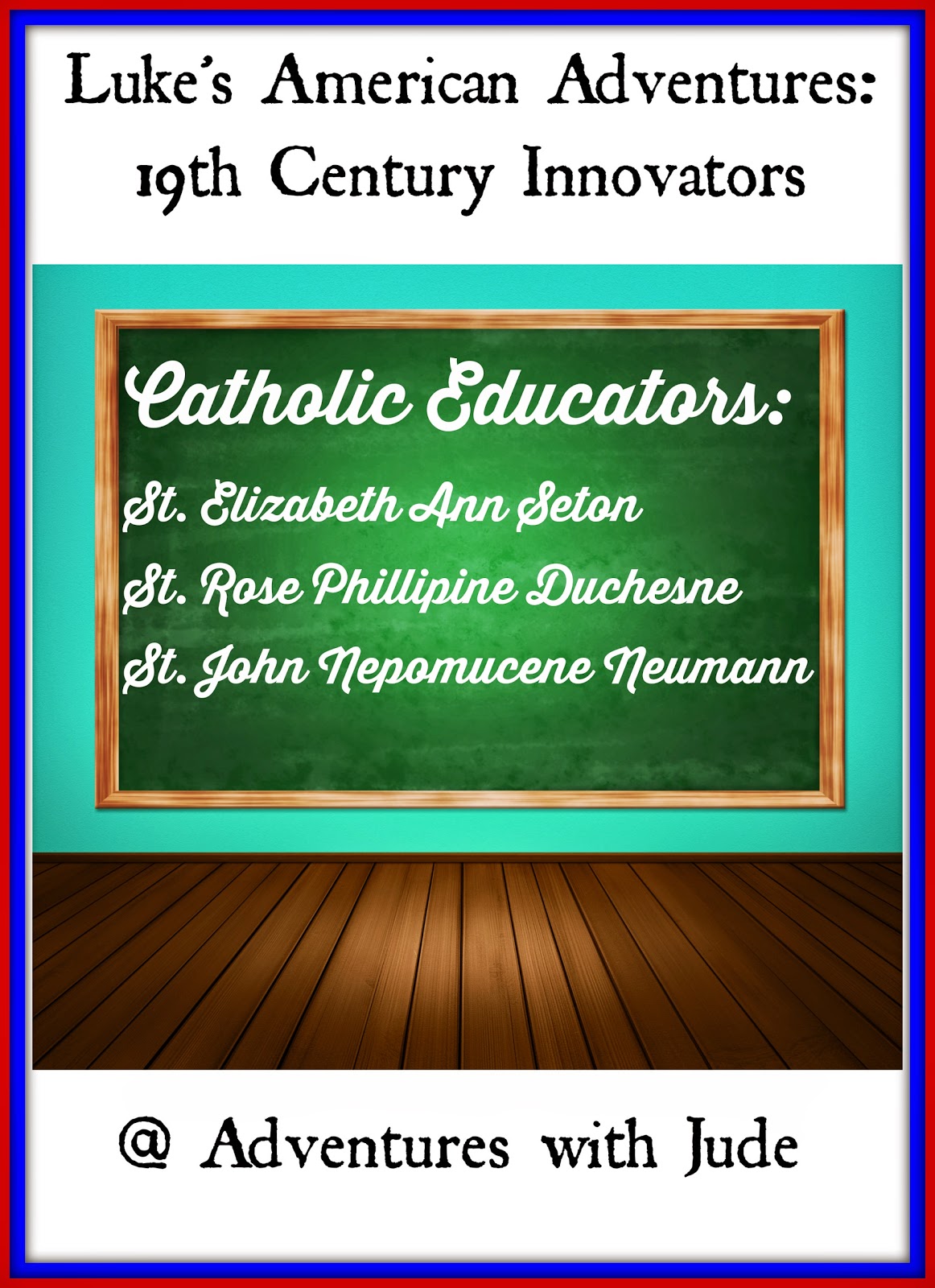
19th Century American Innovators: Catholic Educators


There were many great revolutionaries of the late 18th and early 19th centuries, but the ones at the forefront of history are usually those who made achievements in the scientific field. Most historians overlook those who made advancements in other fields. The early 1800s saw the innovation of the American Catholic education system. St. Elizabeth Ann Seton, St. Rose Philippine Duchesne, and St. John Neumann were among those who made such advancements. Although the three all had different contributions to education, all three were leaders in the establishment of the modern Catholic education system.


St. Elizabeth Ann Seton
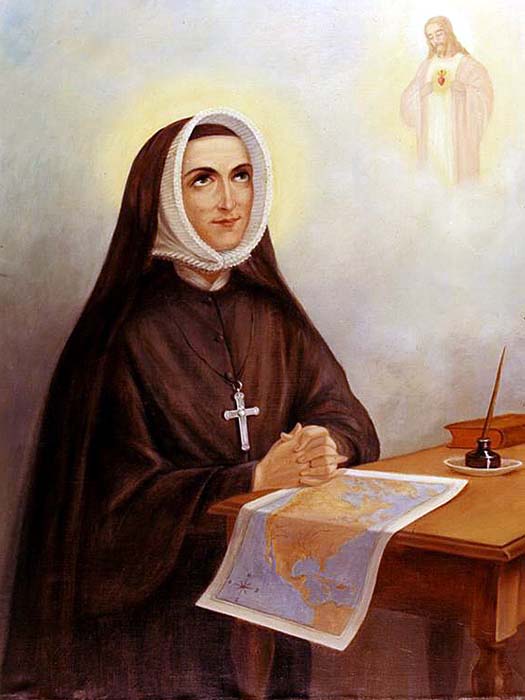
St. Elizabeth Ann Seton, SC
US Public Domain
Elizabeth Bayley Seton was born in New York City, New York, on August 28, 1774. Despite her high society background, Elizabeth's early years were quiet, simple, and often lonely; as she grew older, her Bible became her greatest friend. On January 25, 1794, at age 19, Elizabeth married William Magee Seton, age 25, a wealthy businessman in the import trade. Through most of their married life, William suffered from tuberculosis, and in 1803, his doctors sent the family to Italy because of the warmer climate. Because Italian immigration officials feared the family was carrying yellow fever, the family was held in quarantine for a month; shortly after their release, William died. Elizabeth and their daughter were received by the families of her late husband's Italian business partners, who introduced them to Roman Catholicism. Upon Elizabeth’s return to the United States, she converted to Catholicism. Seeing a need for education of Catholic students in the area, the president of St. Mary's College in Maryland asked Elizabeth to start a school in that city. She established a new religious order and the first Catholic school in America at Emmitsburg, MD. On March 25, 1809, Elizabeth took religious vows and became known as Mother Seton. By 1818, in addition to St. Joseph Academy and Free School for Catholic girls, the new Sisters of Charity had established two orphanages and another school. Mother Seton died in 1821 at the age of 46, also of tuberculosis. The first native-born American saint, Seton was beatified by Pope John Paul XXIII on March 17, 1963, and canonized by Pope Paul VI on September 14, 1975.


St. Rose Phillipine Duchesne
St. Rose Phillippine Duchesne, RSCJ
US Public Domain
Born in Grenoble, France on August 29, 1769, Rose Philippine Duchesne was educated by Vistandine nuns. After surviving a bout of smallpox, in 1781 Rose and her cousin Josephine were sent to be educated at the nun’s Monastery of Sainte-Marie-d'en-Haut just outside of Grenoble. When she began to show a strong attraction to the monastic life, her father withdrew her from the school. In 1788, she returned to the monastery and entered the convent there, despite her family's opposition. In 1792, when French Revolutionaries shut down the monastery and dispersed the nuns, Rose returned to her family, along with two aunts who had been Visitandines at Romans-sur-Isère. She attempted to continue living in the style her Order dictated, while serving both her family and people imprisoned at her former monastery. When the Catholic Church was again able to operate openly in France under Napoleon in 1801, she attempted to re-establish the Visitandine monastery, acquiring the buildings from its new owner. Though a few of the nuns and the Mother Superior did return temporarily, the now elderly nuns found that the austere living conditions were too much for them. In 1804, the order merged with the Society of the Sacred Heart and continued to educate young women. In 1817, William Dubourg, Bishop of the American Diocese of Louisiana and the Two Floridas, visited the order’s Parisian convent. After meeting him, Rose immediately felt her old yearning for missionary service revive and begged permission from Dubourg to serve in his diocese. In 1818, Rose sailed for the United States. She established a new founded a boarding school for daughters of pioneers near St. Louis, and opened the first free school west of the Missouri. By her death in 1852, she had helped establish six communities in Missouri and Kansas, including a school for displaced Native Americans. Members of the Potawatomi tribe gave her the name of “Kwah-kah-kum-ad,” meaning the Woman Who Prays Always. Rose was beatified by Pope Pius XII in 1940 and canonized by Pope John Paul II in 1988.

St. John Nepomucene Neuman
St. John Nepomucene Neumann, CSsR
US Public Domain
John Nepomucene Neumann was born in Prachatitz, Bohemia (modern Czech Republic) on March 28, 1811. He entered the seminary to become a priest, but in 1835, the bishop of Bohemia decided there would be no more ordinations - Bohemia was overstocked with priests! John was determined to become a priest, learning English by working in a factory with English-speaking workers. He wrote to the Bishops in America, and finally the Bishop of New York agreed to ordain him. John was sent to minister to the German-speaking people who were clearing the forests around Niagara Falls. He traveled on horseback from one mission station to another, visiting the sick, teaching catechism, and training teachers to take over when he left. Despite his many responsibilities, he felt very lonely at times. Feeling the need for the fellowship of community life and for the spiritual challenge that living with other priests might bring, John entered the Redemptorist Order, and became the first Redemptorist to be professed in the United States. He served as a parish priest in Baltimore, becoming a naturalized American citizen in 1848, until he was named Bishop of Philadelphia in 1852. During his time as Bishop, immigrants were flooding the city of Philadelphia and Catholic parishes were being established almost every month. He and the Diocese helped the parishes establish an adjoining school for the education of the children of the parish. John died of a stroke on January 5, 1860 at the age of 48. Pope Paul VI beatified John Neumann on October 13, 1963, and canonized him on June 19, 1977. He is the first American bishop to be declared a saint.

Although they had differing paths to America and religious service, all three of these people were leaders in the development of the modern day Catholic education system.  St. Elizabeth Ann Seton was an American married lay person who became a nun, and St. Rose Duchenne was a French religious, both in contrast to their family’s wishes. They each established convent-based schools maintained by specific religious orders. St. John Neumann’s desire for religious life was so great that he emigrated to America, where priests were desperately needed. Despite being part of the Redemptorist order, he used his position as Bishop of the Diocese of Philadelphia and saw to the establishment of a diocesan system where the school was part of a parish community. All three were Americans who shaped the foundation upon which the American Catholic School system stands upon today, and are recognized by the Canon of the Catholic Church for their contribution to education in the growing United States.



©2012- 2014 Adventures with Jude. All rights reserved. All text, photographs, artwork, and other content may not be reproduced or transmitted in any form without the written consent of the author. http://adventureswithjude.com

Thursday, December 5, 2013

A Craft Advent Wreath

We are really trying to get into the Advent spirit here.  Sure, there is Christmas all around us, and if we don't work on things like shopping and cookie baking, there won't be anything come the 25th, but Advent is supposed to be a time of preparing not just the presents and the food but really our hearts for the coming of the Infant Jesus.

For his Advent project, Luke is copying and exploring Bible verses.  He is using this list, from Real Life Titus Two, that gives a passage a day to reflect on.

Advent Bible Verses


Jude and I are working on projects a little less ambitious with the writing.  We're doing crafts, starting with making an Advent Wreath.

Upcycled Craft Advent Wreath

Advent Wreath Materials:

Two paper towel or four toilet tissue cores
Two paper plates (see note)
green, purple, and pink paint
craft foam (yellow or orange)
scissors
a pen or marker
glue

For paper plates - you want something with a bit of a rim on it.  You'll glue the top of the wreath to the bottom plate and you want it to be able to adhere to the side, not the center.  You'll need to "splurge" a bit for these.  (You can use cheapie plates for creating a paint palette.)  We used Stalkmarket brand plates - they are made from recycled sugar cane so they take paint nicely.  


 Start by tracing the edge of the roll onto the back of the plate. 


 Cut out the circles.  Keep one of them for sizing the flames, but the rest can be thrown out/recycled.


Cut paper towel rolls in half.  If you have toilet tissue rolls, then you can skip to painting.


 Paint the upside down plate green to form your wreath/candleholder.


Then paint the cardboard rolls. Paint three purple and one pink.


Allow everything to dry.


While you're waiting, use the reserved circle to help you make your "flame."  Draw a base line slightly larger than the circle, and then the apex of a triangle.  (By making it slightly larger than the circle, the foam will fit snugly but still curl.)


 Cut your triangles out and set aside.


When your green plate is dry, apply glue to the rim of a second plate. Match the edges of this and the green plate (painted side up).  This will create a channel for your "candles," and a base for the "wreath."


To assemble your wreath, insert the candles into the holes.


 "Light" your candles by gently bending the foam so it slips into the top of the cardboard tube. 


"Light" one candle each week of Advent.  (We put all four flames on for the picture, then stowed the extra flames in the kitchen, so that we only have one candle lit currently, since it's only the first week of Advent.) 


O Lord, stir up Thy might, we beg Thee, and come 
that by Thy protection we may deserve to be rescued from the threatening dangers of our sins 
and saved by Thy deliverance. 
Through Christ our Lord. Amen.


©2012- 2013 Adventures with Jude. All rights reserved. All text, photographs, artwork, and other content may not be reproduced or transmitted in any form without the written consent of the author. http://adventureswithjude.com
Tuesday, June 11, 2013

Christianity Cove (A Schoolhouse Crew Review)


 photo christianitycovelogo_zpsb3aa66f4.jpg

Christianity Cove  is a company that excells at providing Sunday School/Youth Ministry programs.  From their webpage:
Christianity Cove is known for being one of the leading web-based resources for Sunday School lessons as well as other Bible resources.  “With over 700 free Sunday School lesson articles on our blog, and 26 best-selling resources in our library of products, we’ve helped thousands of teachers around the world revitalize their Children’s Ministry programs and fill their classrooms with eager students.” - See more at: http://schoolhousereviewcrew.com/#sthash.UXHEPLUr.dpuf

We seek to have kids understand that the Bible is very relevant in today’s world and the stories therein still apply.  The challenges that kids face in school—bullying, the occult, peer pressure, gossip, idolatry—are all the same challenges faced by Bible heroes, including Jesus Himself!  Kids who use our materials consistently will find the Bible a very comforting, relevant and understandable place to find help.
While they have a plethora of programs to choose from, we took a look at “Tween a Rock and a Hard Place” Lesson Blueprints and Freedom Ride: 12 Lessons of Faith for Today’s Teens.

Tween Prep cover screenshot “Tween a Rock and a Hard Place” Lesson Blueprints provides guidance on the "12 Most Critical (and Uncomfortable) Subjects for Tweens," ranging from relationship with Jesus to modest behavior.  I can't say I remember being a "tween" - I think back then (in the Stone Age, if you ask my own kids) we just were still "kids." But being a 9 to 12 year old NOW is a whole different ball game.  It seems like the awkwardness of the teen years has moved up, and now it is this younger crowd that is grappling with the "Who am I?" questions.  From the text:

Wise therapists offer a bit of advice that often surprises families: Anything you want your children to know about spirituality, morals, ethics and general good behavior, tell them before the age of 12. This includes information about some of the hardest hitting subjects that parents stumble over or fear, including drinking, drugs and sexual behavior.
 This seems to be very true.  Having survived parenting a tween once, and now being in the throes of it with two children simultaneously, I can say that it is not easy on any of us.  I think we are very blessed in that they go to a school that is reasonably sheltered - they're not naive enough to believe that kids are ignorant of the world, but try to keep life as age appropriate as possible - and that has meant they are not growing up too quickly.  But as much as I'd love to keep them kindergarteners forever, that's just not possible and they are going to to have to learn to handle themselves in the real world.  The lessons in this book to provide a way to discuss important values with your child.  This PDF syllabus costs $29. and comes with two files - a "text" book that can be used by a group leader, and then a second "parent and teacher" guide on dealing with today's tweens.  This second text is a great addition because life just is different now and it helps adults to better relate and interact in a way that will engage rather than push away tweens.

Freedom Ride for Teens leaderbook coverFreedom Ride: 12 Lessons of Faith for Today's Teens is for high school students, who are faced with greater challenges to their faith.  It can be difficult to balance the intensely private natures of the teenage years and faith with the cacaphony of outside influences.  This program helps teens shift from religion being something taught to them on Sunday to faith being something they practice daily. They learn how to use their faith as a yardstick to make decisions.  This PDF, also $29., is geared for the youth group leader. 

It also helps them to understand that God isn't being the "Heavy."  He isn't giving us rules to keep us from having fun or living a full life.  Perhaps when the teens were younger, clear rules were what they needed, because they needed boundaries.  Younger children tend to do well with "Because I said so."  But as they get older and life isn't so black-and-white, the answer to that becomes a snarled "Well, who put you in charge anyway?"  This program enables faith helps guide them through the grey challenges.  One particular concept I LIKE about the program is it encourages the participants to use real-life scenarios and items (parties, social media, cellphones, etc.) as tools that can enhance their faith.  Again, showing that real life isn't black or white -- something like Facebook isn't inherently evil, it's how it is used (and how you behave!) that makes it one extreme or the other.

While biblically based, each program is less of a Bible study and more of a critical thinking program.  Both of these programs are intended to span 12 group sessions.  They would be ideal for dedicated weekly or monthly youth group meetings, rather than as part of a Bible study session, as each lesson is expected to take about 60 minutes between the introduction, class teaching and discussion, and then small group discussion.

This leads me to where this program fell a little short for us.  One teen or two tweens does not a youth group make.  Also, when Mom is the person leading the discussion and it's more of a 1:1 rather than "Anybody but my parent in the front of the room and other kids who will talk first," it sometimes makes it a little awkward to discuss things freely.  I think it would be much easier to keep the communication going at home after a group meeting, where the parent can say, "Oh, I saw the agenda said you were discussing <this concept>, how did it go?" or "What did you think of..." where there would be more to talk about than just the chapter's topic.   Most teens and tweens tend to open up when they don't feel so "stared at."  (Proof that God sends you Guardian Angels: I can't tell you how many times I have nearly crashed the car when somebody has asked a "tough" question seemingly out of nowhere. Clearly, it's been percolating in his or her mind, so it makes perfect sense to ask it at that moment and catch Mom off guard.)  While I would highly encourage parents to be involved and know what is being discussed, these programs are definitely something better facilitated by a co-op or church-based youth group rather than as family. 

As I said, Christianity Cove has a huge number of programs geared to help strengthen faith for all ages.  Among their programs: 


Members of the Crew reviewed all of these, so click through on the banner to find out about all of these other activities!

Photobucket


©2012- 2013 Adventures with Jude. All rights reserved. All text, photographs, artwork, and other content may not be reproduced or transmitted in any form without the written consent of the author. http://adventureswithjude.com
Related Posts Plugin for WordPress, Blogger...
Pin It button on image hover