Showing posts with label Philadelphia. Show all posts

Monday, January 9, 2017

One National Park, TWO Junior Ranger badges

It's brutally cold out right now -- snow on the ground, wind chills in the negative numbers.  One of the boys joked that they were REALLY glad they weren't at Valley Forge this week, and I realized I hadn't shared about our field trip from there (when it was much warmer)!


This was actually our second visit to Valley Forge National Military Park; we had been there a few years ago when we had family visiting us.  This time, we went to earn Junior Ranger badges.  We actually earned two -- one for the park itself, and a second special Paleontology badge -- Valley Forge is one of several parks designated as a "fossil park."

We began at the museum in the visitor's center.  There are several exhibits in the museum about life as a soldier during the encampment.  I love how the Junior Ranger program cuts across so many types of study -- there's usually a page that involves critical thinking, some math, a bit of history and science.  One of the tasks were to search the center's database to find out about a soldier who is featured in the museum.


Other tasks were to find things that were needed during the encampment.  We learned that supplies were very limited. Between limited funding and the British takeover of Philadelphia, there wasn't a whole lot to be found.  Washington chose Valley Forge because of its location - not far from the city, but deep enough into the country to be able to find local provisions.


We headed out to watch the film (I can't say I've seen a poorly made NPS film, but this is one of my favorites), and then to work on the rest of our books.  We took advantage of the beautiful weather and worked on our Junior Paleontologist books while sitting in the courtyard.  This book focuses on all of the fossil and rock findings throughout the park system. (Note: If you visit a Fossil Park, you may want to print this book at home; while they generally have their "standard for that park" program books, not all of parks have the specialty books on hand.)


We then went back to working on our historical books.  One of the pages sent us out to the reproduction Muhlenberg cabins.


It's hard to believe how quickly the huts were constructed -- enough for everyone within just a few weeks!  Although, not freezing to death was probably great motivation. One of these tasks were to count how many logs were needed for each building, and then multiply how many trees were felled to build the camp.  Three students came up with three different numbers.  Did we count only long logs? Maybe they used the ends to make the shorter pieces. Do chimneys count?  In the end, we found out the Ranger's secret -- there isn't a firm answer, so they're mostly checking to make sure you visited them.  It's not about knowing exactly how many logs, but understanding how they were constructed, and the sheer volume of trees needed to shelter the soldiers.


Across from the cabins was a canon, marking where the Army's position would have been guarded.  Of course, the little boys had to pretend to be soldiers.


We then headed back on the driving tour.  There are several stopping points.  One is this memorial arch.


We eventually found our way to Washington's Headquarters.  A small, interactive museum can be found in a former train station -- in the early 1900s, the Reading Railroad established a station stop on the park grounds.  In the valley next to the depot is where the Isaac Potts house is located; General Washington and his entourage rented the house for the winter.


There was a young man who served as Washington's Aide-de-Camp, who worked in that very room behind Matthew.  Can you guess who it was?


We were running out of time, so we headed back to the visitor center to turn in our books.  I was disappointed we didn't have time for Washington's Chapel -- when we had visited here before, it was pouring rain.  I wanted to see the stained glass windows in the sunlight.  Sounds like a reason for another trip back!   The boys' books were checked and the little boys were sworn in as both Valley Forge Junior Rangers and National Park Service Junior Paleontologists.


©2012- 2016 Adventures with Jude. All rights reserved. All text, photographs, artwork, and other content may not be reproduced or transmitted in any form without the written consent of the author. http://adventureswithjude.com

Sunday, October 12, 2014

Philadelphia - A Hub of World Culture


Philadelphia and the surrounding area is well known being steeped in American history.  From the State House that hosted the Continental Congresses to Father Judge High School Vietnam Memorial, Philadelphia holds some of the greatest range "American" history landmarks. However, Philadelphia's American pride isn't so egocentric that we exclude the cultures that make this nation such a melting pot. Here's a list of some places we've visited (or put on our bucket list) with an international flavor!


1.  Shofusu - Japan

Friends of the Japanese House and Garden via Wikimedia Commons


Shofuso is the Japanese cultural center located in Fairmount Park.   This house and garden hosts   traditional tea ceremonies, as well as cultural exhibitions from April until October.

 2.  The American Swedish Museum - Sweden

This museum cannot be found near the main historical and museum districts, but rather tucked by itself in South Philadelphia.  It is the oldest Swedish-American museum in the United States, and was founded in 1926.  The Museum is located on land that was once part of a 17th-century land grant from Queen Christina of Sweden to colonist Sven Skute.  

Just across the Delaware River in New Jersey is the town of Swedesboro, settled in the 1600s as part of the New Sweden colony.  The oldest surviving log cabin in the United States, the C. A. Nothnagle home, exists there.  (Tours by reservation only.)


3.  Chinatown - China

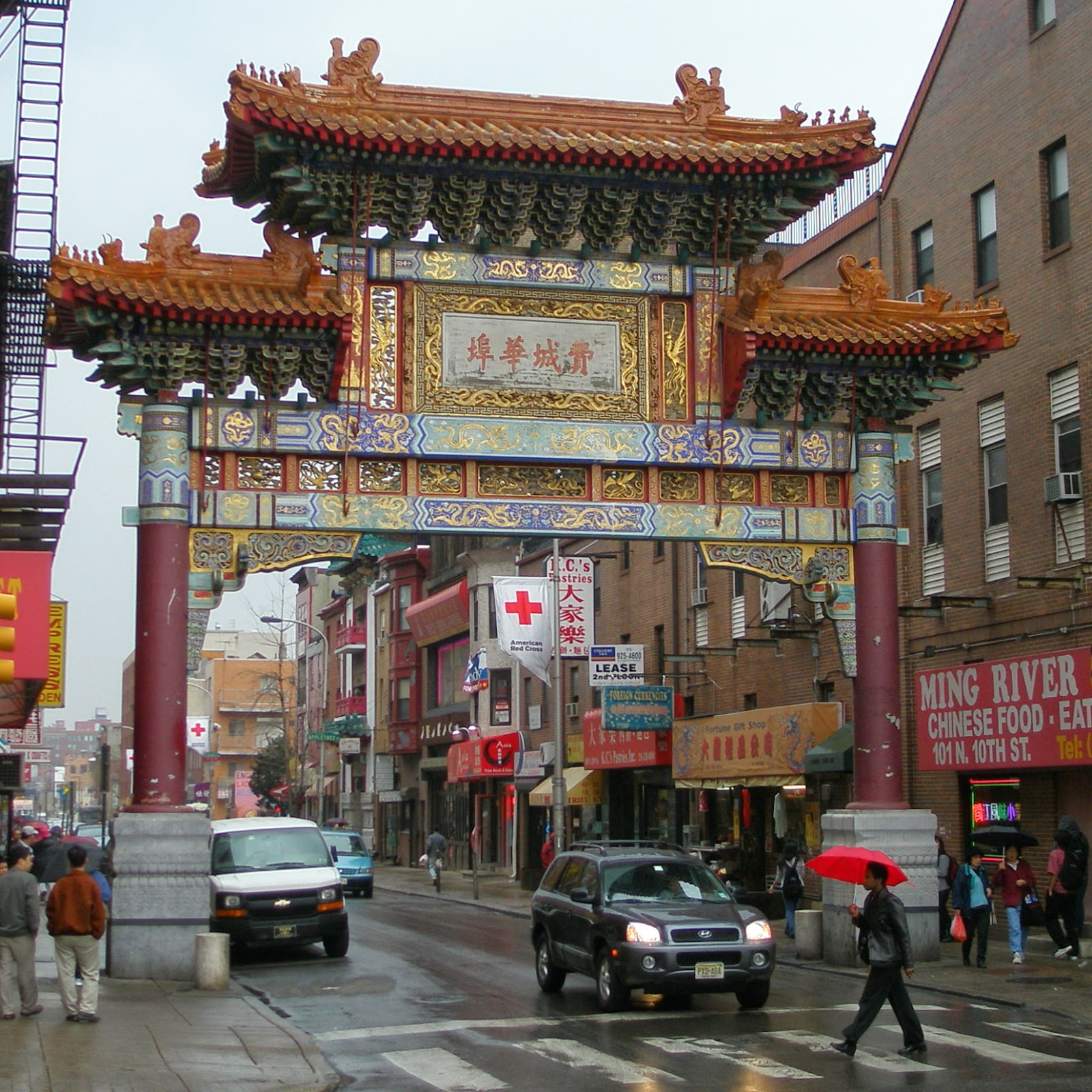
Chinatown is just north of the heart of Center City, and one of the most well-known neighborhoods in Philadelphia.  Settled by Cantonese immigrants in the 19th century, boasts a community arts center, some of the best (and most authentic) Chinese restaurants, and the iconic China Gate.

3.  Awbury Arboretum - England

Awbury was the summer home of the Cope family.  Built by Henry Cope, a Quaker shipping merchant, it was named for the family's ancestral town in England.  The estate is laid out in an English landscape garden style and is dedicated to providing visitors with an active learning center.

4. Bucks County Playhouse   - Monaco

Perhaps a bit of a stretch, but what better culture of ALL the world is there than a theater?  While the city of Philadelphia is home to over a score of theaters, this one is about an hour north of the city.  While a world-renowned playhouse in its own right, another bit of its history is that a young Grace Kelly trod the boards in 1949.  Miss Kelly later became a real-life Princess - Princess Grace of Monaco.


 5.  Rodin Museum - France

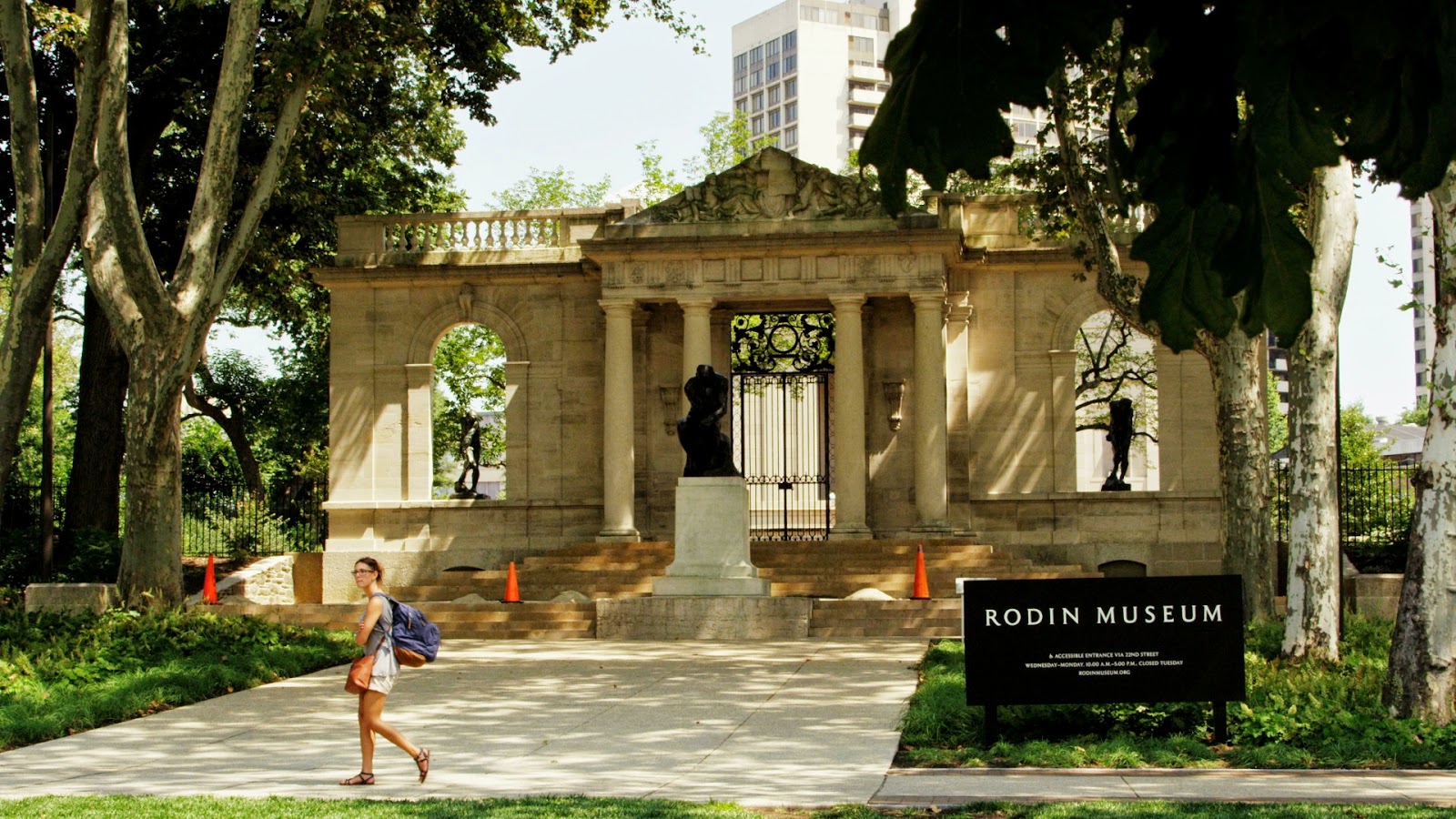
This indoor/outdoor museum on the Benjamin Franklin Parkway house largest non-Parisian collection of Auguste Rodin's sculptures. 


©2012- 2014 Adventures with Jude. All rights reserved. All text, photographs, artwork, and other content may not be reproduced or transmitted in any form without the written consent of the author. http://adventureswithjude.com

Sunday, October 5, 2014

Whither the Weather: Cold or Rainy Field Trips


There's a lot of things to do and places to go when the weather is beautiful, or even if it's overcast but dry.  But where do you go when it's pouring down buckets or the middle of winter, and outdoor field trips just aren't an option? 

In the Philadelphia Area, there's the obvious "hands-on" museums like Please Touch or the Garden State Discovery Museum for preschool and early elementary folk.   For the older kids, the Franklin Intsitute is great, or even the Philadelphia Museum of Art.   I like both of those museums, but they're so popular that they are incredibly crowded.

So, where to go?  These are places on our list for rainy days.  They're fun and exciting -- but not the "go-to popular" ones.   If the weather is really bad (heavy snow in midwinter isn't out of the ordinary), try a virtual tour - many of the places listed offer online exhibits as well.  While all are educational and interesting, please check out the suggestion's website before going - some of them may be more suitable for older children rather than little ones.

1.  Benjamin Franklin Museum - Philadelphia PA

Jude is a huge Ben Franklin fan, so this is at the top of our list.  It's open 9-5 daily (except Thanksgiving, Christmas and New Year's Day), and administered by the National Park Service.   The NPS recently completed an extensive refurbishment of the site.  All ages.

2.  Eastern State Penitentiary - Philadelphia, PA

This is an abandoned prison-turned-museum.  One of the first true "penitentiary" style prisons designed to bring a change of heart, this Gothic structure once housed Al Capone.  Definitely bring your camera to take pictures of the outside and the way light plays in the building.  Open daily from 9-5 (last entry 4 pm) except Thanksgiving, Christmas, and New Year's.  All ages.

During the fall, there is a separate rain-or-shine evening presentation, entitled "Terror Behind the Walls."  By day, the prison excursion is quiet and bleak.  At night, it turns into a terrifying haunted house, where guests may choose to observe or become marked as interactive volunteers.  IT is NOT for the faint of heart - definitely for teens and up.


3.  Penn Museum - Philadelphia PA

This museum, supported by the University of Pennsylvania, is a premier destination for ancient archaeology buffs, as it holds the largest agent Egypt exhibit in the country.  It also hosts exhibits on several areas of the Middle East, Asia, and the Americas.  All ages, closed Mondays.  Note: a special discounted admission ticket can be purchased to cover both this and the Mütter Museum.

4.  Mütter Museum of the College of Physicians of Philadelphia -Philadephia, PA

Some think this museum is macabre - it's definitely not for those who are faint of stomach.  A homage to the history of American medicine, it houses a Civil-War era amputation kit, a piece of John Wilkes Booth's vertebra, and preserved sections of Albert Einstein's brain.  If there is a break in the rain, go outside and see the Benjamin Rush Medicinal Garden, first recommended by this eminent Philadelphia doctor and statesman.  No strollers/child carriers or large bags due to the building size; no photography.  Open daily, closed Thanksgiving, Christmas Eve and Day, New Year's Day.

5.  US Mint - Philadelphia, PA

Watch coins being made! Self-guided tours with audio stations examine the history of coining from colonial times until today.  See Peter the Mint Eagle, a real Bald Eagle who made the Philadelphia Mint his home.  All ages, open daily but closed Federal Holidays except Memorial Day, Independence Day, and Labor Day. 

6.  Pennyslvania Academy of Fine Arts - Philadelphia PA

This museum is home to one of the best American art collections.  The Academy was established by painter Charles Wilson Peale in 1805, and the current museum opened in 1876. The collection explores the history of American art from the 1760s to the present.  All ages, closed Monday and Federal Holidays. 


©2012- 2014 Adventures with Jude. All rights reserved. All text, photographs, artwork, and other content may not be reproduced or transmitted in any form without the written consent of the author. http://adventureswithjude.com
Sunday, July 13, 2014

A Catholic Pilgrimage in Penn's "Holy Experiment"


Religious Shrines in Philadelphia/suburbs

If you're planning a trip to Philadelphia, most people think of heading to the Liberty Bell and Independence Mall.  Often people consider heading to the suburbs and Valley Forge to the west and Washington's Crossing to the north.  All are major landmarks that celebrate American freedom.  However, when William Penn petitioned the king for land in the new world, he asked because he wanted religious freedom.  Initially wanting a safe haven for the Society of Friends, he declared the colony of Pennsylvania would welcome citizens of all religions.  Penn's Charter of Privileges, written in 1701, guaranteed this religious freedom.  Pennsylvania welcomed people of all faiths -  from the anabaptist Amish and Mennonites to the protestant Lutherans, Methodists, and Baptists to the Roman Catholics.

Catholics flocked to Pennsylvania, escaping persecution from Puritan New England and the more Anglican south.  Missionary priests traveled through the colony offering Mass, and in 1733, the first Catholic church, now called "Old St. Joseph's" was built in Philadelphia.  In 1789, the Diocese of Baltimore (Maryland) was established, because of Baltimore's history as a Catholic city.  Within 20 years, the Catholic population in Philadelphia and the surrounding are had exploded and the Diocese of Philadelphia, the second oldest diocese in the New World, was established in 1808.  By 1875, the Diocese's importance and population had grown so much that it became Archdiocese of Philadelphia. 

Today, there are a number of pilgrimage destinations in both the city of Philadelphia and the surrounding area.  From the Cathedral of Ss. Peter and Paul, the clerical seat of the Archdiocese to the suburban shrine to Our Lady of Czestowowa, there are as many places to explore the history of Catholics in the area as there are general American History.  All are open to the public (check individual site information for details.)

Within the city of Philadelphia:

Cathedral Basilica of Ss Peter and Paul, Philadlephia
1.  Cathedral of Ss. Peter and Paul - 18th Street and Benjamin Franklin Parkway, Philadelphia.  With an exterior designed by architect Napoleon LeBrun (who also designed the Philadelphia Academy of Music and the Metropolitan Life Insurance Building Tower in New York) and an interior by Constantino Brumudi (known for his fresco work in the US Capitol building), this building on the National Historic Registry is a gem to study regardless of your faith tradition! Construction began on June 29, 1846, feast day of its patron namesakes, and was completed in 1867.  It was originally built with windows near the top of the building only to avoid vandalism from anti-Catholic protestors, with lower windows added during renovations in the 1950s.  It was the host church to St. John Paul II's visit in 1978, and a delegation from Philadelphia recently traveled to Rome to personally invite Pope Francis to Philadelphia for the 2015 World Meeting of Families

2.  Old St. Joseph Church -321 Willings Alley, Philadelphia.  St. Joseph Church was the first Catholic church in the British colonies and the home for Jesuit circuit priests who ministered to Catholics in mid-Atlantic.  When Catholicism was officially outlawed in Maryland by 1718, priests turned to Pennsylvania for a place to openly officiate at Masses.  It is the home of the oldest parish in the United States.

Shrine of St. John Neumann

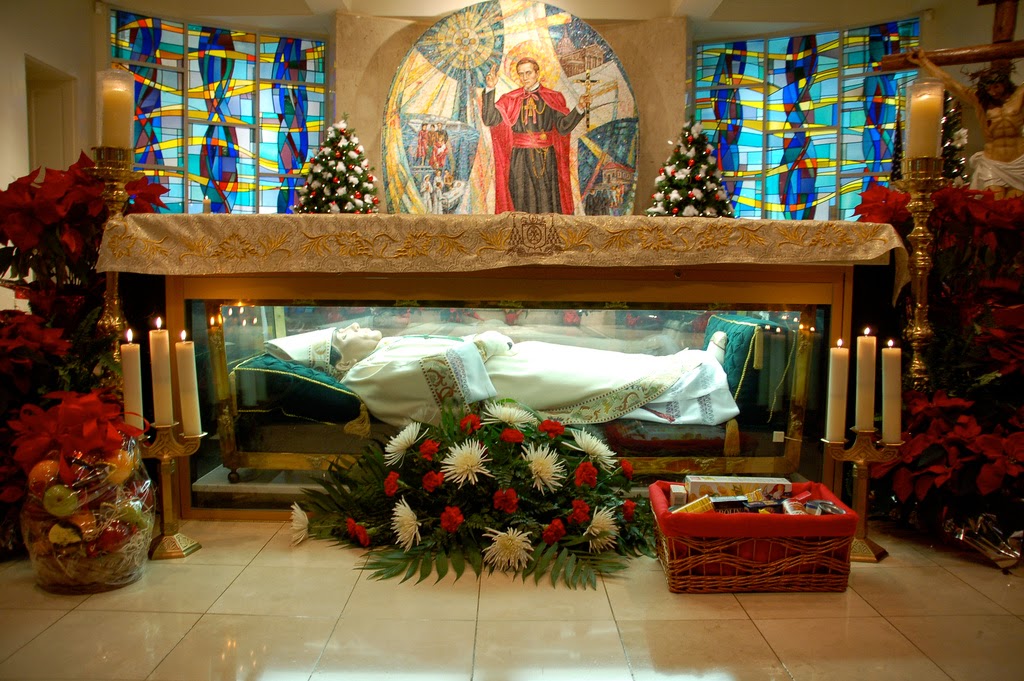
3.  St. Peter the Apostle Church/National Shrine of St. John Neumann - 1019 N. Fifth Street, Philadelphia. St. John Neumann was the fourth Bishop of Philadelphia and played a major role of in the establishment of the parochial school system. His body (with death mask) is interred in glass beneath the altar table.

4.  The National Shrine of St. Rita of Cascia - 1166 S. Broad Street, Philadelphia.  originally a parish for Italian immigrants in South Philadelphia, the Shrine of St. Rita now hosts a well-attended Solemn Novena (nine days of prayer) and Blessing of Roses each May.  The patron saint of impossible causes (along with St. Jude), her intercession is particularly invoked by patients with cancer and other difficult illnesses.

5. The Central Association for the Miraculous Medal -  475 E. Chelten Avenue, Philadelphia. This chapel dates back to 1875, when it was built as a worship site at St. Vincent's Seminary for the seminarians and priests for the Congregation of the Mission.  In 1912, Fr. Joseph Skelly, CM, of the seminary was charged with raising funds to build another seminary (at Princeton, NJ).  In his fundraising pleas, he included a Miraculous Medal and donations were more generous than he dreamed.  In thanksgiving, the Central Association of the Miraculous Medal (CAMM), a society devoted to Mary's interests, was formed and the chapel rebuilt as a shrine to Our Lady.  A Perpetual Novena is held each Monday, with a Solemn Novena in November to commemorate The Feast of the Miraculous Medal.  There is also a museum of Marian art open to the public by appointment.

In the Philadelphia Suburbs:

1. The Shrine of Our Lady of Czestochowa ("Ches-toe-hoe-vah") - 654 Ferry Road, Doylestown PA.  This was established in 1955 as a way for Polish Catholic immigrants to celebrate their heritage. It began as a small chapel built into a barn, and was quickly outgrown.  In 1966, ground was broken for a new, larger shrine.  John Cardinal Krol, of Polish descent and the then Archbishop of Philadelphia, stated at the groundbreaking:
  "This place will be an expression of our gratitude for all the graces which came to us, and the millions of our countrymen who found themselves in this new Fatherland. We have something to be thankful for. This Sanctuary is an expression and monument of Polonia for our Fathers..."
It has been a cultural and religious center for much of the Polish diaspora, and has been visited by many native Poles as well, including two visits from Karol Cardinal Wojtyla in 1969 and 1976.  (Cardinal Wojtyla would be elected Pope John Paul II in 1978, and did not visit on his papal trips to Philadlelphia.) The shrine especially celebrates major Marian liturgical feast days.

2. Shrine of St. Gianna Beretta Molla -  625 West Street Road, Warminster, PA.   St. Gianna holds a special place in the Canon because she has been canonized as a lay woman.  Many female saints have been married and upon widowhood entered religious life.  St. Gianna epitomizes the vocation of wife and mother. 

National Shrine of St. Katharine Drexel
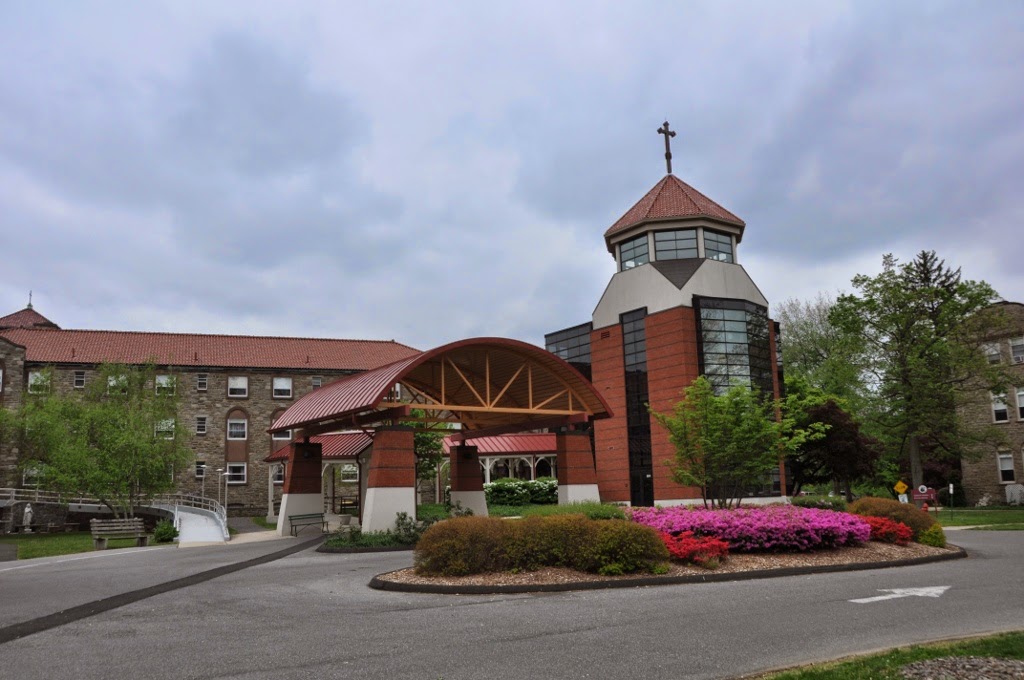
3. The National Shrine of St. Katharine Drexel -  1663 Bristol Pike, Bensalem, PA.   St. Katharine Drexel gave up her life as a wealthy Philadelphia socialite and began the religious order Sisters of the Blessed Sacrament.  The order dedicated itself to the education of Black and Native American Children.  The shrine is on the grounds of the order's first convent.  St. Katharine's story is told through artifacts from the people she and her order serve. 


Images:
Cathedral Basilica of Ss. Peter and Paul
National Shrine of St. John Neumann
National Shrine of St. Katharine Drexel


©2012- 2014 Adventures with Jude. All rights reserved. All text, photographs, artwork, and other content may not be reproduced or transmitted in any form without the written consent of the author. http://adventureswithjude.com
Friday, July 4, 2014

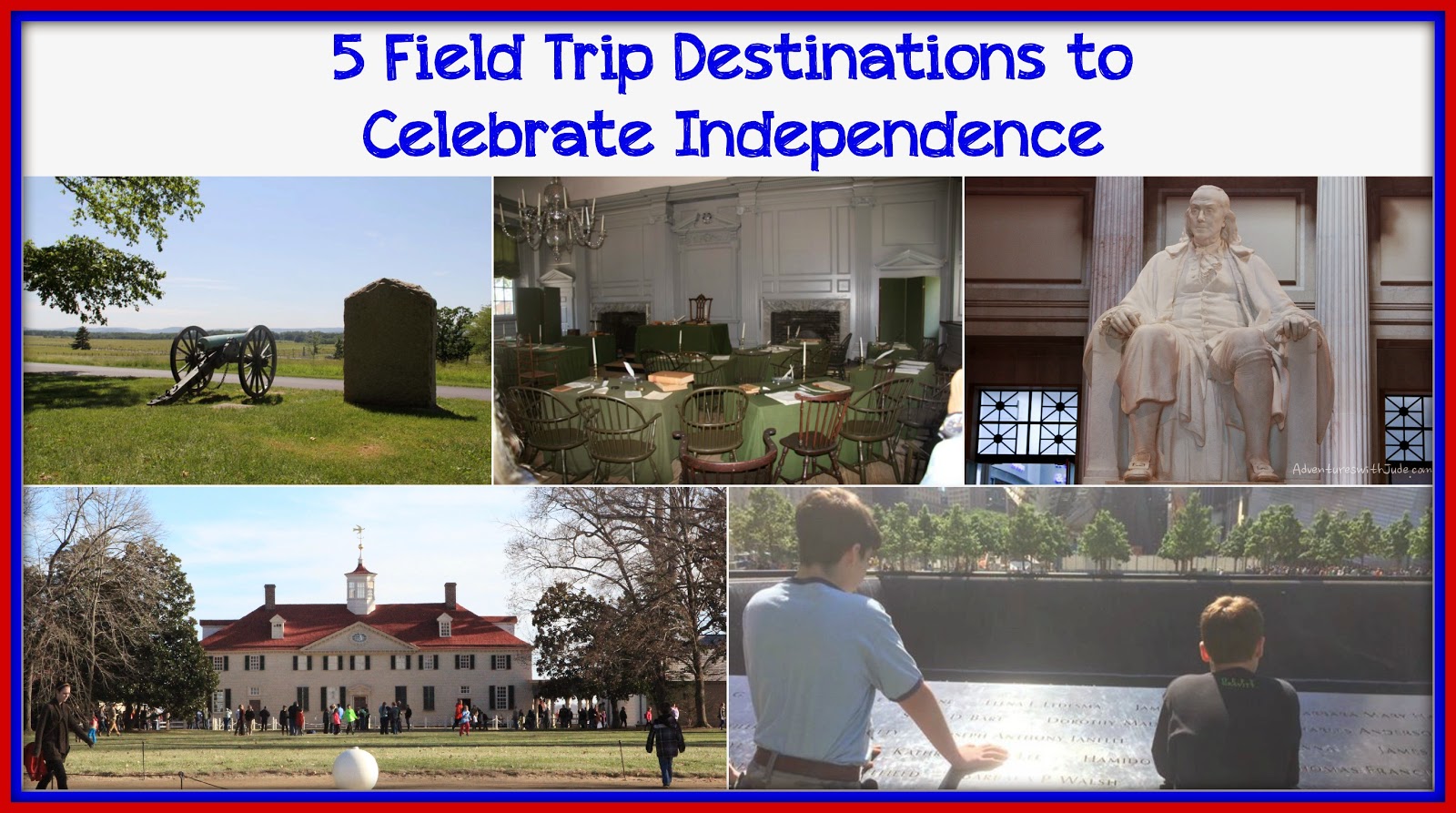
5 Field Trip Destinations to Celebrate Independence


5 Field Trips to Celebrate Independence

Some of our favorite field trips have been studying American History.  For Independence Day, we are sharing our top five, along with related quotes from voices of freedom.  If you would like to know more about them, click on the location names. 


Indepenence Hall, Philadelphia
Philadelphia, PA

We, therefore, the Representatives of the UNITED STATES OF AMERICA, in General Congress, Assembled, appealing to the Supreme Judge of the World for the Rectitude of our Intentions, do, in the Name, and by Authority of the good People of these Colonies, solemnly Publish and Declare, That these United Colonies are, and of Right ought to be, FREE AND INDEPENDENT STATES...

The Declaration of Independence

Philadelphia, PA 

Where liberty dwells, there is my country.

Benjamin Franklin


Gettyburg Battlefield
Gettysburg, PA

It is for us the living, rather, to be dedicated here to the unfinished work which they who fought here have thus far so nobly advanced. It is rather for us to be here dedicated to the great task remaining before us – that from these honored dead we take increased devotion to that cause for which they here gave the last full measure of devotion - that we here highly resolve that these dead shall not have died in vain – that this nation, under God, shall have a new birth of freedom, and that government of the people, by the people, for the people, shall not perish from the earth.

Abraham Lincoln, Gettysburg Address, 1863 


Mount Vernon 
Mount Vernon, VA

 Observe good faith and justice towards all Nations. Cultivate peace and harmony with all. 

George Washington, Farewell Address, 1796

9/11 Memorial - Tower 1
9/11 Memorial (Twin Towers)
New York City, NY


Liberty must at all hazards be supported. We have a right to it, derived from our Maker.
But if we had not, our fathers have earned and bought it for us,
at the expense of their ease, their estates, their pleasure, and their blood.  

John Adams 1765


©2012- 2014 Adventures with Jude. All rights reserved. All text, photographs, artwork, and other content may not be reproduced or transmitted in any form without the written consent of the author. http://adventureswithjude.com
Wednesday, June 4, 2014

Exploring like Ben Franklin

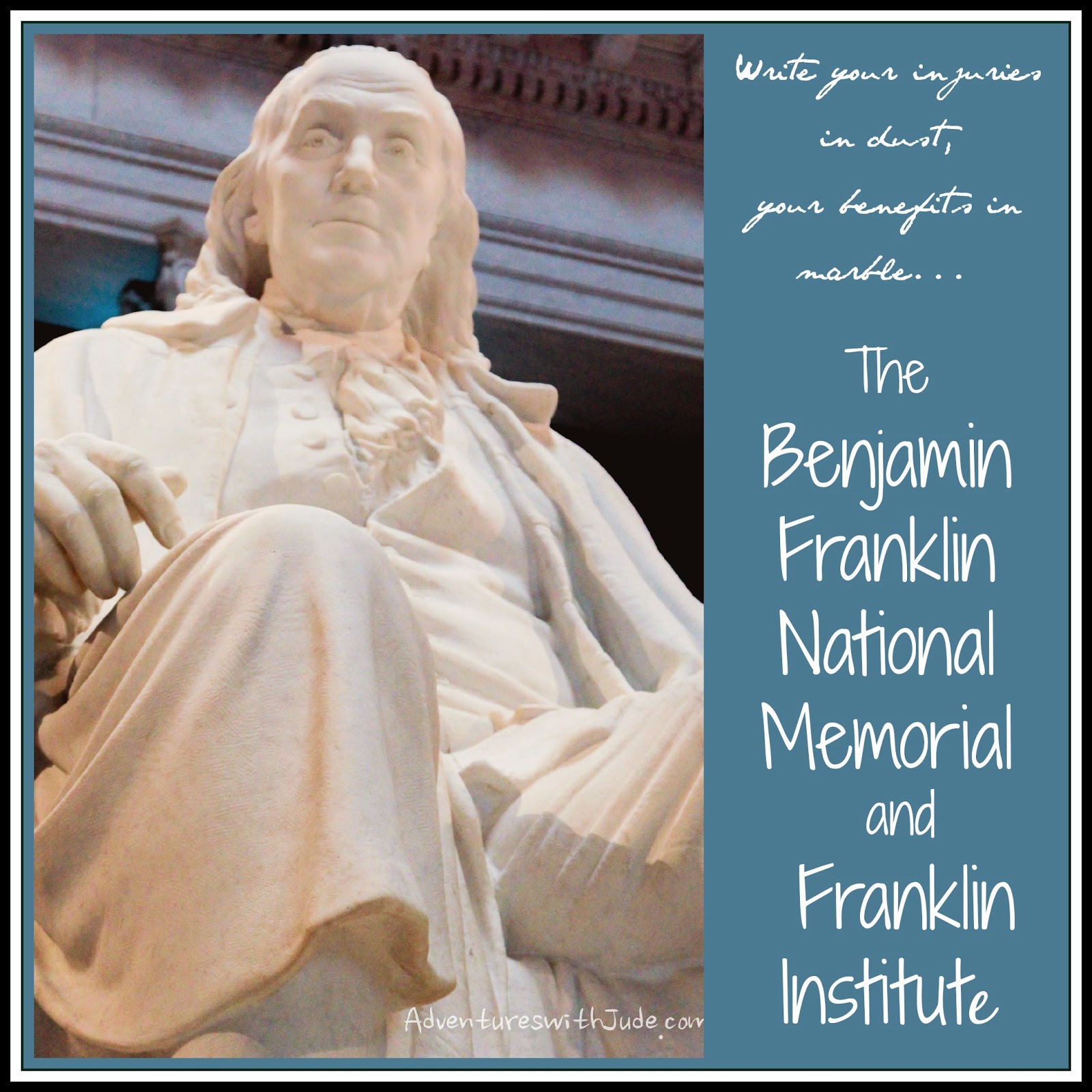
Write your injuries in dust, your benefits in marble - Ben Franklin

In this house, Ben Franklin ranks pretty high.  Jude thinks he's probably the greatest American ever (though George Washington ranks pretty close behind).   Ben edges everyone out because he did everything.  He was a printer.  He went to France (during the American Revolution).  He flew that kite in a thunderstorm.  He invented bifocals.  When it comes to pedestals, Ben Franklin's is pretty tall.

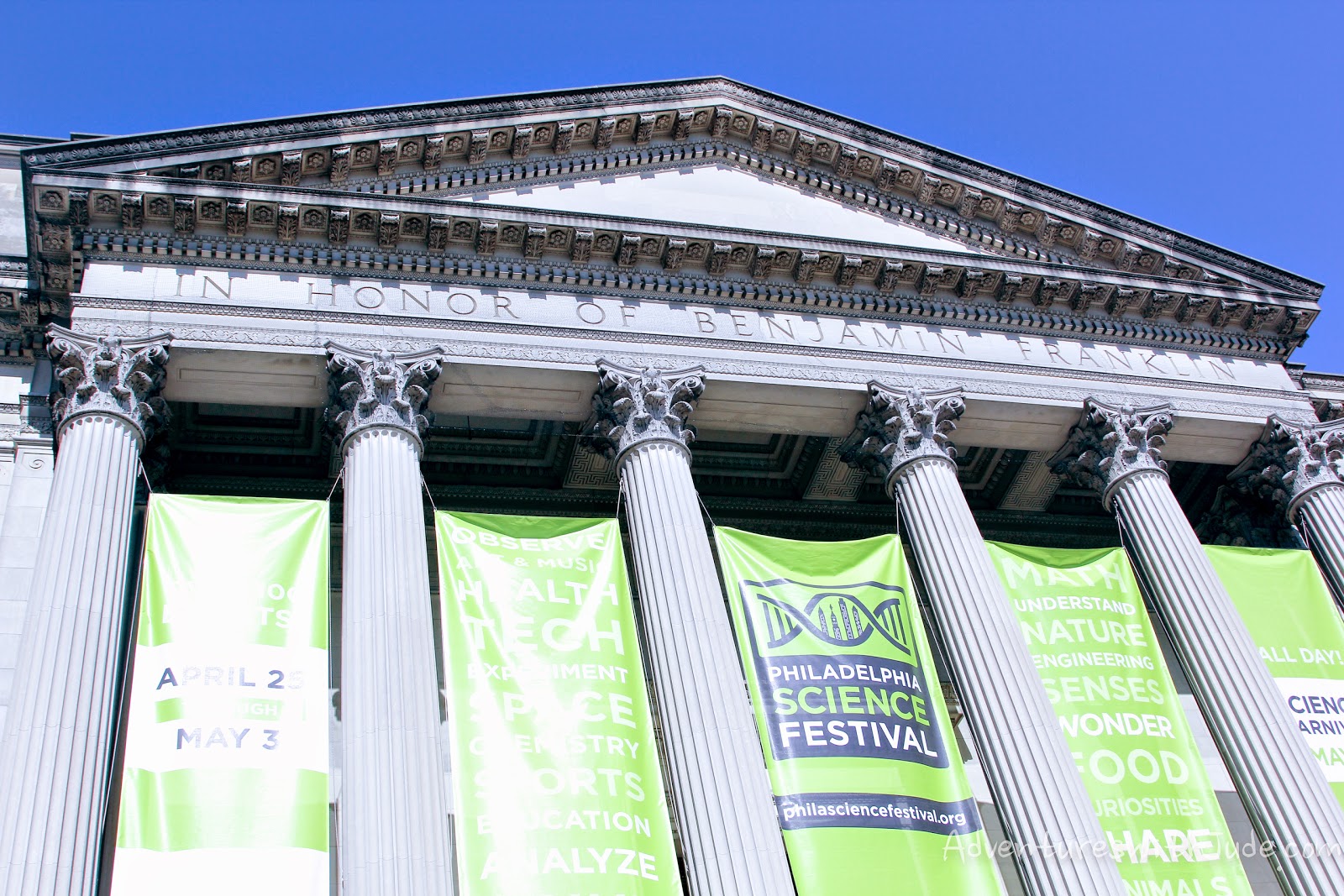
For Celia's recent class trip, the school chose the Franklin Institute for their destination. (Jude was jealous -- though we've been there as a family, he was disappointed he didn't get to go this time, too.  Maybe one day in the fall we'll have a homeschool trip!) The Franklin Institute is a twofold venue: a free National Memorial to Benjamin Franklin and a paid entrance hands-on Science Museum.

Ben Franklin National Memorial and Franklin Institute

The centerpiece of the Benjamin Franklin National Memorial is a 20-foot (6.1 m) high marble statue, sculpted by James Earle Fraser.  The Memorial was designed by architect John T. Windrim and modeled after the Pantheon in Rome, and opened to the public in 1938.  The floors and walls created of imported Italian, Portugese, and French marble soar into a 1600-ton yet self-supporting dome.  Projections of many of Ben's well-known phrases light the walls.  Dedicated in 1976, the Benjamin Franklin National Memorial is the only privately owned National Memorial in the country.  It is maintained by the museum.

Statue of Ben Franklin


In 1824, Samuel Vaughan Merrick and William H. Keating founded The Franklin Institute of the State of Pennsylvania for the Promotion of the Mechanic Arts. The Franklin Institute was established to honor Benjamin Franklin's contributions to science.  This museum was built at 15 South 7th Street in Center City Philadelphia.  By the 1930s, a new venue was necessary.  The Franklin Institute and the Poor Richard Club began to seek funds to build a new science museum and memorial hall. Despite the throes of the Great Depreession, 5.1 million dollars was raised in just twelve days.  In 1932, the cornerstone of the new Franklin Institute was laid at 20th Street and the Benjamin Franklin Parkway. In 1933, construction began on the Fels Planetarium, donated by Samuel S. Fels. It was to be only the second planetarium in America.  The new museum opened to the public in 1934. 

One of the most wonderful things about the Franklin Institute is children learn much as Ben Franklin did -- by doing.  As the tenth and youngest son (who still had 16 siblings in total), the price of a formal education was too dear.  At age 10, young Ben began working in his father's candle shop; he later apprenticed with his brother James as a printer.  A true Renaissance man, Franklin may have left school but he never stopped learning.  His inventions are legendary; his contributions as a Statesman were pivotal in establishing the United States as a sovereign nation.   However, what almost everyone recalls about Ben Franklin is his experiment with a thunderstorm, a kite, and a key.

Ben Franklin flying his kite

The Franklin Institute has ten permanent exhibits that showcase every area of science.  Among the exhibits (and their science branch):

Electricity (Electricity & Technology) 


Electricity doesn't just power the lights.  It moves us, too!


The Frankin Airshow (Aviation & Technology) 

Explore principles of aeronautics in this section.  Pretend to pilot an Air Force plane, or build and launch your own (paper) airplane.


If your plane is made right and properly balanced, it will shoot out of the launcher directly into the recycle bin!

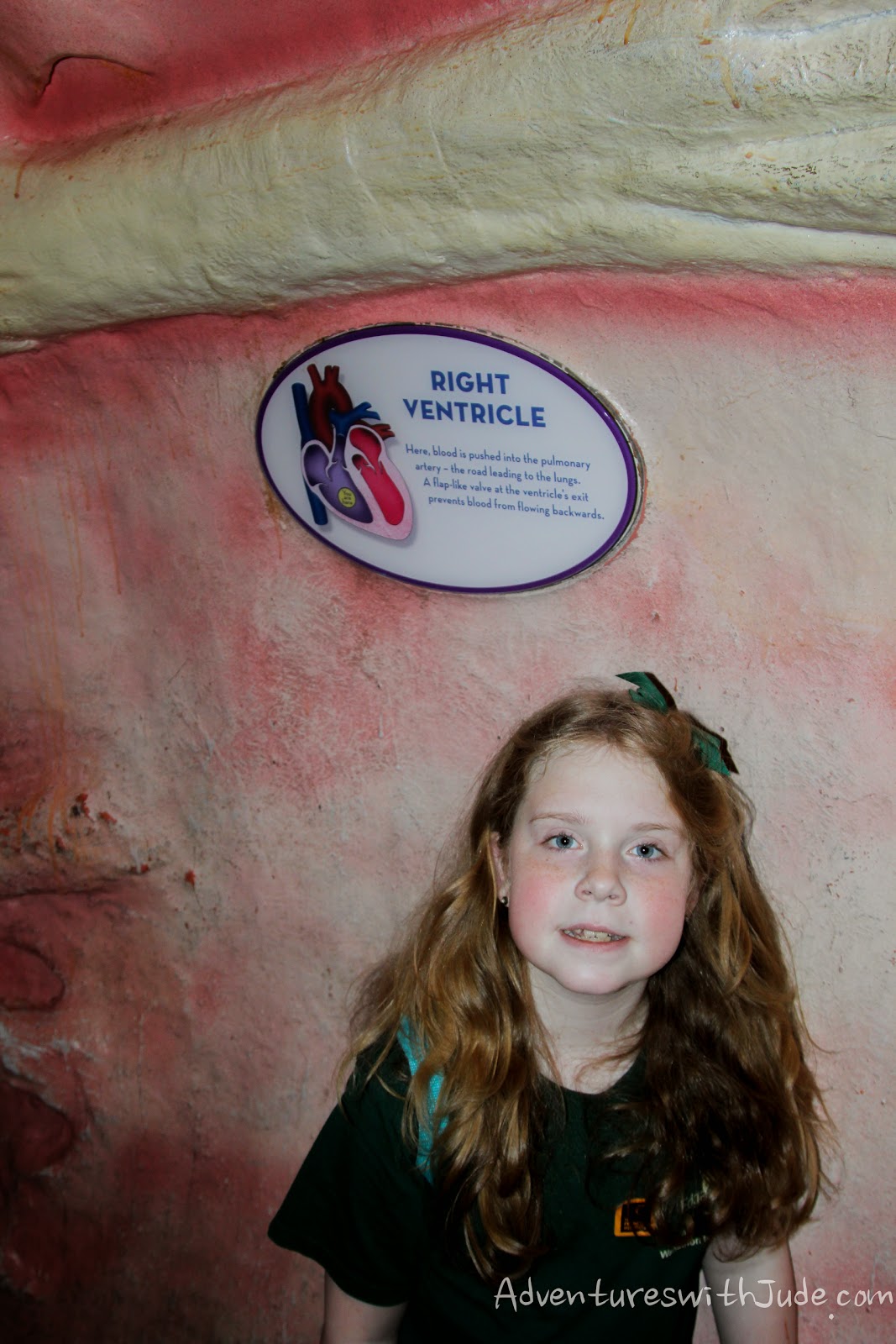
The Giant Heart (Anatomy, Biology, & Chemistry)

The centerpiece of this exhibit is a giant, walk through reproduction of the human heart and lungs.  Follow the path blood takes as it leaves enters the heart, becomes oxygenated in the lungs, and returns to the body.


We have a warped sense of humor here: 

The Heart at the Franklin Institute

Look!  I'm a catastrophic cardiac thrombus!

Now I'm a pulmonary embolism!

Other exhibits explain the cardiac system, and the importance of cardiac health.


Ever wonder how much blood you have? Generally speaking, it's about 8% of your total body weight.   This scale measures your body weight and then the appropriate volume of liquid is shown.  Celia was shocked to learn that Mom's blood volume was more than three times hers.


If you're looking to rest your feet, have a seat.  It's modeled to show the marrow that resides in our bones.  Celia's first impression -- "Look Mom!  A Bacon Bench."  Ironic considering the topic...it's a good thing Philadelphia hospitals have some of the best cardiologists in the nation on staff!

The Sports Challenge (Physics & Technology) 

This exhibit uses sports and activity to show science.  From the motor planning of wall climbing to a figure skater needing managing centrifugal force in a spin to the role of aerodynamics in a racing wheelchair, you can learn how sports is a specialized science.


Chase Utley's uniform


Philly's hometown sports heroes are also featured. This uniform was worn by Chase Utley, the second baseman for 2008 World Series Phillies team and Matthew's favorite player.  (Celia was disappointed that there was no feature for her favorite Phillie, pitcher Cole Hamels, so she settled for a photo with Utley's uniform, to make Matthew wish he had been on the trip, too.)


The Train Factory (History, Engineering, and Technology) 

Baldwin Locomotive 60000

This Baldwin 60000 locomotive was built just outside of Philadelphia in 1926.  It gives visitors the opportunity to climb aboard a real steam engine.  You'll also have the opportunity to explore electric and magnet trains.

Forensic science is also on display.  Solve the mystery of why a train derailed.


Space Command (Astronomy, Mathematics & Technology)


The Amazing Machine (Machines)

Machines of all types - from pendulums to pulleys - are featured in this area.


Pull the lever, release the bowling ball...and don't flinch!!

Sir Isaac's Loft (Physics)

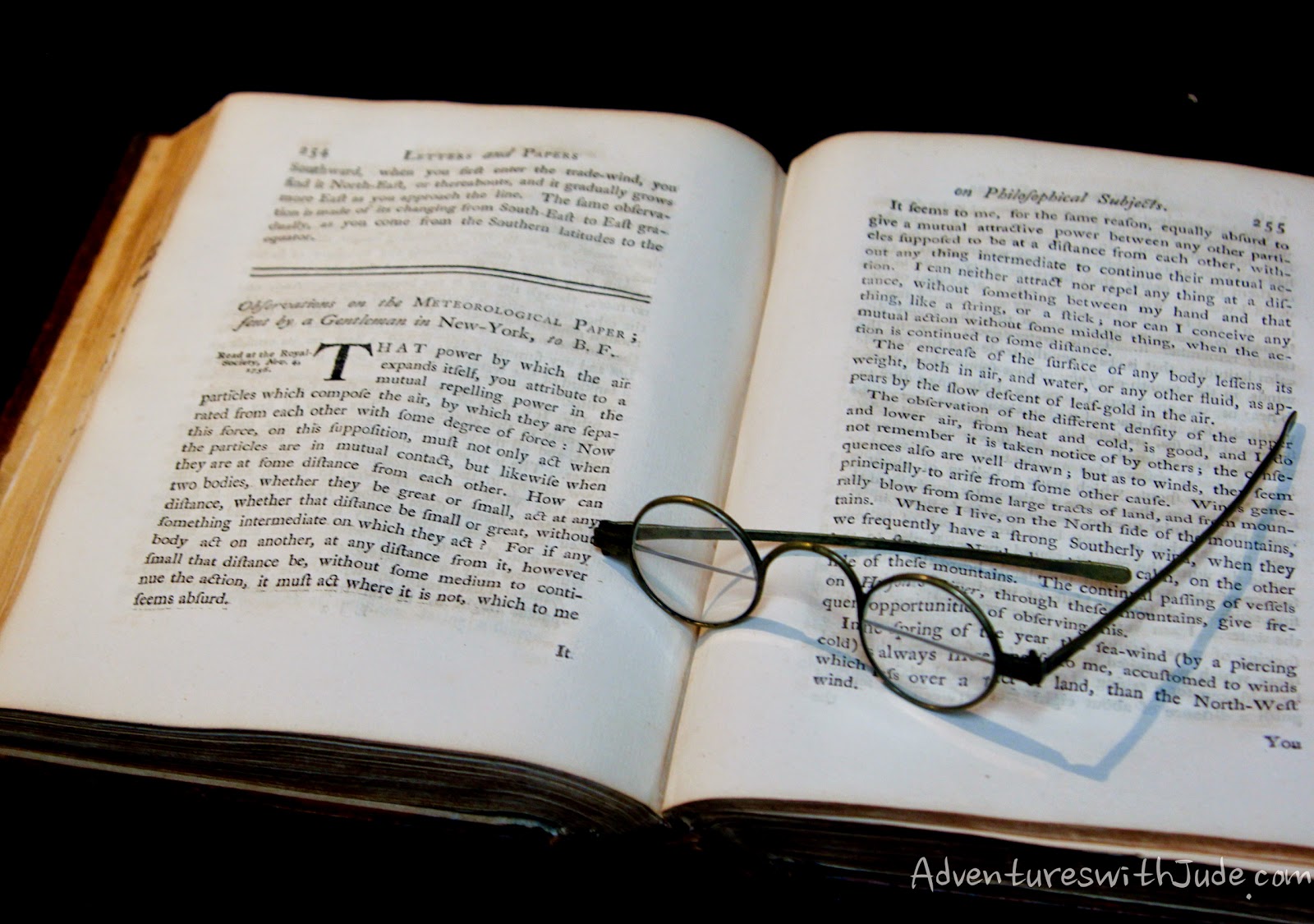
Other areas to explore in the museum include  The Joel N. Bloom Observatory (unfortunately closed during our visit), and the Samuel Fels Planetarium.  There is also a center marble staircase that highlights the Fulcrum Pendulum, and several smaller display cases along the outside of the stairs.  One of them is this exhibit that honors Franklin's contribution to optometry:  bifocals!

Ben Franklin's bifocals


The Franklin Institute was one of Celia's favorite trips so far.  We were sorry when we had to head back to the bus to come home.  We'll definitely be heading back again soon!

http://benandme.com/2014/06/f-faithful.html
F is for Franklin Institute


©2012- 2014 Adventures with Jude. All rights reserved. All text, photographs, artwork, and other content may not be reproduced or transmitted in any form without the written consent of the author. http://adventureswithjude.com
Related Posts Plugin for WordPress, Blogger...
Pin It button on image hover