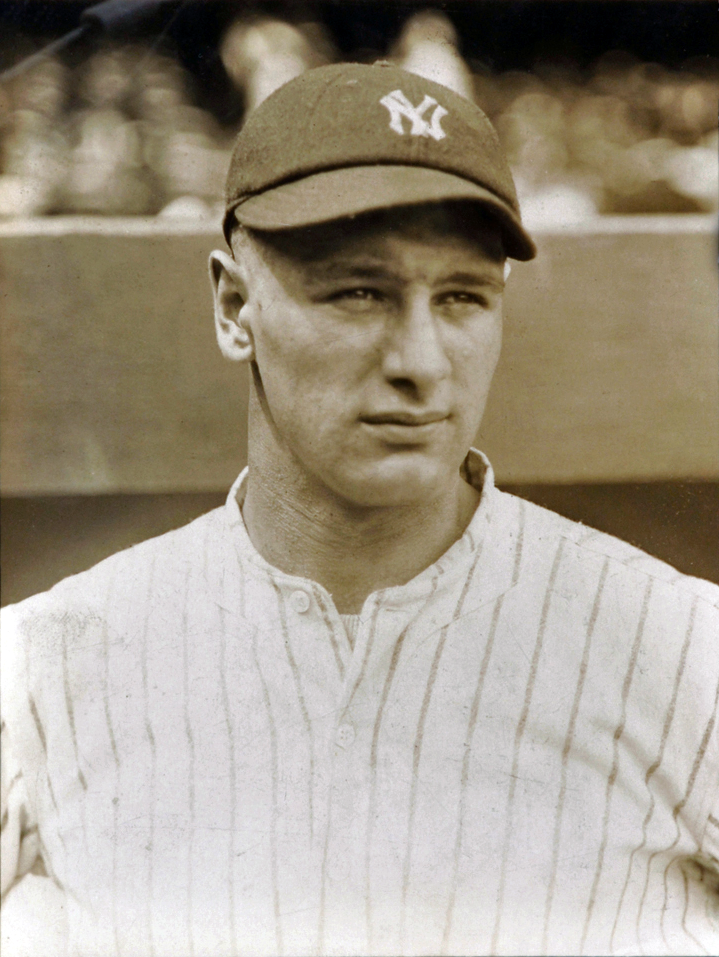
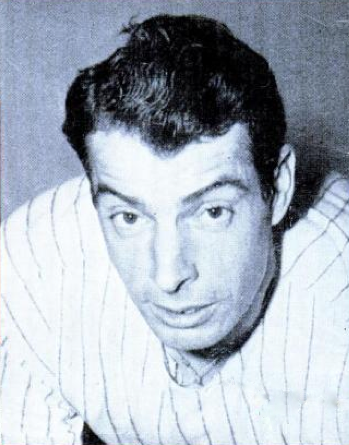
Showing posts with label Americas Game. Show all posts

Wednesday, June 29, 2016

America's Game: After the Last Out: A Postgame in Cooperstown


America's Game: After the Last Out: A Postgame in Cooperstown

The idea of a Baseball Hall of Fame began in 1935. That year, retired players Ty Cobb, Babe Ruth, Honus Wagner, Christy Mathewson and Walter Johnson, all pioneers of the modern sport, were named the first “class” of Hall of Famers. Each year, another group of players was elected to join this elite group. However, this was more of an “on paper honor,” rather than a museum-like actual “hall.” Members of the Clark Foundation, founded by Stephen Clark, sought to revive business and tourism to a city that was devastated by the Great Depression and Prohibition. On the supposed claim that General Abner Doubleday, a Cooperstown native, had invented the sport, they lobbied for a museum dedicated to baseball to be built. Though that claim has long been disputed and generally discredited, the word “Cooperstown” has become synonymous with “excellence in baseball.” Baseball's Hall of Fame was dedicated on June 12, 1939.

1936 inaugural Baseball Hall of Fame inductees: L-R: Ty Cobb, Babe Ruth, Honus Wagner, Christy Mathewson, Water Johnson
Public Domain, via Wikimedia Commons

How does a player get into the Hall of Fame? He needs to have been part of baseball for ten or more years, retired for at least five, and pass through a selection process administered by either the Baseball Writers' Association of America or the Veterans Committee. Once placed on the ballot, he needs to garner 75% or more approval. Those who meet that threshold are admitted the following summer. Players who receive less than 75% of the vote can be reconsidered in a later year; those with less that 5% approval are dropped from the balloting permanently. Two former players are permanently banned from eligibility. Player and manager Pete Rose was banned in 2004 because of alleged betting against his team, and “Shoeless” Joe Jackson for his role in the 1919 World Series scandal.

Abbot and Costello in "Who's On First?"
Photo Credit: Profile 365
Permanent exhibits showcasing 19th- and 20th-century baseball, including the plaques with inductees’ names, are mingled with changing ones. You’ll also see two non-players in the Hall -- Abbott and Costello, the comedians who brought America “Who’s on First?” Some of the temporary exhibits in the past include “Picturing America’s Pastime”, which captures the historic link between baseball and photography in over 250,000 original photographs, as well as “The New Faces of Baseball”, highlighting the new faces of MLB in the decades following integration. Memorabilia, from stadium recreations to baseball cards, is also featured, allowing today’s fans to understand yesterday’s game.

From its first pitches in Antebellum America, baseball has become a symbol of the United States. Baseballs traveled the country in the rucksacks of Union soldiers, spreading the game from its origins in New Jersey to the west coast. It became a game where abandoned boys like Babe Ruth could shine, and where the lure of money both created and ruined Joe Jackson’s career. Race and gender didn’t matter, but the love of the game allowed all to find their place on a “field of dreams.” Being part of baseball doesn’t depend on your fielding skills. The game has permeated literature, movies, and the American dialect, including famous “Yogi-isms” like “It ain’t over till it’s over,” and when your favorite commentator announces that your team lost its fifth game in a row, “It’s deja vu all over again.” Baseball has become America’s Game.


Click Here to read other posts in the Series!


©2012- 2016 Adventures with Jude. All rights reserved. All text, photographs, artwork, and other content may not be reproduced or transmitted in any form without the written consent of the author. http://adventureswithjude.com

Wednesday, June 22, 2016

America's Game: Baseball's Hidden Heroes


America's Game: Baseball's Hidden Heroes

While many will associate baseball teams as merely comprising of the athletes, the direction from the dugout and the folks behind the microphones are just as important. Imagine your home team without its leader, or the voices that provide play by play commentary! Many of these coaches and announcers once had on-field careers.

The first full-time coaches in professional baseball date to 1909, when the New York Giants’ John McGraw hired Wilbert Robinson and Arlie Latham as coaches. By the 1920s, most Major League teams had two full-time coaches, although the manager often doubled as third-base coach, and specialists, such as pitching coaches, were rare. You had to know it all to coach! After World War II, most MLB teams listed between three and five coaches on their roster, as managers increasingly ran their teams from the dugout full-time, and appointed pitching, batting, and baseline coaches to assist them and the baseline coaches. Because of the proliferation of uniformed coaches in the modern game, Major League Baseball now restricts the number of uniformed staff to six coaches and one manager during a game. A benefit to having former players as coaches is they know what it’s like to be directed and how to play the game every day, and can have reasonable expectations for their players.

Wilbert Robinson (center) and Arlie Latham (Right)
New York Giants dugout, 1909
Library of Congress, via Wikimedia Commons

In most sports leagues, the coach is easily identified by his clothing. However, in baseball, the manager and coaches typically all wear numbered team uniforms, just like their players, with few exceptions. Hall of Fame manager Connie Mack always wore a black suit during his 50 years at the helm of the Philadelphia Athletics, and Burt Shotton, manager of the Brooklyn Dodgers in the late 1940s, wore a Dodger cap and a team jacket over street clothes in the dugout. After the widespread adoption of numbered uniforms in the early 1930s, Joe McCarthy, another Hall of Fame manager, wore a full uniform but no number on his back for the remainder of his career (with the New York Yankees, then the Boston Red Sox). Coincidentally, all three men retired during or after the same season — 1950.

Teams may also employ individuals to work with players in other areas or activities. These positions sometimes include the word "coach" in their titles, but these people do not dress in uniform during games, to avoid not putting the team outside of the MLB restrictions. The most prominent of these positions are the athletic trainer and the strength and conditioning coach. Other members of the coaching staff include bullpen catcher and batting practice pitcher. Some teams also employ additional coaches without specific responsibilities.

Ronald Reagan, WHO Radio Sportscaster
Photo Credit: Des Moines Register 
While the coaches give the teams feedback, broadcasters give the fans their own. The first baseball game ever broadcast on radio was a Pittsburgh Pirates versus Philadelphia Phillies game on August 5, 1921. The game was broadcast by KDKA of Pittsburgh, and the Pirates defeated the Phillies 8-5. It was broadcast by KDKA staff announcer Harold Arlin. That year, KDKA and WJZ of Newark broadcast the first World Series on the radio, with Grantland Rice and Tommy Cowan calling the games for KDKA and WJZ, respectively. The next year, WJZ broadcast the entire series, with Rice doing play-by-play.

Often, the broadcasters were not actually present at the game, but simply gave reports telegraphed to them from the stadium. From the years 1933-36, a young Ronald Reagan provided commentary for the Chicago Cubs. During one game, he lost his feed, and simply ad-libbed possible scenarios to avoid dead air.

For the 1923 World Series, Rice had a partner for the first time: Graham McNamee. Rice was the leading broadcaster, but during the fourth inning of Game 3, he turned the microphone over McNamee, making him the first “color commentator” - a person ad-libs when the game isn’t actually in progress. Although frequently criticized for his lack of expertise, McNamee helped popularize baseball.

As the Golden Era of the 1950s wound down, radio broadcasts were gradually eclipsed by television. The World Series continued to be broadcast on the radio, with NBC Radio covering the Series from 1960–1975, and CBS Radio from 1976–1997. However, after 1960 there would not be regular-season baseball broadcast nationally on the radio until 1985 when CBS Radio started a Game of the Week. Most teams do have a local broadcasting outlet to provide games to their fans.

Richie Ashburn's Hall of Fame Plaque
By Peter Bond, via Wikimedia 
The broadcast booth is another place for a player to have a second career. Two of the most famous players to do so are Bob Uecker and Richie Ashburn. Uecker lasted only six seasons (1962-67), yielding a low .200 batting average and only 14 Major League home runs on the field, but he has been the Milwaukee Brewers’ announcer since 1971. His comedic timing earned him over 100 invitations to The Tonight Show with Johnny Carson, where Carson dubbed him, “Mr. Baseball.” Richie Ashburn began his baseball career with the Philadelphia Phillies, spending 11 years on the team, including the 1950 World Series team before being traded to the Chicago Cubs and the New York Mets. He had a .308 batting average for his career, and his career 2,576 hits places him in top 80 career hitters of all time (as of May 2016). When he died in 2007, not having “Whitey’s” voice calling the game was a strange experience for generations of fans who had been listening to him since 1963.

Another memorable broadcasting voice is Harry Kalas.  During the summer, he was known by Phillies fans for his hallmark "Swing...and a long drive...this ball is outta here!" when a home run was launched to the stands, and leading the crowd in post-game performances of the song "High Hopes."  Kalas broadcast for the Phillies for nearly forty years, until literally the day he died.  (Kalas collapsed in the booth just before the start of the April 13, 2009 Phillies-Nationals game, and died shortly after being taken to the hospital.)  However, many outside of baseball recognize his distinct voice because he was also the announcer for  Inside the NFL during the baseball off-season, and provided voice-overs to the NFL for nearly 30 years.

A wise man once said, “Sometimes it’s what you don’t see that matters the most.” That certainly is the case with these “hidden” heroes at the ballpark. While many believe a baseball team to comprise only of the athletes at the plate, the coaches that train them and the broadcasters who popularize their names are equally important.  Commentators and broadcasters allow fans to experience the game as if they were in the stands themselves watching the payoff of a coach’s hard work.


Harry Kalas Cover Photo Credit: Sons of Penn


Click here to read other posts in the Series!


©2012- 2016 Adventures with Jude. All rights reserved. All text, photographs, artwork, and other content may not be reproduced or transmitted in any form without the written consent of the author. http://adventureswithjude.com

Wednesday, June 15, 2016

America's Game: As American As Apple Pie

America's Game: As American as Apple Pie

Baseball is an integral part of American pop culture. For over a century and a half, Americans have grown up up with baseball, playing on Little League teams and dreaming of playing in the Majors, turning the game into a tradition of American culture. Over time, it has come to be a synonym for being quintessentially American -- or so goes the saying “As American as hot dogs, baseball, or Mom’s apple pie.”

Professional baseball has reflected shifting values in American society. In the early years, Jim Crow thinking banned blacks from the Major Leagues, but in 1947, the first black baseball player, Jackie Robinson, entered the league. Soon, more black players were signed, making the “field of dreams” a “field of reality.” Players become heroes, and companies started hiring them to endorse their products. Whether it is Nolan Ryan plugging Advil for pain relief or Derek Jeter selling Ford automobiles, the general public sees the player’s endorsement as a promise that the product will stand up to its application, making endorsement deals lucrative for both sponsor and player.

Mike Trout, spokesman for Zepp
Mike Trout, spokesman for Zepp 

Baseball permeates pop culture. Abbot and Costello’s Who’s on First? routine descended from turn-of-the-century burlesque sketches that used plays on words and names.  The line has become a common response to a confusing situation, and a humorous "Who's on first?" means "Explain this to me again, please."

 "If you build it, they will come..." is another baseball phrase, quoted from from the motion pictures Field of Dreams. Christopher Sharrett of USA Today described it as a motion picture that "used baseball as an image of a golden, half-remembered past,” and it shows how baseball is a link between generations.  If you want something to happen, you might say, "If you build it, they will come," as encouragement.

Dozens of English-language idioms have been derived from baseball.  One of the first examples, Ernest Thayer's poem Casey at the Bat, appeared in 1888. A wry description of the failure of a star player in what would now be called a clutch situation, "There is no joy in Mudville." can be used to describe a once promising situation that has fallen apart.  You probably have said to someone "I want to touch base," meaning you want to find out about their future plans. Someone might ask "Am I in the right ballpark?"  if they are uncertain if an idea they are thinking is correct, or  someone might congratulate you by praising, "You’re in the big leagues now!"


Mickey Mantle's baseball card portrait
Public Domain, via Wikimedia Commons 
Baseball has also inspired the creation of new cultural forms. Baseball cards—many of which are now prized collectibles—are the source of the much broader trading card industry, involving similar products for different sports and non-sports-related fields. They were introduced in the late 19th century as trading cards, and a typical card would feature an image of a baseball player on one side and advertising for a business on the other. In the early 1900s, they were produced widely as promotional items by tobacco and confectionery companies; now baseball cards and bubble gum go hand in hand. The 1930s saw the popularization of the modern style of baseball card, with a player photograph accompanied on the rear by statistics and biographical data.

The baseball cap has become a ubiquitous fashion item not only in the United States, but also in countries where the sport itself is not particularly popular, such as the United Kingdom and Japan. The basic shape, including its curved bill, is similar to some styles of 19th century sun bonnet. Made-over for the men, the baseball cap had a simple task: keep the sun out of the players’ eyes. Usually, the cap was fashioned in the team’s official colors, and often the logo, mascot, or team's initial was placed on the cap. Selling them to fans at the games bolstered them as a way to show your enthusiasm for your home team.  In addition to standard "player replica" caps, teams re-style them to appeal to multiple fan demographics.


While associated with the sport, the cap’s style has become part of other careers and daily life. It’s humble origins for blocking the sun makes it popular for military or police officer wear, and the front of the cap becomes a place for many veterans to display their past careers.

Baseball entered the American culture in the 1850s, and as the game grew, so did the culture surrounding it. Today, baseball images and references, from television ads to the ubiquitous ball cap, baseball culture is a part of our everyday lives.


©2012- 2016 Adventures with Jude. All rights reserved. All text, photographs, artwork, and other content may not be reproduced or transmitted in any form without the written consent of the author. http://adventureswithjude.com

Wednesday, June 8, 2016

America's Game: Star Sluggers

America's Game: Star Sluggers

When the Great Depression struck, many baseball owners feared the worst. They expected the fans would have trouble affording tickets, and fans they did draw would not have enough for extra souvenirs or food concessions. To their surprise, many people would still come to the ballpark if only to forget about their own troubles for a while. Attendance was down in the 1930s, but none of the sixteen franchises ever folded or moved as a result of the Great Depression. While some of the games’ lasting stars said goodbye, others said hello. A new era of baseball had begun.

The 1930s also saw two immortal aspects of the game arrive. The first was arrival of the All-Star Game. Originally, played in Comiskey Park in 1933, the managers and the fans selected the players. The game was thought up Chicago Tribune sports editor Arch Ward and to be a part of the celebration of Chicago’s Century of Progress Exposition. This mid-summer classic now features the best players of baseball as voted in by fans, and every team has at least one player to represent them. The American League teams’ best play against the stars of the National League, and the winning league has the “home field advantage” in that season’s World Series.

The second was the Baseball Hall of Fame. It would not be until 1939 that the Hall was built, but its first five inductees would be Babe Ruth, Ty Cobb, Honus Wagner, Christy Mathewson, and Walter Johnson in 1936.

First Hall of Fame Inductees
L-R: Ty Cobb, Babe Ruth, Honus Wagner, Christy Mathewson, Walter Johnson
Public Domain, via Wikimedia Commons


The 1930s also saw its fair share of stars on the field. Babe Ruth retired from the Yankees, letting Lou Gehrig have a chance to step into the spotlight. Joe DiMaggio arrived to roam center field for the Yankees in 1935, stealing some of Gehrig's spotlight. He stood alone when Amyotrophic Lateral Sclerosis - known informally as “Lou Gehrig’s Disease” - forced him to retire at the end of the 1939 season. Gerhig’s uniform number, 4, was the first player number retired in Major Leage baseball. In the rest of the league, Jimmie Foxx dominated the decade at the plate. In 1933, Foxx hit .364 with 58 Home Runs and 168 Runs Batted In. Five years later, he was just as strong; during the 1938 season, Foxx hit .349 with 50 HRs and 175 RBIs. The 1930s also saw the introduction of a 17 year old Bob Feller, Lefty Grove, Power Hitters Hank Greenberg and Mel Ott, and a Young Ted Williams arrived in 1939.

Lou Gehrig
Public Domain, via Wikimedia

Dynasties rose and fell. While Connie Mack and the Philadelphia Athletics started out the decade by winning two AL Pennants in a row, their back to back run of 29-30 came to a close in 1931. The “Gas House Gang” arrived in St. Louis in 1934. Led by Dizzy Dean and Leo Durocher, the Cardinals were constant rivals to the Cubs and Giants. This team helped the Cardinals win the National League pennant several times in the 1930s, along with a World Series title in 1934. Much like the 1920s, the Yankees dominated the second half of the decade. Led by manager Joe McCarthy, the Yankees won four World Series in a row to close out the 1930s.

Joe Dimaggio
Public Domain, via Wikimedia Commons
The game took a backseat while the boys of summer became “the boys overseas.” The “girls of summer” emerged with the formation of the All-American Girls Professional Baseball League. The war ended in August, 1945, during the second half of the season. Teddy “Ballgame” Williams would soon be seen patrolling Fenway; “Jolting” Joe DiMaggio would return to his rightful place in Yankee Stadium. Many others would return to the game after serving their country, though some moved on to new careers. Once the boys were back on the field, the mega-watt stars, another New York dynasty, and a new kind of player transformed the post-war game.

The New York Dodgers were still in Brooklyn, the Giants were still in Manhattan, and the Yankees. In the post war era, 12 World Series were played in the city that never sleeps. With star players on each team - Mickey Mantle and Yogi Berra were the new stars for the Yankees, Dodgers pitcher Johnny Podres, and the Giants’ slugger Bobby Thompson, the three teams passed League and World Series championship pennants around the city from 1946-1959. However, bigger news than their lock on the top place in the standings was their newest players: Jackie Robinson and Willie Mays.

Jackie Robinson and Willie Mays
Public Domain, via Wikimedia Commons
Besides breaking the color barrier, Robinson had an exceptional 10-year baseball career. He was the recipient of the inaugural MLB Rookie of the Year Award in 1947, was an All-Star for six consecutive seasons from 1949 through 1954, and won the National League Most Valuable Player Award in 1949—the first black player so honored. During his career, Mays also won two National League Most Valuable Player (MVP) awards and shares the record of most All-Star Games played (24) with Hank Aaron and Stan Musial. He ended his career with 660 home runs, third at the time of his retirement, and currently fifth all-time.

Baseball’s Golden Age brought new life to home plate, with new ways to acknowledge great players, such as annual All-Star Game and the Hall of Fame. The 40-year span was the prime for many star sluggers, both veteran and rookie. Damn Yankees, a 1955 Broadway musical, was a nod to the dominance of the New York teams. However, the league's most enduring accomplishment was the inclusions of players from all races.


Click here to read other posts in the Series!


©2012- 2016 Adventures with Jude. All rights reserved. All text, photographs, artwork, and other content may not be reproduced or transmitted in any form without the written consent of the author. http://adventureswithjude.com

Wednesday, June 1, 2016

America's Game: Stadium Traditions


America's Game: Stadium Traditions


From the first pitch to the ace reliever’s last out, baseball, like America, is rooted in tradition. Some traditions are unique to one team or ballpark, while others are observed all throughout the leagues. This list contains seven of my favorite traditions.

1. Ceremonial First Pitch


In a tradition over 100 years in the making, a notable person will often throw out the first pitch of the ball game. Usually, it's a local celebrity or hero. The tradition began in 1910 when President William Taft threw out the first pitch at the Washington Senators game. After the Senators folded, other teams took turns hosting the President on Opening Day. Now that Washington again has a team, the incumbent president usually throws out the ceremonial pitch at the Nationals’ first game.

President Ronald Reagan, ceremonial opening pitch, Wrigley Field, 1988
President Ronald Reagan, 1988 opening game
Chicago Cubs/Wrigley Field
Public Domain, via Wikimedia

Over the years, the first pitch tradition evolved. Taft tossed the ball to a single specific player, but subsequent Presidents threw it into a group of players who fought over it in a scrum, much like bridesmaids battling over the bouquet at a wedding. In the 1970s, scrumming gave way to the much tamer and safer first infield-to-plate pitches we see today. Today, the ceremonial pitches’ receivers are usually either the team’s mascot or catcher, and nearly every game has a ceremonial pitcher or two.

2. Hot Dogs, Peanuts, and Cracker Jacks


What constitutes baseball food, or stadium food, if you prefer? Peanuts, Crackerjacks, and beer are some of the most traditional games foods. Peanuts and popcorn are easy to eat while you’re distracted by the play on the field, and a cold one with the boys on a hot summer day was easily gotten away with because the wife was at home. But what if you are hungry for more than a snack? Just raise your hand when the hot dog man comes by.

But how did hot dogs become synonymous with baseball? Waves of German immigrants in the 1800s brought both their traditional sausages to America, along with their dogs. Legend says sausages on rolls - easy to eat one-handed while watching the game, and more substantial than popcorn to slow the effects of all of those beers - became familiar stadium fare, with sellers carrying insulated bags filled with piping hot sandwiches walking up and down the aisles announcing “Red hots! Get your red hots!” Along the way, someone noticed that the sausages on the bun looked like the long-bodied dachshunds and said the sandwich looked like a hot dog. Newspaper cartoonist Thomas Aloysius "TAD" Dorgan immortalized the comment in a 1906 cartoon, and the name stuck. Today, nearly 35 million pounds of hot dogs are served at baseball stadiums.


Many stadiums also serve local specialties as well.  A fan can eat a lobster roll, a New England favorite,  while the Red Sox play at Boston’s Fenway Park, while Anaheim's concessions include “Angel Wings,” the home team's twist on buffalo chicken wings. Nationals Park serves Teddy's Barbeque, a concession featuring images of Theodore Roosevelt and a signature food item—a 13 inches (33 cm) beef short rib called the "Rough Rider. Citizen’s Bank Park, home of the Philadelphia Phillies, resides in not only the “City of Brotherly Love,” but also the “Land of Cheesesteaks and Hoagies,” making these hometown foods a signature game meal.

3. Take Me Out to the Ballgame


While on the subject of peanuts and Cracker Jack, the anthem of the ballpark, "Take Me Out to the Ball Game," is one all baseball fans know. Few know the full song, but everybody who's seen a ball game knows the chorus.

This tradition started with Harry Caray. During a mid-inning break, he began singing it to what he thought was a “dead” booth, when White Sox announcer Bill Veeck turned his mic on, broadcasting live to the crowd. When Caray moved to the Cubs and Wrigley Field, it became a tradition and is sung during the 7th inning stretch. After his death in 1998, Wrigley Field continued the sing-along tradition, inviting celebrities to lead the song in Carey’s place.

The traditional words to the song are:

lyrics to "Take Me Out to the Ballgame"

Some fans rearrange the words to reflect their teams’ performances. After their recent losing seasons, it’s not uncommon to hear Phillies fans belt “...if they don’t win it’s the same!”

4. The 7th inning stretch


After sitting through 6 and a half innings, you start to feel a little tired; if you haven't gotten up for food (likely since concessions are brought to your seat), then you'll feel like you need to stand up. Legend says that during a 1910 game, the portly President Taft got up to stretch his legs in the middle of the seventh, and out of respect, the crowd stood up, too. Then the rest of the fans realized this little bit of exercise was a pretty good idea, and a tradition was born. In early games, a military band would often be on hand to play a patriotic song -- why the band was ready to strike up The Star Spangled Banner during the 1918 World Series.

After getting up and singing "Take Me Out to the Ball Game," people either sit back down or run to grab their final snacks; the 7th Inning Stretch has become the “last call” for food and alcohol purchases.

seventh inning stretch

5. “Hey, Beer Man!”


At any other place of business, if you’re handing over money, it’s a one-on-one transaction. You keep an eye on the recipient and count your change along with him. All that is thrown out the window in baseball.
To let you watch the game instead of spending half of it in food queues, vendors walk around the stadium, hawking their wares. When one comes by with what you want, you put your hand up (as if hailing a taxi) and holler “Hey ____ Man!” When he stops, you hold up your fingers for how many. The vendor shouts the total as gets your order out, and completing the transaction becomes a group activity.

Total strangers will pass money and food to each other. Your food gets handed to the person sitting on the aisle, who in turn passes it down the row, while you start passing the money up the row.  If you're due any change, that follows your food. You’d never do this outside of a stadium, but everyone’s trustworthy at a ball game.

6. Watch out for foul balls!


If there's one thing kids will bring to the game, it's their baseball gloves. It doesn't matter if you're sitting at the foul line, behind home plate or in the nosebleed sections—the glove comes to the park. After all, you never know where those foul balls might end up, and who doesn’t like a genuine souvenir? Usually, it’s a popped-back foul ball that you’ll catch. If you’re exceptionally lucky, you’ll nab the home run ball knocked out of the park from your home team.

Catching a home run from the opposing team, however, feels wrong. Often, the home-run ball from the visiting team gets caught and “thrown back” to the field. The tradition began at Wrigley Field, where so many balls are hit out of the park that it’s not totally crazy to say “I’ll wait for another.” Most fans will keep opposing team balls unless it’s been hit by an arch-rival. Then it becomes almost a greater honor to toss it back than to keep it, even if you never catch another ball in your life.

7. Mascots


If you were to see a picture of a team’s uniform, would you know what team it represented? Maybe, if you were familiar with team logos. The odds are pretty good, though, if you saw a team’s mascot, you’d know right away who he belonged to.
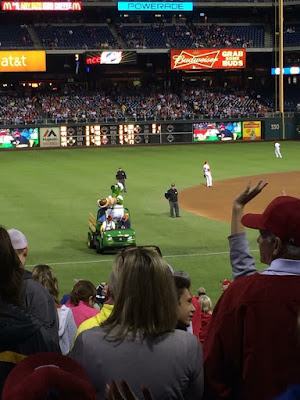
Phillie Phanatic and his hot dog launcher
The first baseball mascot was literally “a kid in a chicken suit.” In 1974, a San Diego college student was working a radio gig, promoting the station while dressed in a chicken suit. He enjoyed his first assignments and offered to promote the station at the San Diego Padres games. For five years, he advertised the radio station at games, and while The Famous Chicken eventually parted ways with the radio station, becoming the Padres’ full-time mascot, he was the catalyst for many of the mascots we know today. The next major team to have a mascot was the Philadelphia Phillies. The “Galapagos Island-born” green guy first arrived in Philadelphia in 1978, and is one of the most easily identified Philadelphians -- sometimes being recognized faster than Ben Franklin!

Baseball mascots interact with the players and fans, serving as both entertainment and a “goodwill bridge.” Often, the mascots appear at local events; their popularity often guarantees a good turn out. While mascots in and of themselves embody tradition, sometimes they can make traditions themselves. The fourth inning of Washington Nationals home games features the Presidents Race. Caricature and team-uniformed versions of permanent mascots George (Washington), Tom (Jefferson), Abe (Lincoln) and Teddy (Roosevelt), along with a “President of the Year” race around the field and entertain fans.  When the Phillies pack for Spring Training, the Phanatic's three wheeler and hot dog launcher are given reserved seating alongside the bats, balls, and uniforms in the truck.


What is your favorite part of attending a ball game?


Click here to read other posts in the series!


©2012- 2016 Adventures with Jude. All rights reserved. All text, photographs, artwork, and other content may not be reproduced or transmitted in any form without the written consent of the author. http://adventureswithjude.com

Wednesday, May 25, 2016

America's Game: A Field of Dreams

America's Game: The Negro Leagues

Baseball was originally played by men in rival athletic clubs for recreation, and in 1864, immediately after the Civil War’s resolution, baseball’s popularity increased dramatically.  At this early time, it was still an amateur sport that attracted all races.  Reflective of society at large, there were both single-race as well as integrated teams.  However, on December 11, 1868, a casualty of the formation of the National Association of Baseball Players was a silent "gentleman’s agreement" barring black players.

In the early years of the 20th century, there were two attempts to establish leagues for black teams.  The first was in 1906 when the International League of Independent Baseball Clubs was formed in the Philadelphia area. This league was an integrative league, as it was initially composed of one white American, two Cuban, and two African American teams. The championship game pitted two black teams against each other and attracted 10,000 fans to Columbia Park, then the home of the Philadelphia Athletics. The league was planned to continue with a 1907 season, but it never happened. Four years later, there was an attempt to start an independent black major league with teams across the country; unfortunately, the league died before any sanctioned games were played.

The 1887-88 Cuban Giants
Public Domain, via Wikimedia Commons
The first nationally-known black professional baseball team was founded in 1885 when three clubs, the Keystone Athletics of Philadelphia, the Orions of Philadelphia, and the Manhattans of Washington, D.C., allied to form the Cuban Giants. The newly-formed black teams played as independent but allied ball clubs until the organization of the first black league in 1920.  That same year, Rube Foster, now known as the father of black baseball, founded the Negro National League.  In 1923, Ed Bolden formed the Eastern Colored League.  These two leagues thrived in the beginning years, but eventually declined because of financial difficulties.  In 1933, a new Negro National League was formed, and the Negro American League was chartered in 1937.  These two leagues, bankrolled by black businessmen, prospered until the color line was broken by Jackie Robinson.

Jackie Robinson made history in 1947 when he broke baseball’s color barrier to play for the Brooklyn Dodgers. A talented player, Robinson began his professional career in the Negro League before being selected by Branch Rickey, the Brooklyn Dodgers’ president, to help end segregated Major League Baseball. With the number 42 embroidered on his jersey, Robinson won the National League Rookie of the Year award his first season and helped the Dodgers to the National League Championship – the first of Robinson’s six trips to the World Series.  In 1949, Robinson won the league MVP award, and he was inducted into the Baseball Hall of Fame in 1962.

Jackie Robinson in his 1950 Brooklyn Dodgers Uniform,
By United States Information Agency
[Public domain], via Wikimedia Commons

Despite his skill, Robinson faced a barrage of insults and threats because of his race. The courage and grace with which Robinson handled the abuses inspired a generation of African Americans to question the doctrine of “separate but equal” and helped pave the way for the Civil Rights Movement. On April 15, 1997, his jersey number was retired throughout all of Major League, an unprecedented and still unrepeated tribute to the man who returned his race to the mainstream games.

Hank Aaron, 1960 Milwaukee Braves
Public Domain, via Wikimedia Commons
While Jackie Robinson became the man who broke the color barrier, and essential the “first strike” against segregated baseball, the Negro Leagues did not immediately strike out when Robinson took the plate.  Dwindling finances as more players opted for the integrated MLB was strike two; the NNL disbanded in 1948 while the NAL lasted until 1960 before shuttering. A few teams of the Negro League teams continued independently beyond this, though. The last team to play was the Indianapolis Clowns, who mixed comedy with baseball. The Clowns were the lineal descendants of the Ethiopian Clowns of the 1940s, who had outraged many fans by wearing grass skirts and painting their bodies in a cartoonish version of cannibals. But the latter-day Clowns played serious baseball until the team’s end in 1973; home run king Hank Aaron made his professional debut with them in 1952.  The folding of the team was the last strike against segregated baseball, ending the era of the Negro League's games.

Just a few years after they learned to play baseball while fighting alongside white soldiers in the Civil War, blacks became quietly forbidden from Major League Baseball.   In the Jim Crow era, the formation of the Cuban Giants association, followed by the Negro National and Negro American Leagues, gave black players a chance to make their big league dreams come true.  The Leagues were especially successful during World War II and in the years after when black urbanites, flush with cash from well-paid defense jobs, crowded into stadiums across the nation to see players like Hank Aaron play.  After Jackie Robinson had broken into the “white league”, some proposals were floated to bring the Negro leagues into "organized baseball" as developmental leagues for black players, but that was recognized as contrary to the goal of full integration.  Negro Baseball Leagues provided African Americans their own “field of dreams,” while Jackie Robinson and his cohorts proved that baseball wasn’t a white man’s sport, but America’s game.


Cover Image credit:  David King, [Public Domain], via Wikimedia Commons


Click here to read other posts in the series!


©2012- 2016 Adventures with Jude. All rights reserved. All text, photographs, artwork, and other content may not be reproduced or transmitted in any form without the written consent of the author. http://adventureswithjude.com

Wednesday, May 18, 2016

America's Game: A League of Their Own


America's Game A League of Their Own

From its first pitches, professional baseball was considered a “gentleman’s sport,” played almost exclusively by men.  However, with America’s entry into WWII, the major league teams were running out of male players.  Half the players in the majors were in military uniform, the farm system that groomed new players was decimated, and there was talk that the 1943 season would have to be cancelled. Who would watch professional baseball without Joe DiMaggio in Yankee pinstripes? Not eager to lose their revenue stream, major league managers turned to a new potential pool of players: the women on the homefront. From 1943 to 1954, America’s pastime was a game played in skirts.

Women had, of course, played ball before the 1940’s, but not with any professional clubs. In 1942, Philip Wrigley, owner of the Chicago Cubs, looked at the future of professional baseball and found it bleak.  He finally had a brilliant idea: start an All-American Girls Professional Baseball League to fill in the gaps.   Teams were to consist of fifteen players, a player manager (coach), a business manager, and a female chaperone.  Wrigley recruited notable men for managers, believing that they would create a bridge between the die-hard male fans and those interested in the novelty of women players. Johnny Gottselig, former National Hockey League coach; Bert Niehoff, former Major League player and minor league manager; Josh Billings, former Major League player; and Eddie Stumpf, former Milwaukee Brewers catcher were hired to lead teams.  1943 would be the inaugural season, and scouts searched the country for potential players.

Philip K. Wrigley
By Chicago Daily News, Inc [Public domain],
via Wikimedia Commons
On May 17, 1943, lady ballplayers as young as 15 years old streamed from Chicago’s Belmont Hotel to assemble at Wrigley Field for the one-day tryout. League officials systematically scrutinized each candidate, testing their skill in field positions, catching and throwing, running and sliding, and importantly, hitting prowess.   At the end of the day, no one wanted to answer the phone for fear of being told the answer was, “Thanks for coming, maybe next year.” The 60 women who survived the grueling tryout were signed to contracts for salaries ranging from $45 to $85 a week.

In order to prove they were “Beauties on the Diamond”, not uncouth young girls, standards and rules of conduct were imposed by the League. A strong yet delicate feminine appearance was a high priority. Wrigley negotiated with Helena Rubenstein's Beauty Salon to meet with the players at spring training. After a full day of baseball practice, the young ladies were required to attend Rubenstein's evening charm and beauty classes. The proper etiquette and dress for every situation imaginable was taught. The players were required to wear short skirts during play to show off athletic bodies.  Lipstick at all times was mandatory,  and trousers and short hair were forbidden.  They could not smoke or drink alcohol in public.  Fines for not following the league's rules of conduct were five dollars for the first offense, ten for the second, and suspension for the third.

1945 Rockford Peaches
Photo Credit: Social Studies for Kids 


During their initial seasons, the teams played almost a hybrid of baseball and softball. Certain regulations like the ball’s 12-inch circumference, the underhand windmill pitching, and the distance between the mound and home plate resembled those of softball. However, regulations such as a nine-man team and the use of an actual pitcher's mound in the first place resembled that of baseball.  However, as time progressed, this hybrid play slowly diluted. By 1948, the ball’s circumference had been shrunken to just over 10 inches (slightly larger than a standard baseball’s 9 inches), the option of overhand pitching was permitted, and the pitcher’s mound was moved from 40 feet to 60 feet away from home plate.

Though the teams brought excitement and a much needed distraction to a country reeling from the stresses of war, many still believed that women had no place playing baseball. In 1944, when it became clear that the war would not lead major league teams to disband, Wrigley lost interest in the women’s league and sold it. Less emphasis was placed on appearance, and charm school classes ended in 1945, and the league enjoyed continued success for several years.

At its peak in 1948, the AAGPBL fielded ten teams in midwestern towns, and the ladies drew crowds of nearly 1 million.  The most notable teams were:


  • Rockford (Illinois) Peaches
  • Racine (Wisconsin) Belles
  • Grand Rapids (Michigan) Chicks
  • Fort Wayne (Indiana) Daisies

However, now that the war was over, and the male athletes time in the service was complete, the men returned to their own diamonds.  Fans returned to their pre-war attendance patterns, causing attendance at the women’s games to dwindle.  However, the post-war league produced several outstanding players,  including first baseman Dorothy Kamenshek, second baseman Sophie Kurys, and pitcher Jean Faut. However, televised major league (men’s)  baseball and slightly condescending promotion of AAGPBL games led to the league’s demise in 1954.

Sophie Kurys
Photo Credit: mlive.com

The All-American Girls Professional Baseball League is just one more way that women contributed to the war effort in the early 1940s. Some women took jobs in factories, but these women took the job as keepers of the National Pastime.  During the league’s twelve-year existence, more than 600 women athletes earned the title “Professional Baseball Player.”


Click here to read other posts in the Series!


©2012- 2016 Adventures with Jude. All rights reserved. All text, photographs, artwork, and other content may not be reproduced or transmitted in any form without the written consent of the author. http://adventureswithjude.com

Wednesday, May 11, 2016

America's Game: Joe Jackson, Sox Not Shoes

America's Game: Shoeless Joe Jackson, Sox Puppet


Born into an impoverished family, Joseph Jefferson Jackson seemed doomed to illiterate destitution; instead of going to school at six years old, Joe began working in a local textile mill. At age 13, he was the star pitcher on the company baseball team.  Here, his rise to Baseball Legend began. A wicked fastball broke a catcher's arm and quickly got him moved to the outfield, but seeing he was sharp at the plate as at the mound, the 1907 minor league Greenville Spinners extended an invitation to join their ball club.  Learning the $75.00 monthly salary was more than twice his current paycheck, Joe eagerly agreed.  He was less excited about his new spiked shoes, though, as they left him with painful blisters.  One day, he limped up to the plate, kicked off the cleats, and belted a triple; as he slid into third base, an opposing fan yelled "You Shoeless Scum, you!"  and the moniker "Shoeless Joe" stuck.

1908 was a milestone year for Jackson; he married Katie Wynn and Philadelphia Athletics owner Connie Mack bought his contract. However, instead of traveling to Philadelphia, the homesick newlywed disembarked from the Philadelphia-bound train at Richmond and returned to Greenville on the first available train.  In 1909, Mack sent Jackson to Savannah, where he batted a league-leading .358. In 1910, he was recalled to Philadelphia. Jackson struggled with relentless hazing from veteran teammates but declined Mack's offer to hire a tutor for the still illiterate player. Unable to get along with his teammates, Mack traded Jackson to the Cleveland Naps (later Indians) in 1910.

"Shoeless Joe" Jackson, 1911 Cleveland Naps
By Heritage Auctions [Public domain],
 via Wikimedia Commons

Cleveland suited the player much better.  Here Jackson hit an astonishing .407 during his first full season in the big leagues, second only to legendary outfield Ty Cobb. The new Major Leaguer developed a taste for fine food and extravagant clothes; ironically, he loved expensive shoes. His laid-back, friendly personality endeared him to fans, his superstitious collection of hairpins that resided in his back pocket amused them, and his training regimens enthralled them. He built his upper body by holding his favorite bat, “Black Betsey,” in one hand until his arm muscles quivered and he was forced to change sides while his vision exercises included staring at a lit candle, one eye at a time, until his vision began to blur.

Jackson’s legend grew with his prowess. The Washington Senators' star pitcher Walter Johnson called him the greatest natural ballplayer he had ever seen, Cobb acknowledged Jackson’s ability, and Babe Ruth increased his powerhouse status by copying Jackson’s feet-together batting stance and power stride.  Halfway through the 1915 season, Jackson was on the move again, courtesy of a trade to Chicago White Sox.  After leading the team to victory in the 1917 World Series, Jackson and the 1919 White Sox steamrolled through the competition.

 Joe Jackson (center)  at 1917 World Series
By Bain News Service [Public domain],
 via Wikimedia Commons

However, the team was the most proficient, but they were also likely the most miserable.  Club owner, Charles Comiskey notoriously underpaid successful players.  Jackson’s .351 batting average placed him third overall in the Americal League for the season; contemporaries Cobb led the league and Ruth was a distant 8th.  However,  Jackson's $6000 salary was a distant third to Ruth's $10,000 and Cobb's $20,000. Disgruntled and angry, eight team members, including Jackson, agreed to throw the 1919 World Series in exchange for a shared $100,000.

"Fix these faces in your memory." 
By Heritage Auctions [Public domain], via Wikimedia Commons
However, not everything went as planned. At the start of Game 6, the series stood Cincinnati Reds 4, Chicago White Sox 1.  When the gamblers did not pay the promised post-loss installments,  the players broke off the deal and hustled to get back in the game.  The Sox won games six and seven before losing the Series and title in Game 8.  After rumblings of fixes during the 1920 season, a grand jury was convened and found evidence of the "Black Sox" scandal.  Jackson and his teammates were indicted and brought to trial in 1921, but all eight players involved were acquitted. However, the newly appointed first league commissioner, Judge Kenesaw Mountain Landis, sought to make examples of the group, banning all of them from baseball permanently.


Joe and Katie Jackson eventually retired to Greenville, South Carolina. There, Joe Jackson operated many businesses, including a pool parlor and a liquor store, until his death in 1951.  One famous story is that Ty Cobb once entered the liquor store, and Jackson pretended not to recognize Cobb.  Stunned at the behavior, Cobb finally asked Jackson, "Don't you know me, Joe?" Jackson replied, "Sure, I know you, Ty, but I wasn't sure you wanted to know me. A lot of them don't."

Jackson consistently pleaded his case to be reinstated: he claimed he was not part of the original group approached by the high-stakes gamblers and that he tried to tip Comiskey off when he found out about the plan.  Jackson also pointed out that his .375 Series batting average was higher than his regular season one, and he had no fielding errors, even in the losing games. However, nearly one hundred years after the trial ended, Shoeless Joe Jackson remains banned from Cooperstown.


Click here to read other posts in the series!


©2012- 2016 Adventures with Jude. All rights reserved. All text, photographs, artwork, and other content may not be reproduced or transmitted in any form without the written consent of the author. http://adventureswithjude.com

Wednesday, May 4, 2016

America's Game: Baseball's Anthem


America's Game: Baseball's Anthem

 One of the most common sports jokes is "What are the last two words of the American national anthem? Play ball!" Historians don't agree on precisely when the sports-anthem tie began, but everyone acknowledges that it started with baseball. Some say that baseball itself was responsible for helping Francis Scott Key's stirring song to be officially ordained as our National Anthem in 1931. Performed at games regularly as early as Opening Day 1897, it was during Game 1 of the 1918 World Series that the two became forever intertwined.

1814 copy of "The Star-Spangled Banner,"
 the first print edition to include both music and lyrics.
Public Domain, via Wikimedia Commons

On Sept. 4, the day before the first game of the Series, a bomb had ripped through the Chicago Federal Building, killing four people and injuring 30. The Industrial Workers of the World were thought to be behind the attack, retaliating for the conviction of several IWW members on federal sedition charges. Domestic terrorism didn't exactly generate interest in a lighthearted day at the ballpark. For the opener at Comiskey, newspapers optimistically predicted a sellout crowd. When barely 19,000 showed up, a Chicago Herald-Examiner headline proclaimed, "Scalpers Are Making No Money!" The glum crowd in the stands for Game 1 remained nearly silent through most of Babe Ruth's 1-0 shutout victory over Chicago's Hippo Vaughn. Not even the Cubs Claws, the forerunners to Wrigley's Bleacher Bums, could muster any real enthusiasm.

General John Joseph "Black Jack" Pershing
Public Domain, via Wikimedia Commons
As Game 1 of the series unfolded at Comiskey Park in Chicago, there was not much news from overseas to celebrate, either. World War I raged on. A French-led charge the day before resulted in massive American casualties. American General John Joseph “Blackjack” Pershing refused to allow his army to be controlled by the French any longer and planned his own attack for the next morning - the day of Game 1. The American commander took a page from the Native American warriors’ playbook.  He ordered the men to use the cover of night to creep out of their entrenchments and head towards the German lines. When they got within 100 yards of the Germans, the soldiers laid quietly and waited. By morning, several hundred Americans were as close as 20 paces. When the morning bugle sounded the charge, the Germans were caught by surprise, and the attacking Americans were victorious.


Fred Thomas, 1918
Credit: The Society for American Baseball Research
Red Sox third baseman Fred Thomas, furloughed from service at the Great Lakes Naval Training Station in Chicago, was playing. (After the Red Sox went through nine third basemen during the season, the team owners asked the Navy to release Thomas for the Series.) During Game 1's seventh-inning stretch, Thomas stood at his usual position on the diamond and waited for the Cubs to bat. As the news of victory came in, the military band began to play the Star Spangled Banner. Upon hearing the opening notes, Thomas immediately turned to face the stadium's flag and snapped to attention with a military salute. The other players on the field followed suit, in "civilian" fashion, standing with caps off and right hands over their hearts. The crowd, already standing for the “seventh inning stretch,” showed its first real signs of life. The fans joined in a spontaneous sing-along, haltingly at first and then finishing with flair. The scene made such an impression that The New York Times opened its recap of the game with an accounting of the impromptu singing, not the box scores and highlights. The Cubs front office realized it had witnessed something unique, and for the next two games, it had the band play "The Star-Spangled Banner" during the seventh-inning stretch.  By Game 3, an enthusiastic crowd of 27,000 was in attendance.

Not to be outdone, the Red Sox ratcheted up the pageantry when the Series relocated to Fenway Park for games four through six. Boston moved "The Star-Spangled Banner" from the seventh-inning stretch to the pregame festivities, and the team coupled the playing of the song with the introduction of wounded soldiers who had received free tickets to the day’s game. After the war, the song continued to be played at games, but only on special occasions like opening day, national holidays and the World Series.

During World War II, baseball games again became venues for large-scale displays of patriotism. "The Star-Spangled Banner" was played before games throughout the course of the war. A 1931 Congressional resolution named the song as the official national anthem, in part due to the popularity bolstered by baseball. By the time the war was over, the pregame singing of the National Anthem had become cemented as a baseball ritual and other sports leagues eventually adopted the practice as well. From then on, the National Anthem has been performed at every major league baseball game played in the United States. While sometimes a military band will play, it is also common to have hometown singers (a student choir, or a "local-gone-famous") at regular games, while often big-name American singer carry out this tribute to America during the nationally-televised playoff games.

New York native Billy Joel singing the National Anthem
City Field, home of the New York Mets
Game 3 of the 2015 World Series
By slgckgc  [CC BY 2.0], via Wikimedia Commons

The Star-Spangled Banner has signaled the start of a baseball game for over a century.  At first, it was a traditional mid-game tune, but wartime patriotism made it a staple that to this day is the cue that the game's first pitch is about to be thrown. The 1918 World Series forever ordained the inspiring hymn as Baseball's Anthem.


Click here to read other posts in the series!


©2012- 2016 Adventures with Jude. All rights reserved. All text, photographs, artwork, and other content may not be reproduced or transmitted in any form without the written consent of the author. http://adventureswithjude.com
Related Posts Plugin for WordPress, Blogger...
Pin It button on image hover